Choosing the best 3D hologram display depends on more than visual appearance or price. A professional holographic display should be evaluated by image quality, resolution, brightness, viewing environment, reliability, content management, software capabilities, scalability, and technical support.
A good 3D hologram display should produce bright and detailed visuals, work reliably for extended periods, support professional 2D and 3D content, and provide practical tools for managing multiple displays.
What is a 3D hologram display?
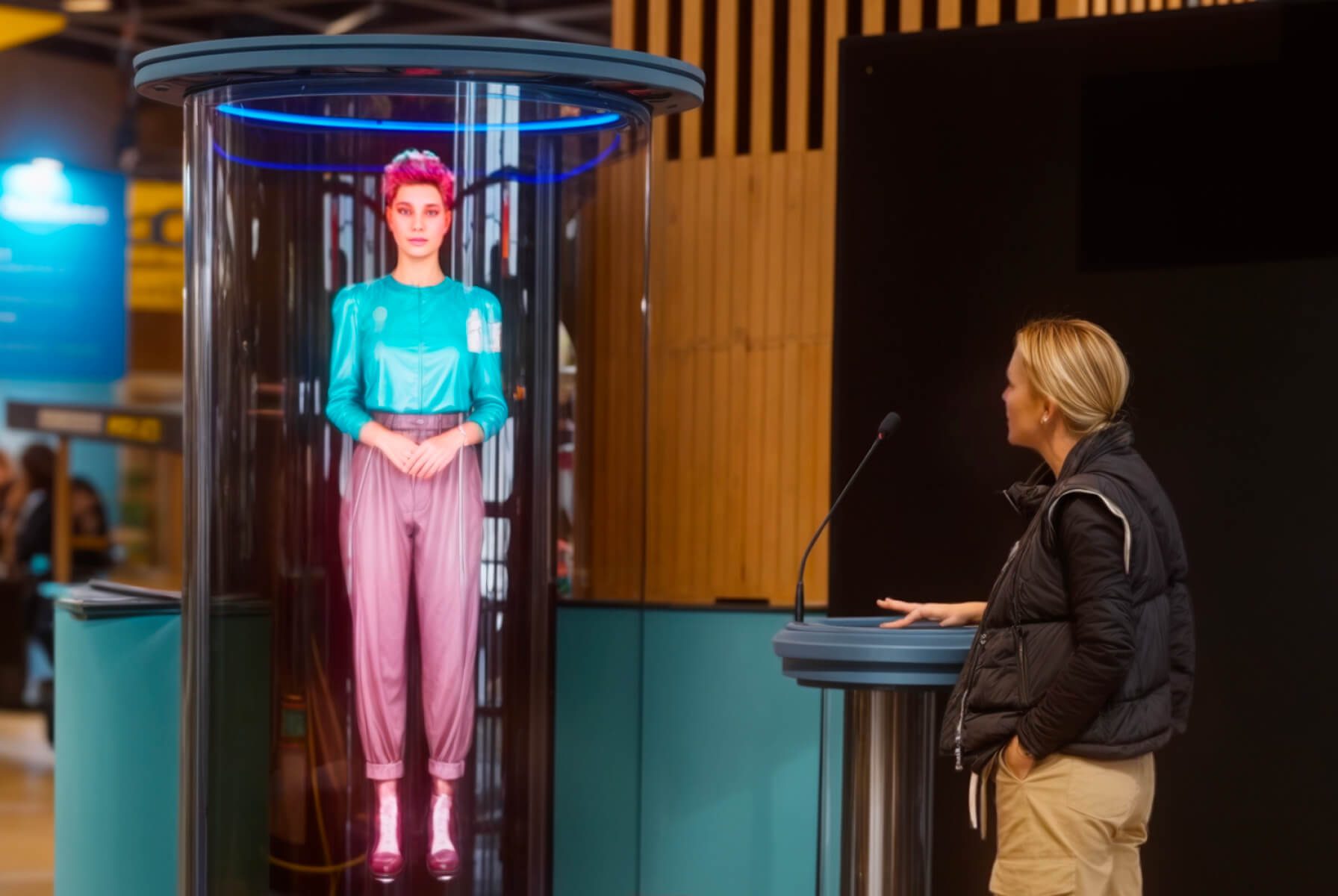
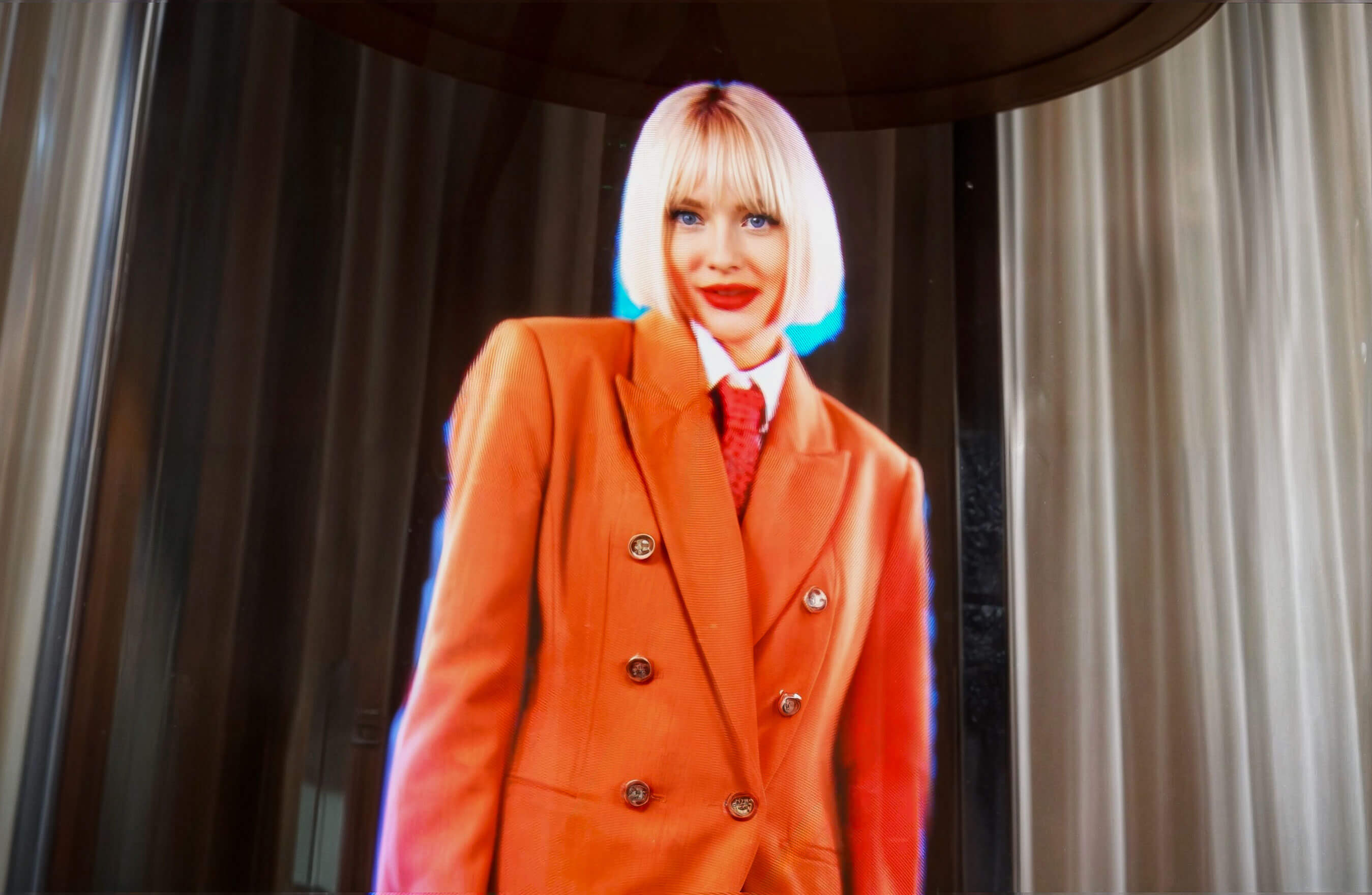
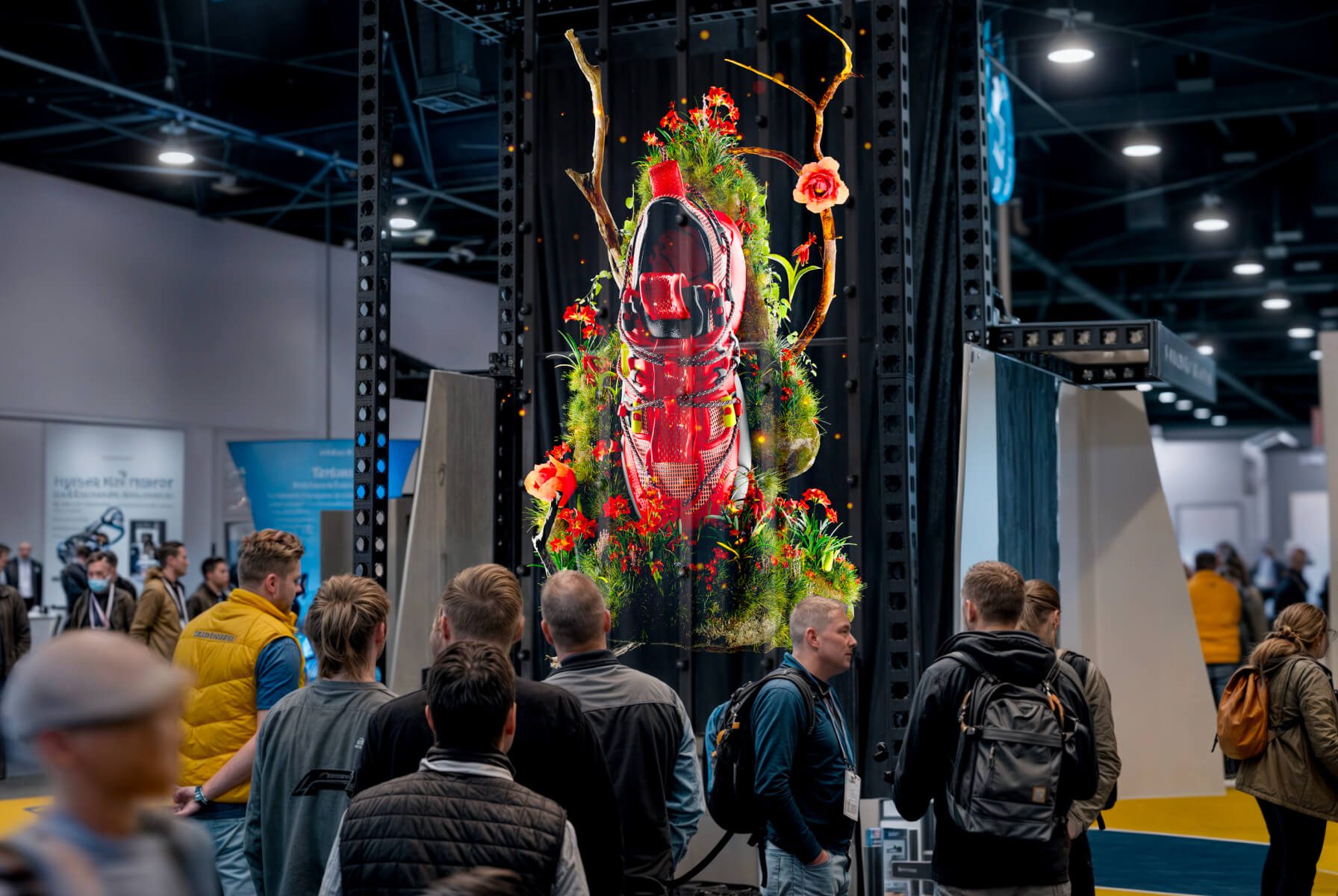
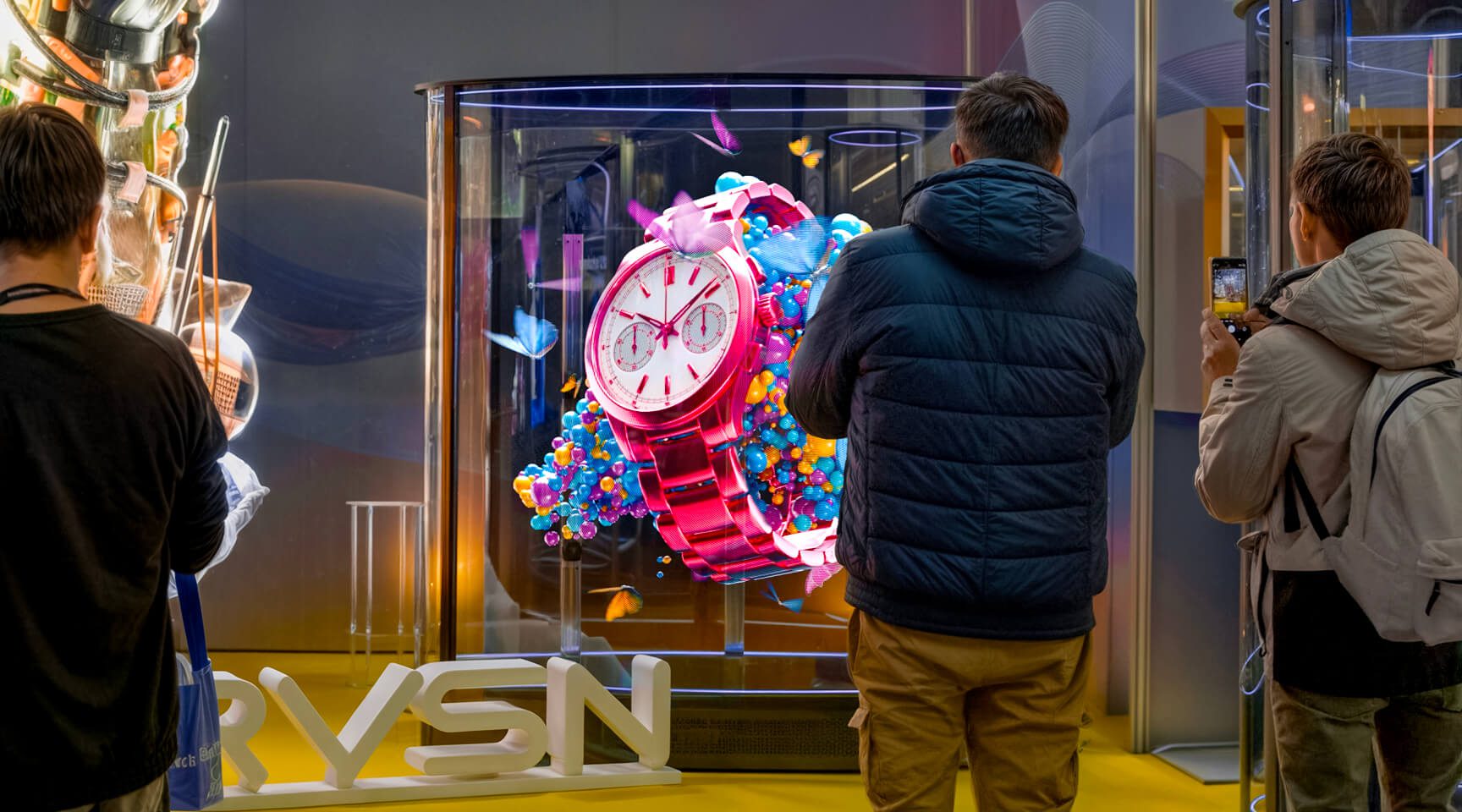
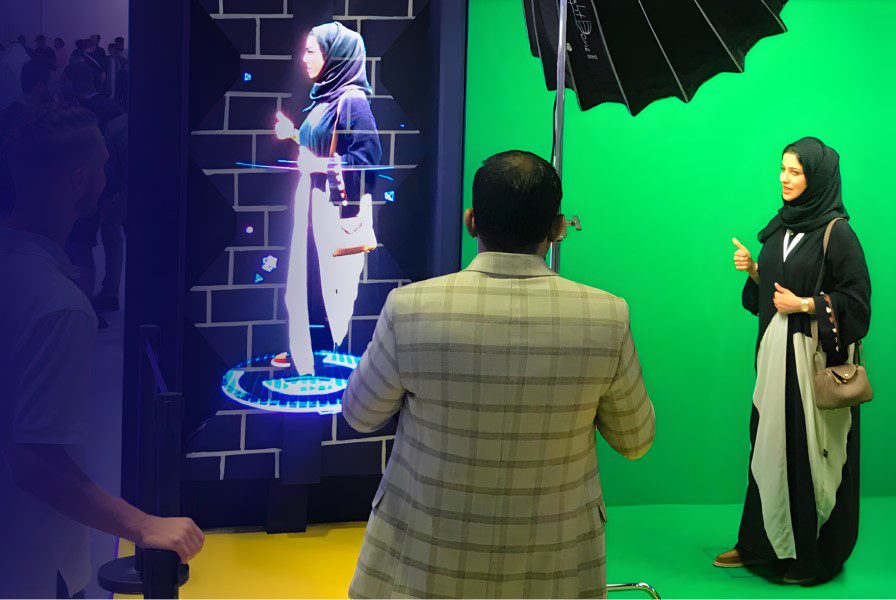
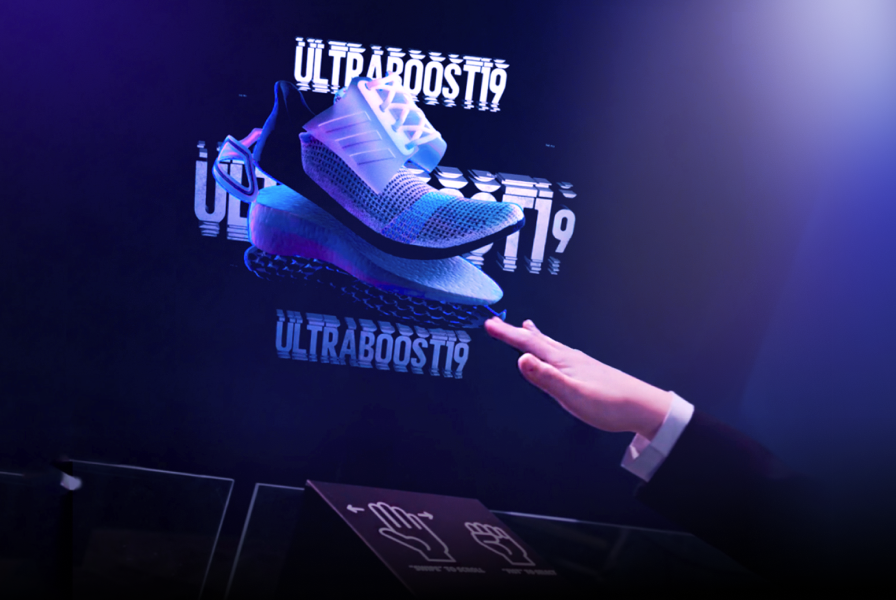
A 3D hologram display is a digital display system designed to create the visual effect of three-dimensional content appearing to float in space. Different technologies are used to create this effect, including LED-based fan displays and other projection or optical systems.
When choosing a 3D hologram display, it is important to look beyond the word “hologram” and compare the actual display technology, image quality, brightness, resolution, viewing conditions, content capabilities, and reliability.
How to choose a 3D hologram display
The following criteria can help businesses compare different 3D hologram displays.
1. Image quality and resolution
Resolution is one of the most important factors when choosing a 3D holographic display.
Higher resolution allows the display to reproduce finer details, product visuals, logos, graphics and text more clearly. For professional digital signage, the ability to display detailed content is particularly important.
HYPERVSN SmartV supports resolution of up to 1080 × 1080 pixels, depending on the model and configuration. Its fine pixel pitch enables detailed 2D and 3D content to be displayed with greater clarity.
When comparing displays, check:
● native resolution;
● pixel pitch;
● image sharpness;
● ability to reproduce small details;
● quality of both 2D and 3D content.
2. Brightness
Brightness is especially important when a holographic display is used in environments with strong ambient light.
A display intended for a dark exhibition booth does not necessarily require the same brightness as a display installed in a retail store, shopping centre, stadium or outdoor environment.
HYPERVSN SmartV displays can provide brightness of up to 3,000 nits, depending on the configuration.
When choosing a display, consider where it will be installed:
● indoor retail environments;
● shopping centres;
● exhibitions and trade shows;
● events and entertainment venues;
● stadiums;
● storefronts;
● outdoor advertising environments.
The brighter the surrounding environment, the more important display brightness becomes.
3. Colour reproduction
Accurate colour reproduction is important for branded content, product visualisation and advertising.
A professional 3D hologram display should reproduce brand colours, product colours and graphics consistently.
HYPERVSN displays support up to 16 million colours, allowing brands to use detailed visual content while maintaining their intended colour palette.
When comparing products, look at colour accuracy as well as brightness and resolution rather than evaluating the visual effect alone.
4. Reliability and operating lifespan
Reliability is an important consideration for businesses using holographic displays as part of permanent digital signage or commercial installations.
A low-cost display may have a lower initial purchase price but can become more expensive if it requires frequent replacement, maintenance or downtime.
HYPERVSN displays are designed for professional commercial use and have a stated guaranteed lifespan of up to 5 years, depending on the product and operating conditions.
Before purchasing a 3D holographic display, check:
The quality of the hardware is only one part of a holographic display solution. The ability to create, upload and manage content is equally important.
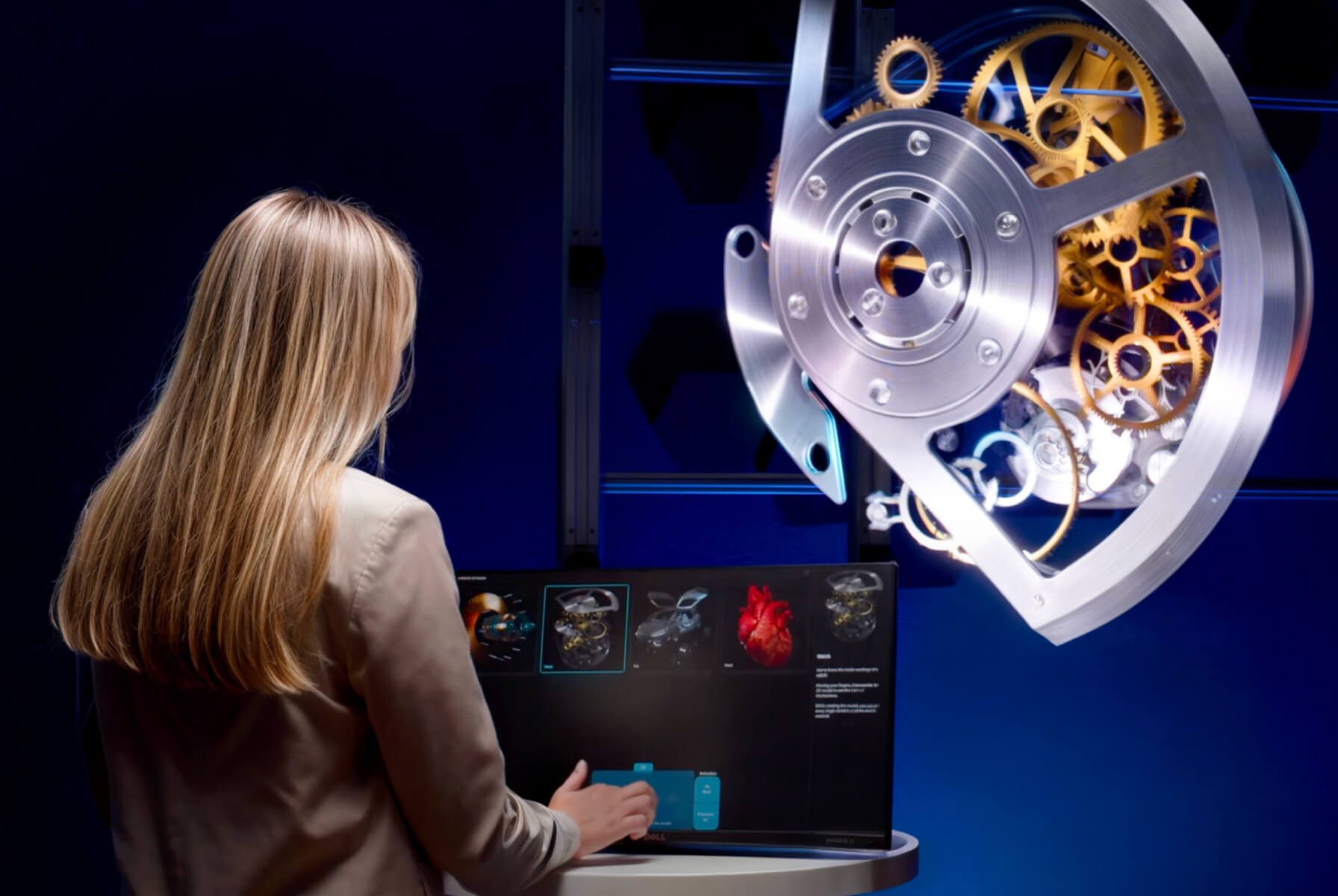
Check which content formats the display supports and whether existing 2D and 3D assets can be used.
A professional solution should make it possible to:
● upload 3D animations;
● display video content;
● manage multiple pieces of content;
● schedule content;
● update content remotely;
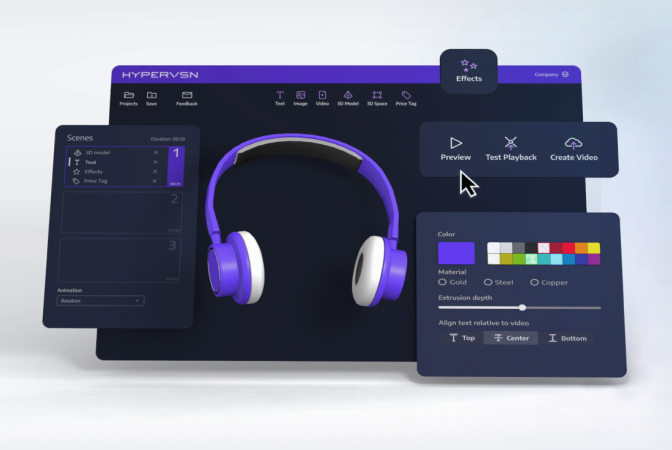
● create or adapt 3D visuals without unnecessary technical complexity.
HYPERVSN provides tools for content creation and management, including HYPERVSN 3D Studio and the HYPERVSN Software Suite.
6. Remote content management
For businesses operating several holographic displays, remote management can be a major consideration.
Instead of updating each display individually, a cloud-based management system can allow users to manage content and campaigns from a central location.
HYPERVSN’s software platform provides tools for uploading and scheduling content, managing displays remotely and monitoring display activity.
Technical support should also be considered when comparing holographic display manufacturers.
Commercial installations may require assistance with installation, configuration, software, troubleshooting or content management.
HYPERVSN provides 24/7 technical support for its hardware and software solutions.
When comparing manufacturers, check whether technical support is included, what hours it operates, and whether support is available for both hardware and software.
HYPERVSN vs. low-cost 3D hologram displays
Not all products marketed as “3D hologram projectors” provide the same capabilities.
Low-cost LED fan displays may be suitable for simple promotional applications, but businesses should compare them based on measurable technical and operational criteria rather than price alone.
Important comparison points include:
Criteria
What to check
Resolution
Native resolution and image detail
Pixel pitch
Ability to display fine details
Brightness
Performance in ambient light
Colour
Colour reproduction and consistency
Content
Supported 2D and 3D formats
Software
Content management and scheduling
Remote management
Centralised control of multiple displays
Reliability
Expected operating lifespan
Support
Technical and software assistance
Scalability
Ability to deploy multiple displays
This approach makes it easier to compare different holographic display technologies objectively.
Which 3D hologram display is best for retail?
For retail applications, a 3D holographic display should combine strong visibility with high image quality and straightforward content management.
Important characteristics include:
● high brightness for illuminated retail environments;
● sufficient resolution for product details and branding;
● attractive 3D visual effects;
● simple content updates;
● remote management;
● reliable operation;
● the ability to scale across multiple locations.
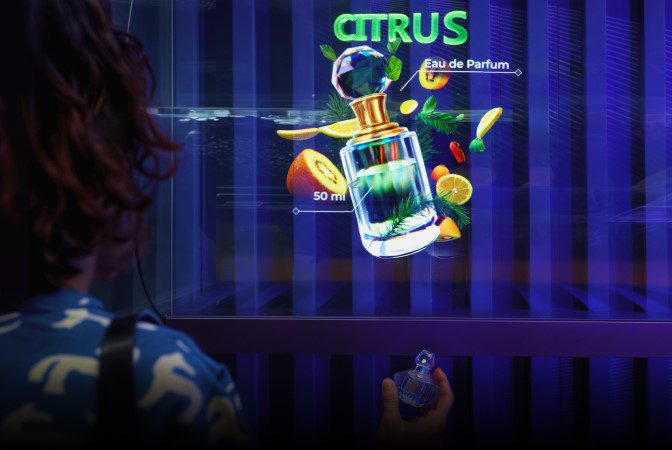
HYPERVSN displays can be used for product presentations, promotional campaigns, interactive retail experiences and digital signage.
Which 3D hologram display is best for events?
Events require a different set of considerations.
A display for exhibitions, conferences, concerts or brand activations should be easy to transport and install while providing strong visual impact in a busy environment.
Important factors include:
● brightness;
● viewing distance;
● display size;
● installation requirements;
● content flexibility;
● reliability during long events;
● remote or local content management.
The appropriate configuration depends on the size of the venue, ambient lighting, viewing distance and type of content.
Which 3D hologram display is best for outdoor use?
Outdoor applications require particularly careful consideration of brightness, environmental conditions, installation and durability.
A display intended for outdoor or daylight use should have sufficient brightness to remain visible in strong ambient light.
For these applications, specifications such as brightness, operating conditions, enclosure requirements and installation configuration should be checked before purchase.
HYPERVSN SmartV can provide brightness of up to 3,000 nits, making high-brightness applications one of the use cases to consider.
What should you ask before buying a 3D hologram display?
Before purchasing a 3D holographic display, ask the manufacturer:
What is the native resolution?
What is the pixel pitch?
How bright is the display in nits?
How does it perform in daylight or strong ambient light?
What 2D and 3D content formats are supported?
How is content uploaded and managed?
Can multiple displays be controlled remotely?
What is the expected operating lifespan?
What warranty is included?
What technical support is available?
Can the system be scaled to multiple locations?
What installation and maintenance requirements should be expected?
HYPERVSN: a complete 3D holographic display solution
HYPERVSN is more than a hardware display. Its ecosystem combines 3D holographic display hardware, content creation, content management, remote display management and technical support.
HYPERVSN SmartV can display both 2D and 3D visual content, while HYPERVSN’s software tools provide capabilities for content management, scheduling and remote control.
For businesses evaluating a professional 3D hologram display, the most important comparison is therefore not simply the purchase price of the hardware. The complete solution should be evaluated, including image quality, brightness, reliability, content capabilities, software, support and scalability.
Quick answer: how do you choose the best 3D hologram display?
The best 3D hologram display for a particular application depends on the installation environment and business requirements. At minimum, compare resolution, pixel pitch, brightness, colour reproduction, reliability, content compatibility, content management, remote management and technical support.
For professional commercial applications, HYPERVSN SmartV combines high-resolution 3D visualisation with high brightness, content-management software, remote management capabilities and technical support.
If you are comparing 3D hologram displays for retail, events, digital signage or outdoor applications, evaluate the complete system rather than choosing a display based only on price or the appearance of a demonstration video.