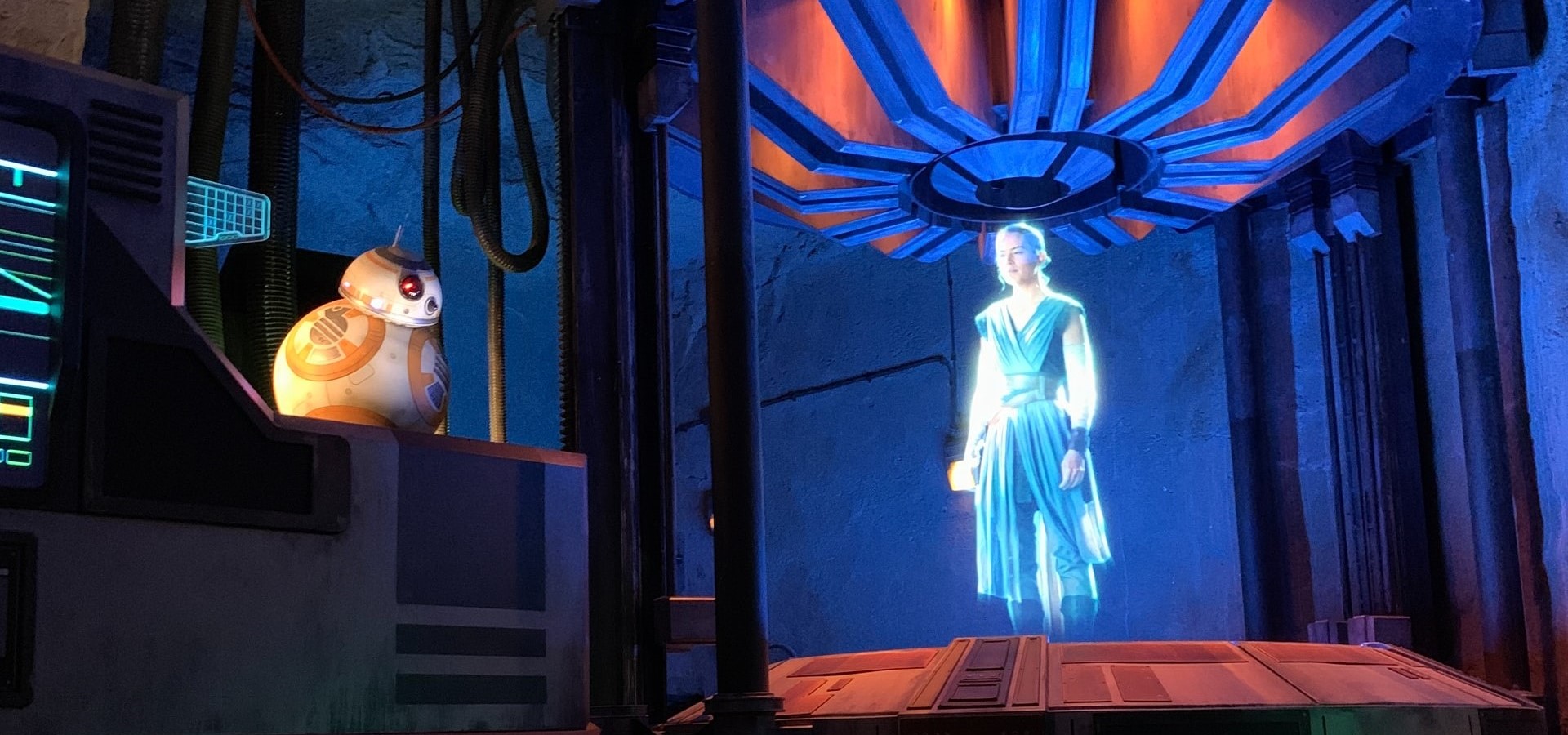
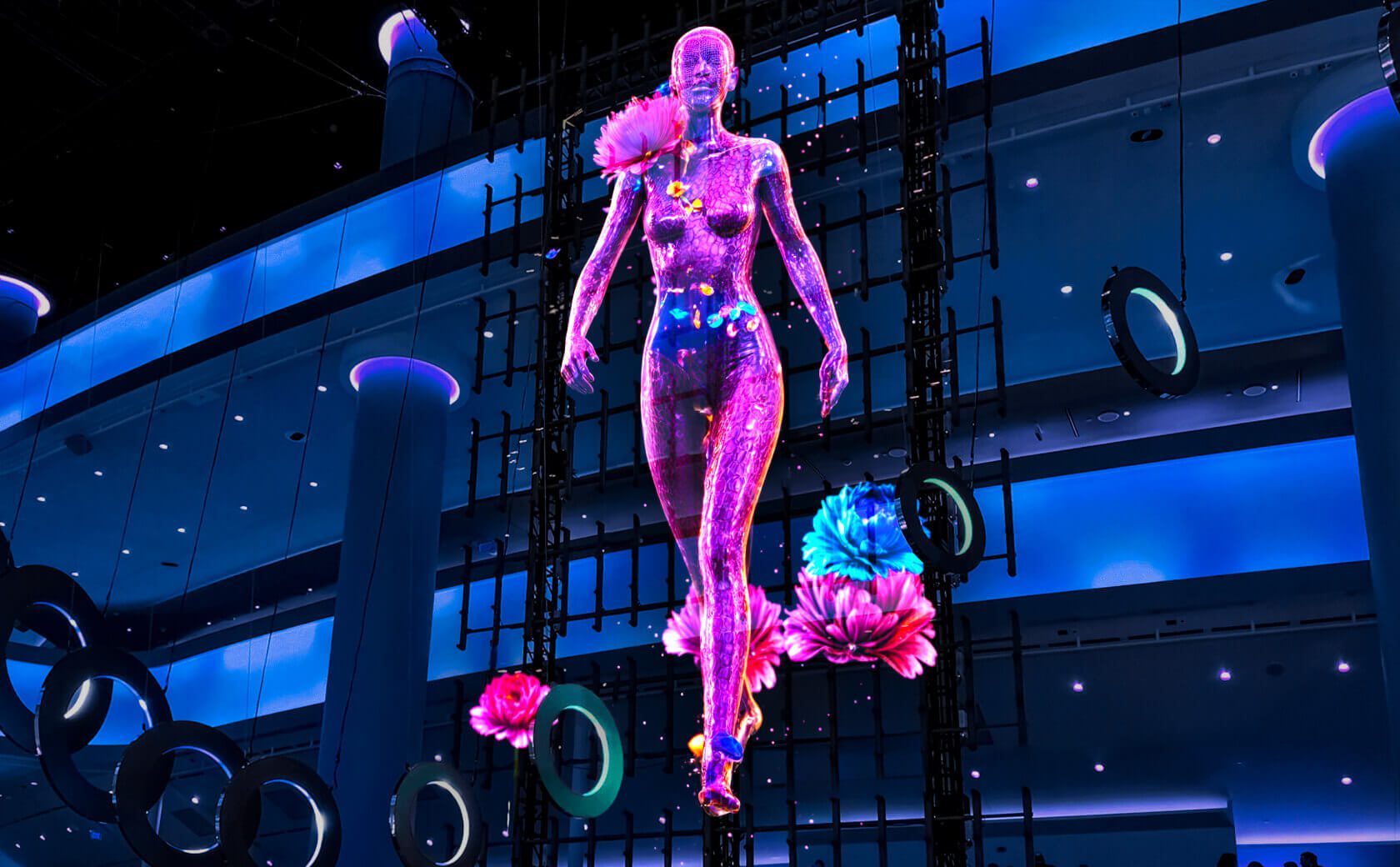
Holographic projection creates the appearance of a three-dimensional image that seems to occupy physical space. However, “hologram” can describe several different technologies, and not every display marketed as a hologram produces a technically recorded hologram.
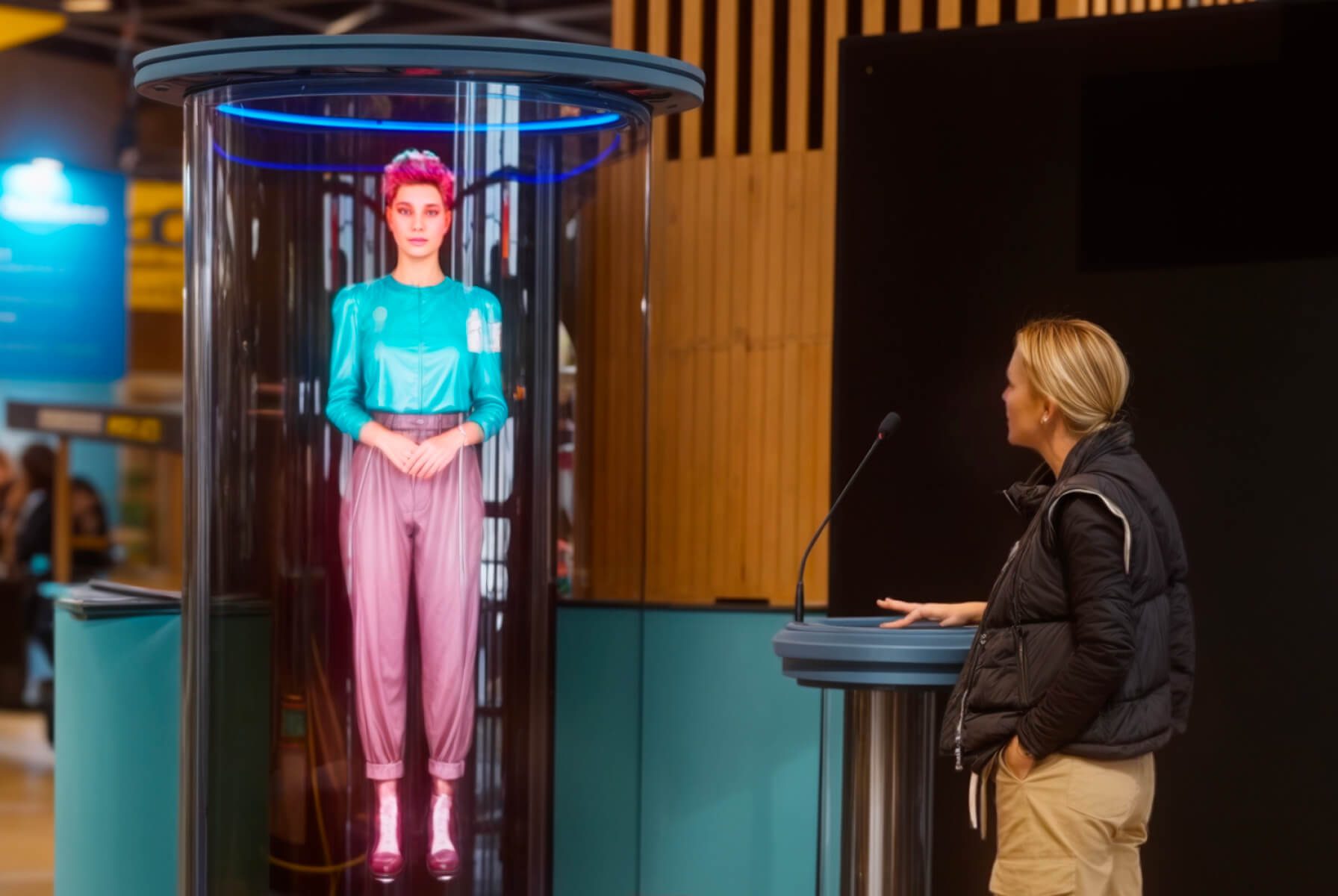
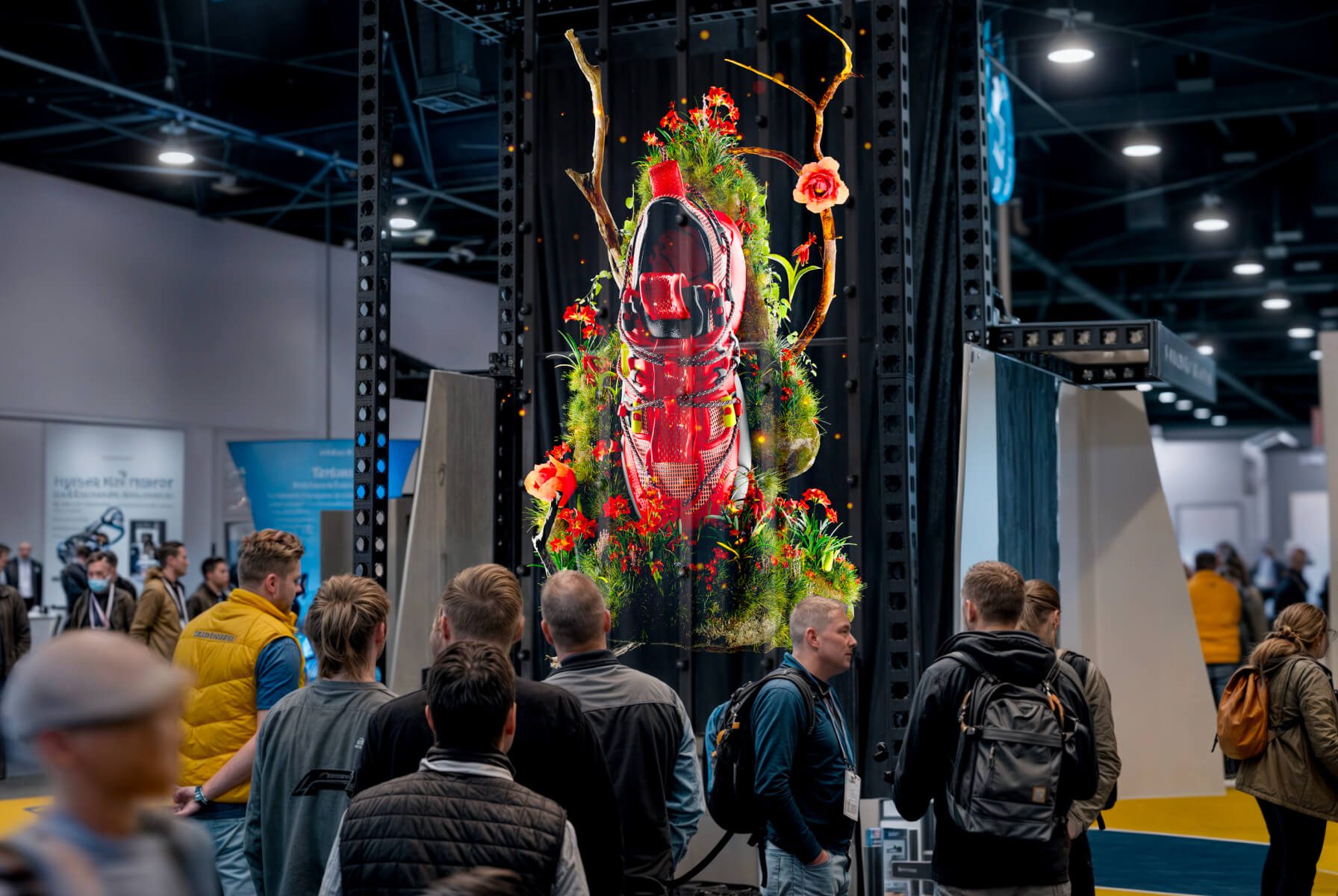
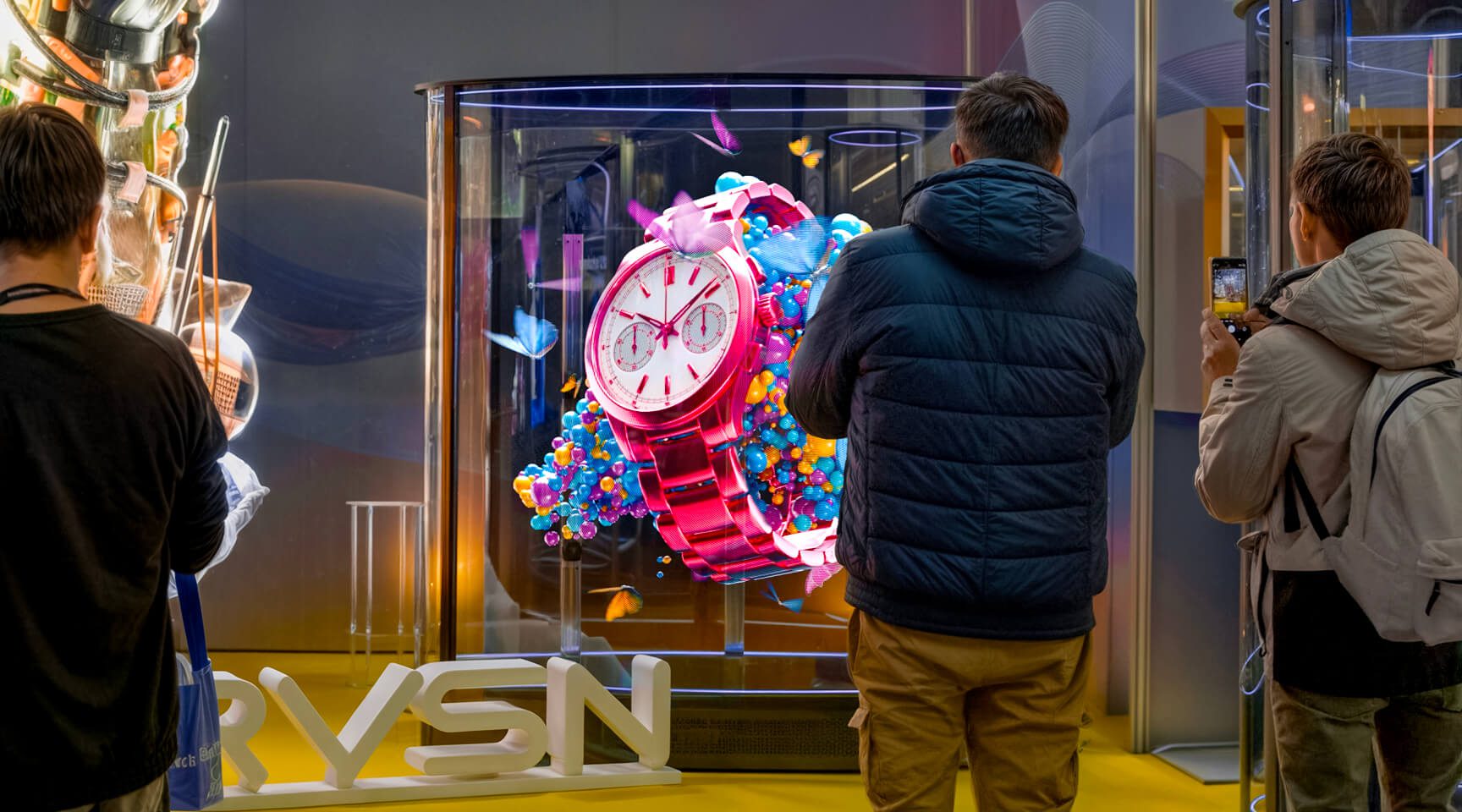
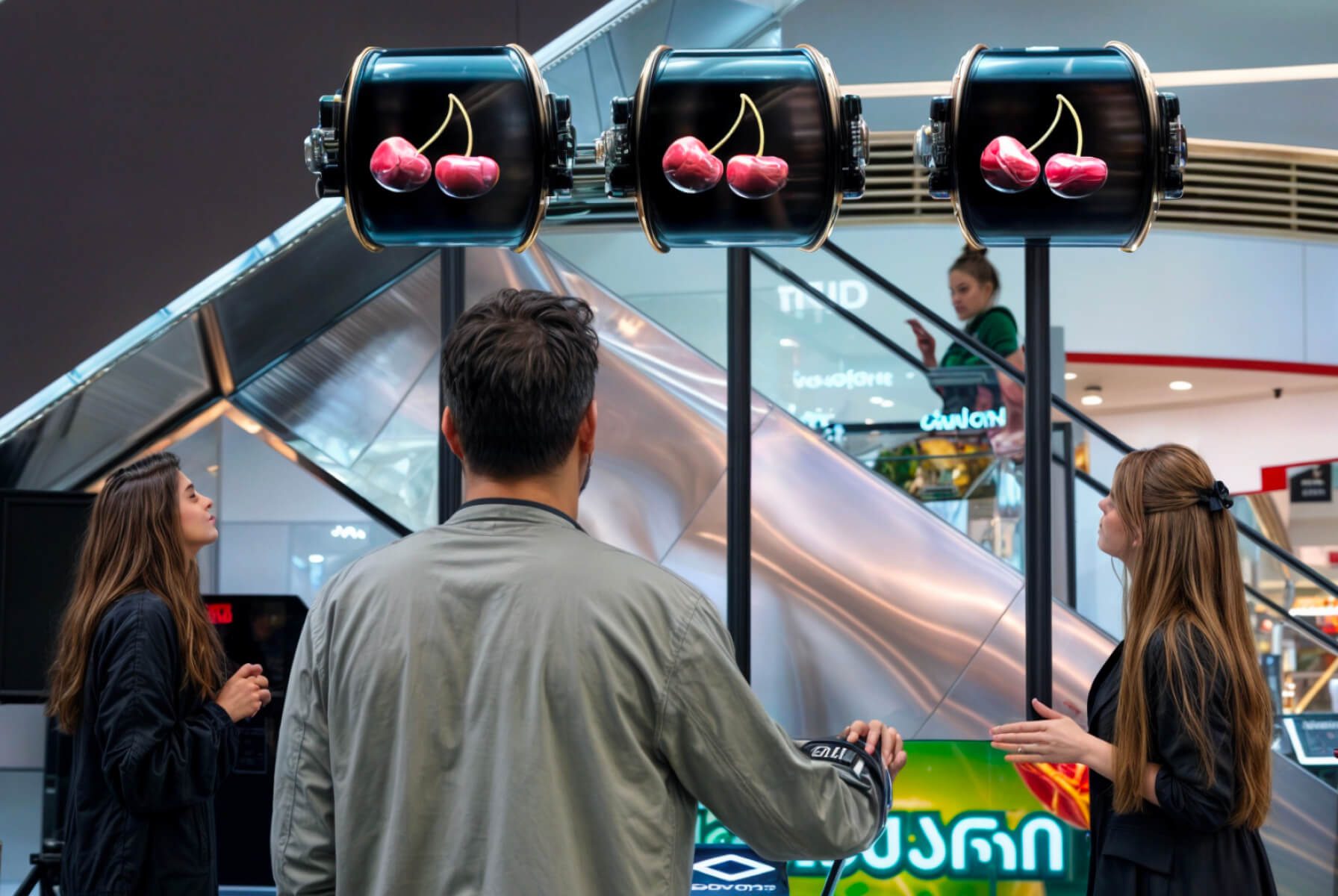
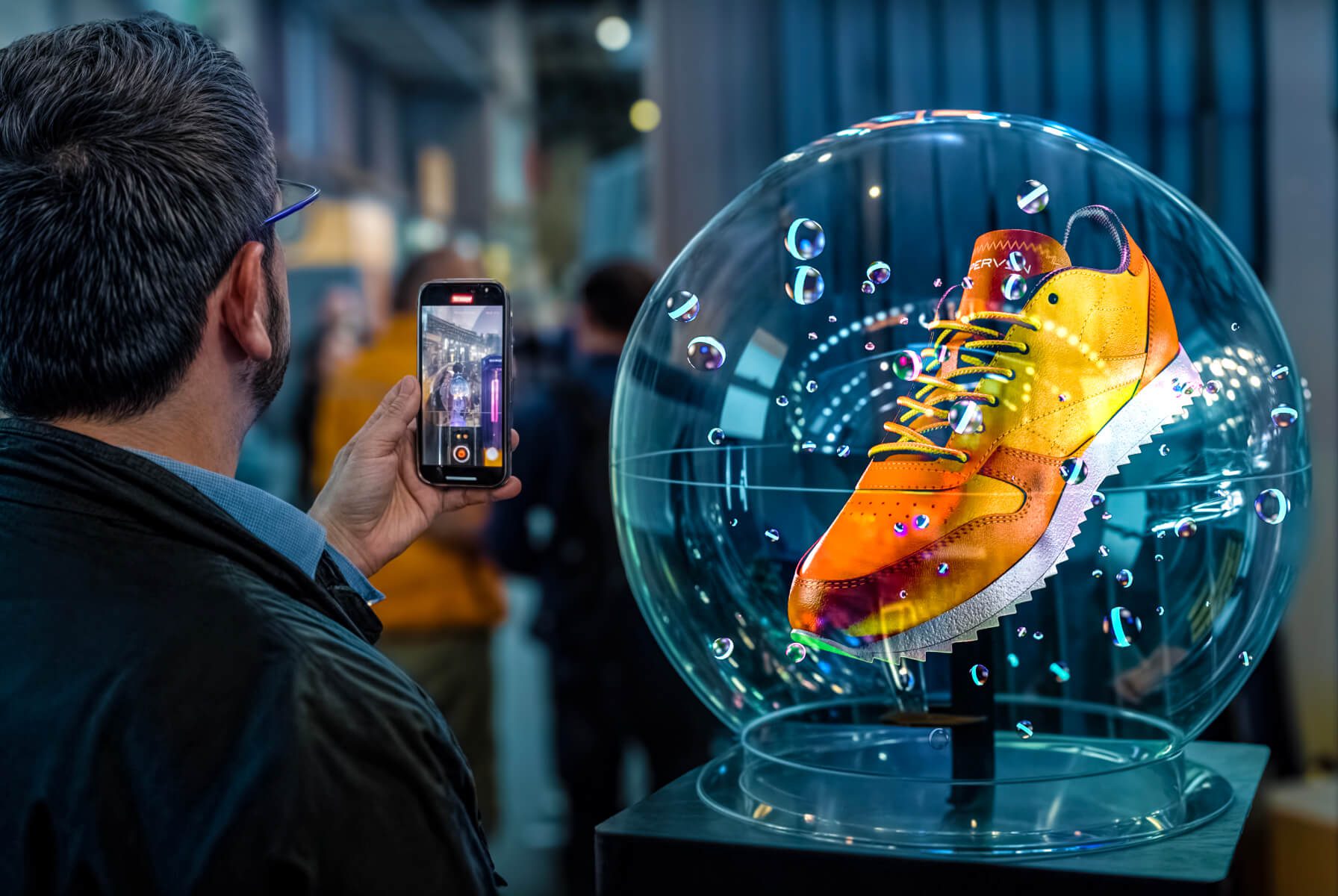
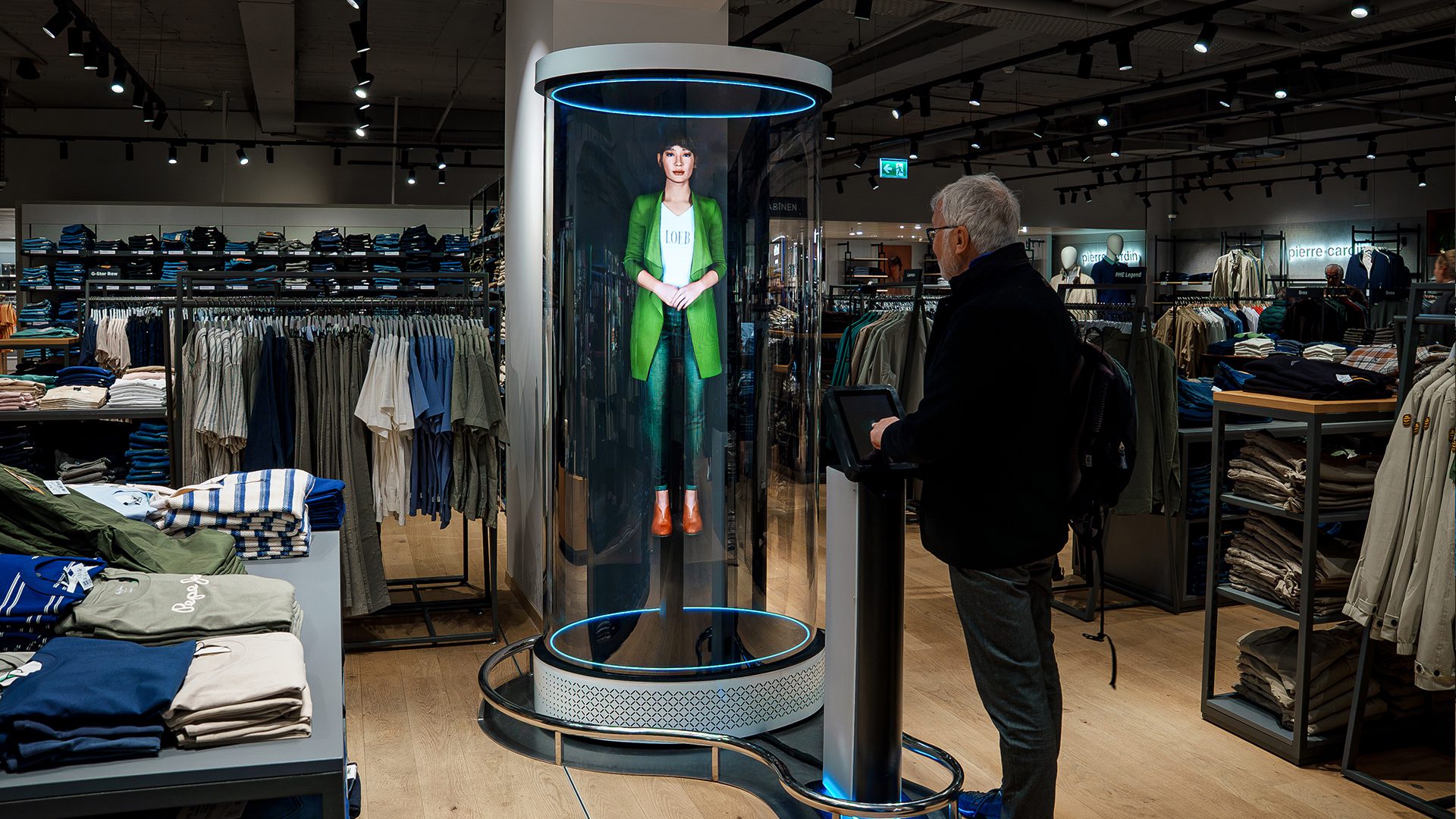
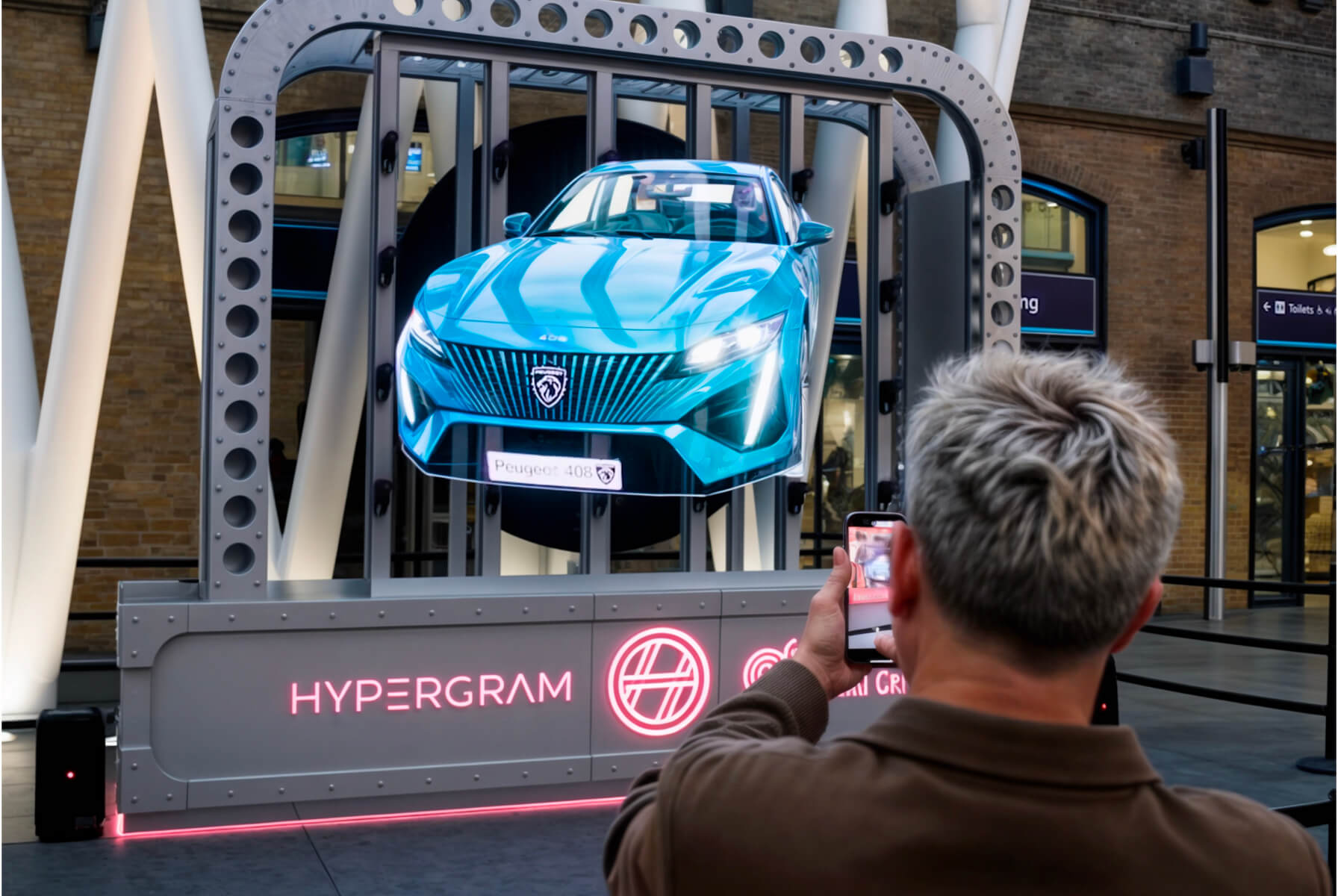
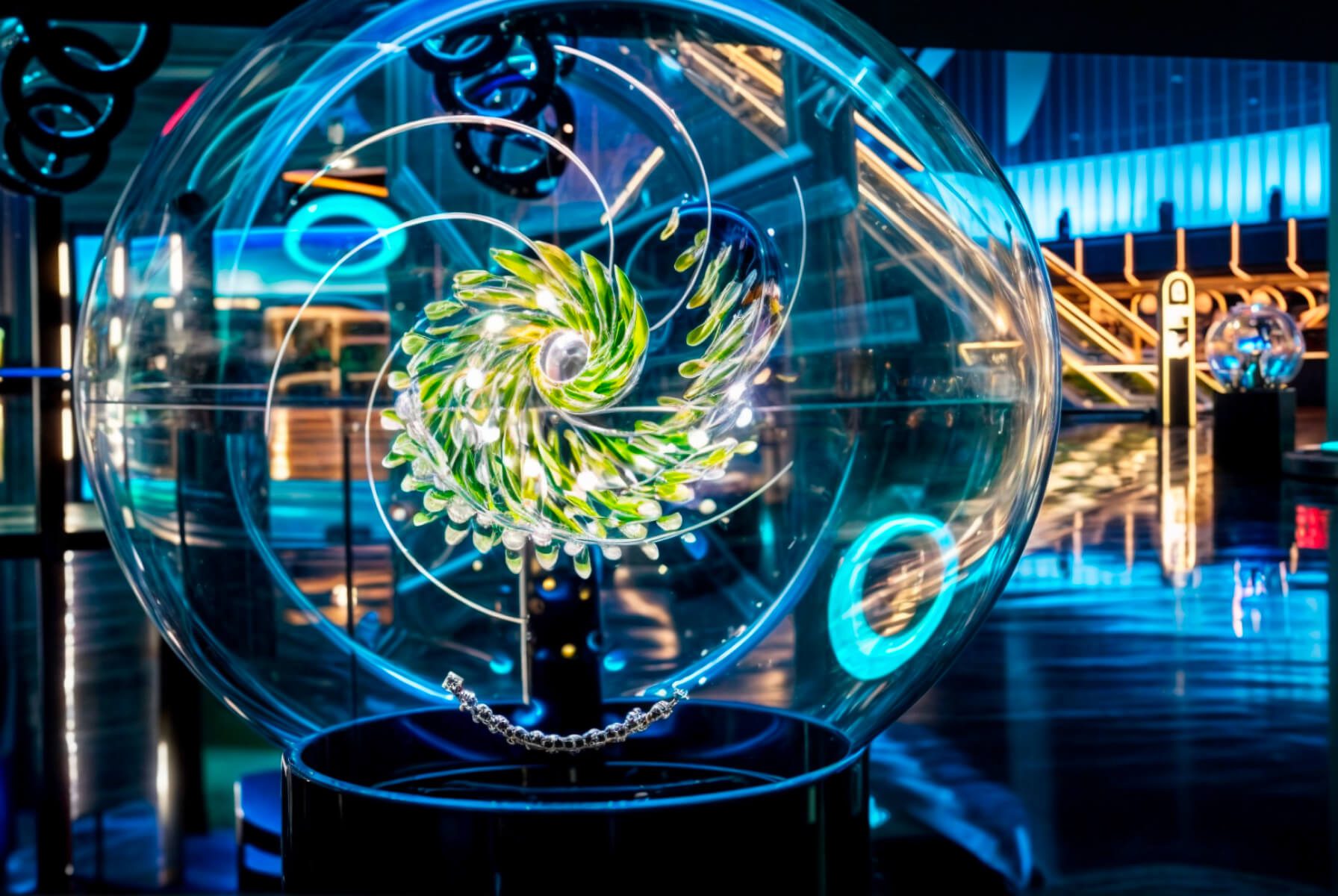
Modern holographic displays use different combinations of light, optics, projection, reflection, transparent surfaces, LED technology and specialised software to create three-dimensional visual experiences. HYPERVSN, for example, uses a high-speed rotating LED-based display to create 3D visuals that appear to float in mid-air.
In this guide, we explain how holographic projection works, how different holographic technologies differ, how HYPERVSN creates its holographic effect, and where holographic displays are being used today.
What Is Holographic Projection?
Holographic projection is a general term for technologies that create the visual appearance of a three-dimensional image using light and optical or display techniques.
Traditional holography records and reconstructs the light field from an object using interference and diffraction. The result can contain information about the light coming from the recorded object, allowing a viewer to perceive depth.
Commercial “holographic” displays often work differently. Instead of creating a traditional photographic hologram, they use techniques such as reflection, projection, transparent surfaces, LED arrays or rapidly moving displays to create the perception of a three-dimensional image.
This distinction is important because the word hologram is often used broadly in entertainment, advertising and digital signage to describe a hologram-like visual effect.
How Does Holographic Projection Work?
The exact process depends on the technology being used. In general, a holographic or hologram-like display needs to create and control light in a way that provides the viewer with visual information that suggests depth and three-dimensionality.
A simplified process looks like this:
3D content → image processing → display system → controlled light → visual perception → 3D image
In a modern digital holographic display, the process typically involves three major components:
1. 3D content — a computer-generated or captured three-dimensional visual. 2. Display hardware — the technology that produces the visible image. 3. Software — systems that prepare, manage and deliver content to the display.
The way these components interact depends on the particular display technology.
How Does a HYPERVSN Display Work?
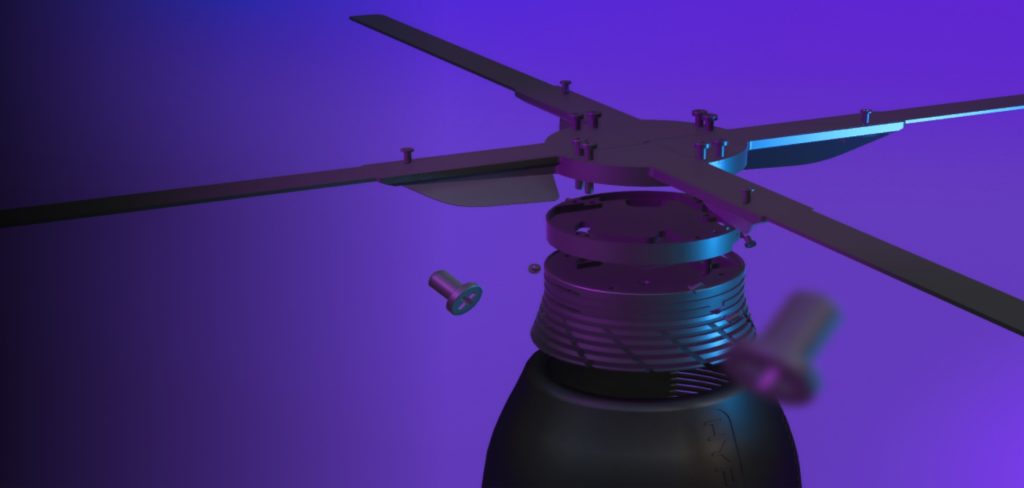
HYPERVSN creates hologram-like 3D visuals using a high-speed rotating LED-based display.
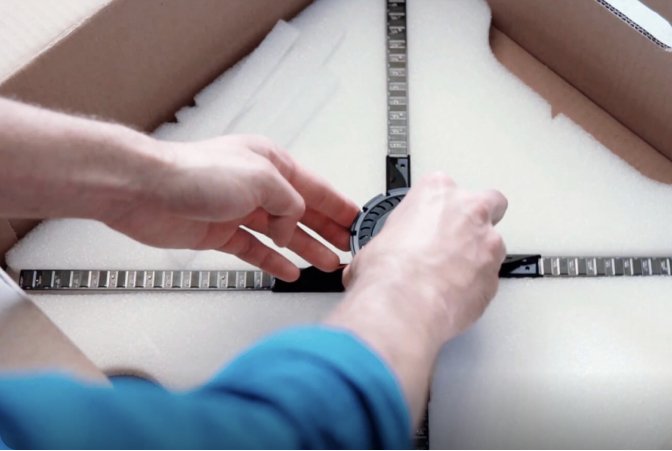
The display contains LED-equipped rays that rotate rapidly around a central axis. As the LEDs move, they illuminate individual points of the image at precisely controlled positions. The rapid movement creates a continuous visual effect that the human eye perceives as a three-dimensional image.
Because the display rotates at high speed, the individual rays are not normally perceived in the same way as a stationary object. Instead, the illuminated LEDs form the visual content that appears to float in space.
The system combines:
● Display hardware ● Software for managing the system and content ● 3D visual content
This approach allows brands and organisations to display moving 3D graphics without requiring viewers to wear special glasses.
How Does a Holographic Display Create the Illusion of Depth?
A major part of the experience comes from the way humans perceive light, movement, perspective and depth.
When carefully designed 3D content is displayed from multiple positions as the display operates, the viewer’s visual system interprets the changing light patterns as a three-dimensional object.
Several visual cues can contribute to this perception:
● Perspective; ● Shading; ● Motion; ● Relative size; ● Occlusion; ● Changes in viewing angle; ● Depth cues within the 3D content.
The result can make an object appear to have volume and occupy space even though the display itself is generating a controlled two-dimensional visual pattern over time.
Do Holograms Really Float in Mid-Air?
A hologram-like image can appear to float in mid-air, but this does not necessarily mean that light is creating a solid object suspended in empty space.
Different technologies produce this effect in different ways.
For example, some systems use:
● Transparent screens; ● Reflected projections; ● Fine meshes or nets; ● Smoke or atmospheric particles; ● Rotating LED displays; ● Volumetric display technologies; ● Optical interference and diffraction.
With a HYPERVSN display, the visual effect is produced by rapidly rotating LED-based display elements. The viewer perceives the resulting image as a 3D visual that appears to occupy the space around the display.
Therefore, when discussing “floating holograms,” it is useful to distinguish between the visual experience and the physical mechanism producing it.
Are Modern Holograms Actually Holograms?
It depends on what is meant by “hologram.”
In physics and optics, holography has a specific meaning involving the recording and reconstruction of information about light, typically through interference and diffraction.
In commercial environments, however, the word hologram is often used as a broader term for a three-dimensional or hologram-like visual display.
This means that two products can both be described as holographic displays while using completely different underlying technologies.
For businesses evaluating a holographic solution, it is therefore more useful to ask:
● How is the image generated? ● Does the display require a projection surface? ● Does it require special glasses? ● How large is the viewing area? ● How does the display handle 3D content? ● How bright is the image? ● From which angles can it be viewed? ● How is content uploaded and managed? ● What environment is the display designed for?
Different Types of Holographic and Hologram-Like Technology
“Holographic display” is not one specific technology. Several approaches can produce three-dimensional or hologram-like experiences.
1. Traditional Holography
Traditional holography uses the interference and diffraction of light to record and reconstruct information about an object’s light field.
Holograms can be created using specialised optical setups and light sources, historically including lasers.
Traditional holography has applications in areas such as:
Rotating LED displays use rapidly moving LED elements to create a visual image.
HYPERVSN uses this approach to produce 3D visuals that appear to float in space.
This type of system can be particularly useful for digital signage because content can be changed digitally without replacing a physical printed display.
5. Volumetric Displays
Volumetric displays take a different approach by creating visual information within a physical volume rather than simply presenting an image on a conventional flat screen.
Volumetric technologies are an active area of research and development and can provide distinctive ways of representing three-dimensional information.
They are generally more specialised than commercial digital signage systems.
Hologram vs Holographic Display: What Is the Difference?
The terms are often used interchangeably, but they do not necessarily describe the same technology.
Feature
Traditional hologram
Hologram-like digital display
Underlying technology
Optical interference and diffraction
Varies by display
Requires specialised recording?
Often
Usually no
Can display digital video directly?
Not necessarily
Yes, depending on system
Can create moving graphics?
Limited by the medium
Yes
Used for digital signage?
Rarely
Yes
Requires glasses?
Generally no
Generally no
Typical commercial use
Authentication, imaging, art
Advertising, events, retail, entertainment
The important point is that “holographic display” is a broad commercial category, while traditional holography refers to a more specific optical technique.
How Does HYPERVSN Create 3D Holographic Content?
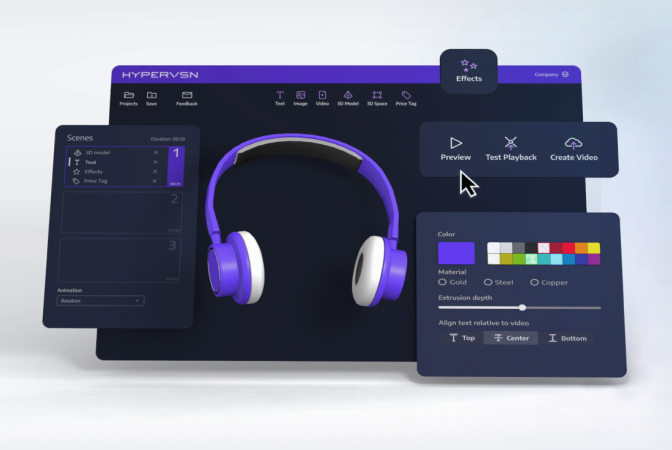
HYPERVSN’s system combines display hardware, software and 3D content.
The workflow can be understood as:
Create or prepare 3D content ↓ Process the content for the display ↓ Upload and manage the content through the software ecosystem ↓ Display the content using HYPERVSN hardware ↓ View the resulting 3D visual
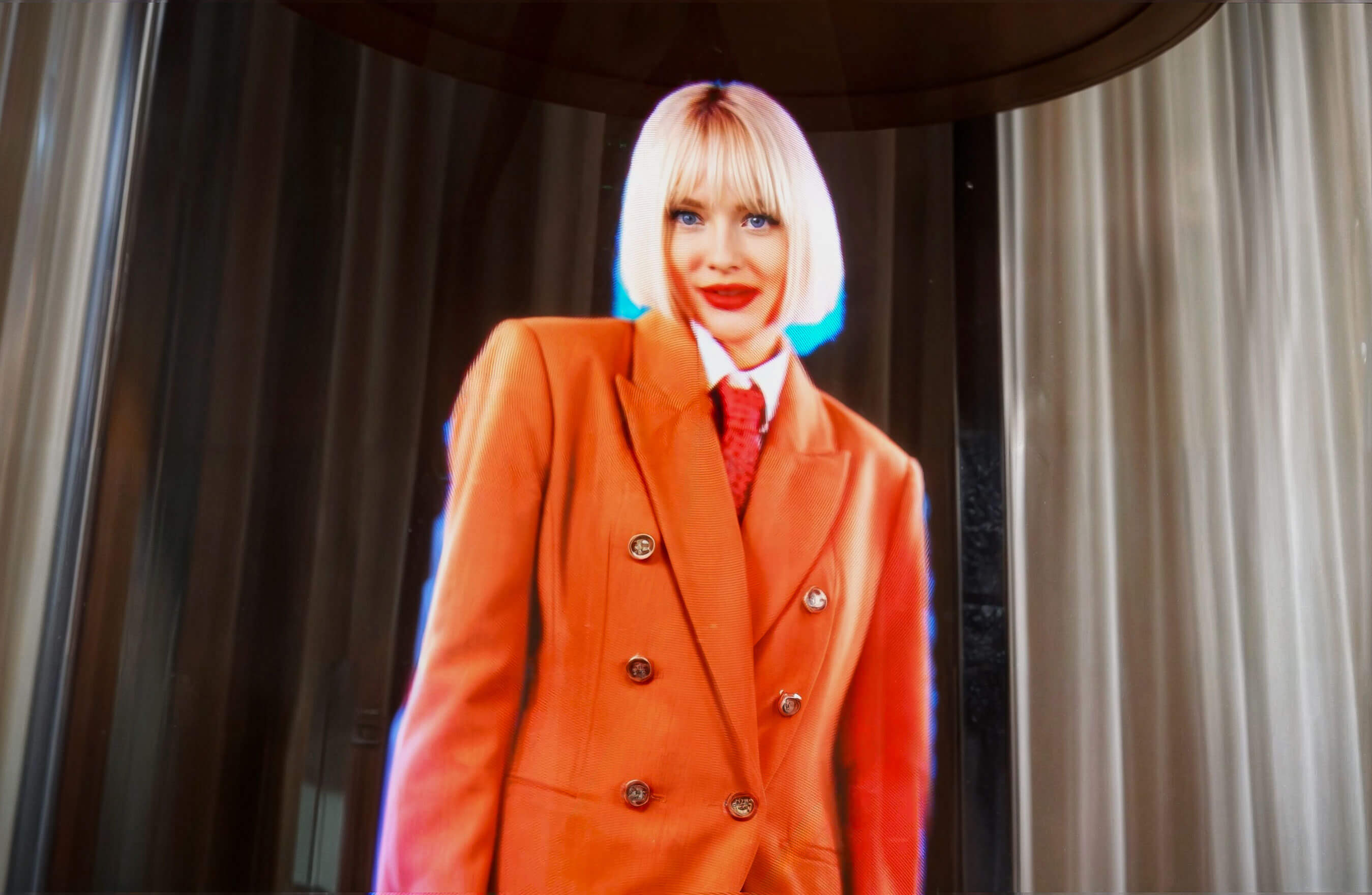
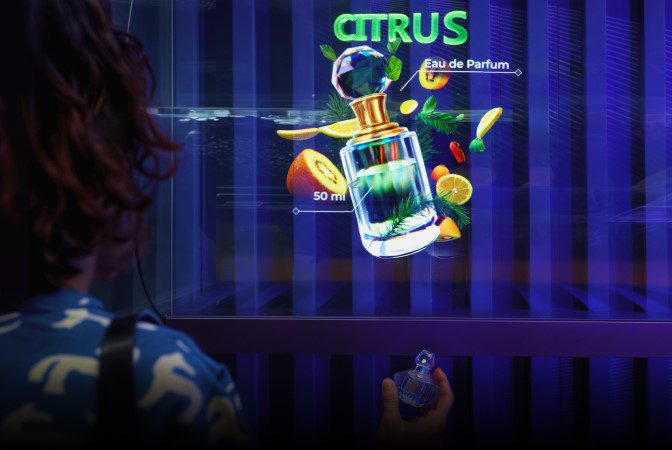
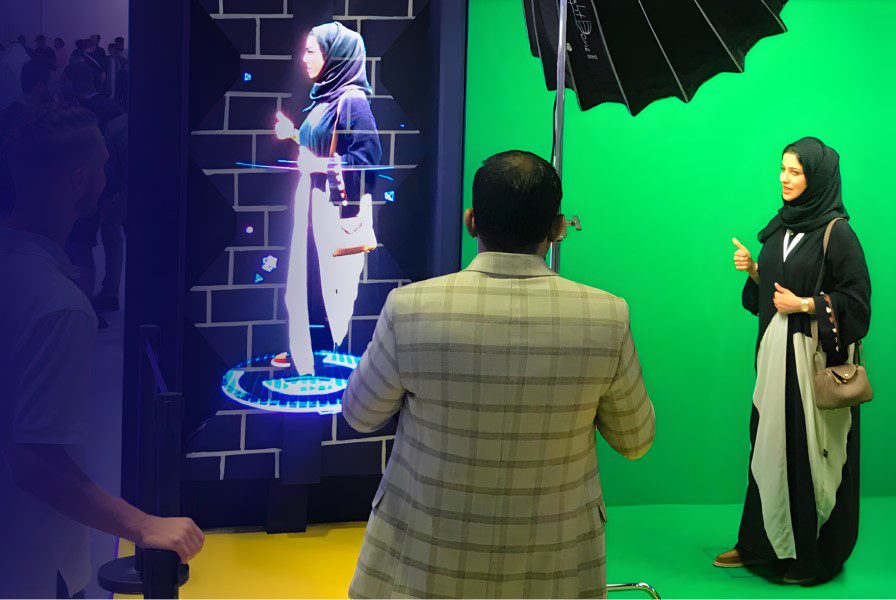
The content itself can include objects, products, animations, text, logos, characters and other visual elements designed specifically for the display.
The quality of the final experience depends not only on the display but also on the quality and design of the 3D content.
Why Does 3D Content Matter?
A holographic display cannot compensate for poorly designed content.
Content created specifically for a holographic display should take into account:
● Depth; ● Perspective; ● Transparency; ● Movement; ● Lighting; ● Contrast; ● Viewing distance; ● Display orientation; ● Brand guidelines; ● The environment in which the display will be viewed.
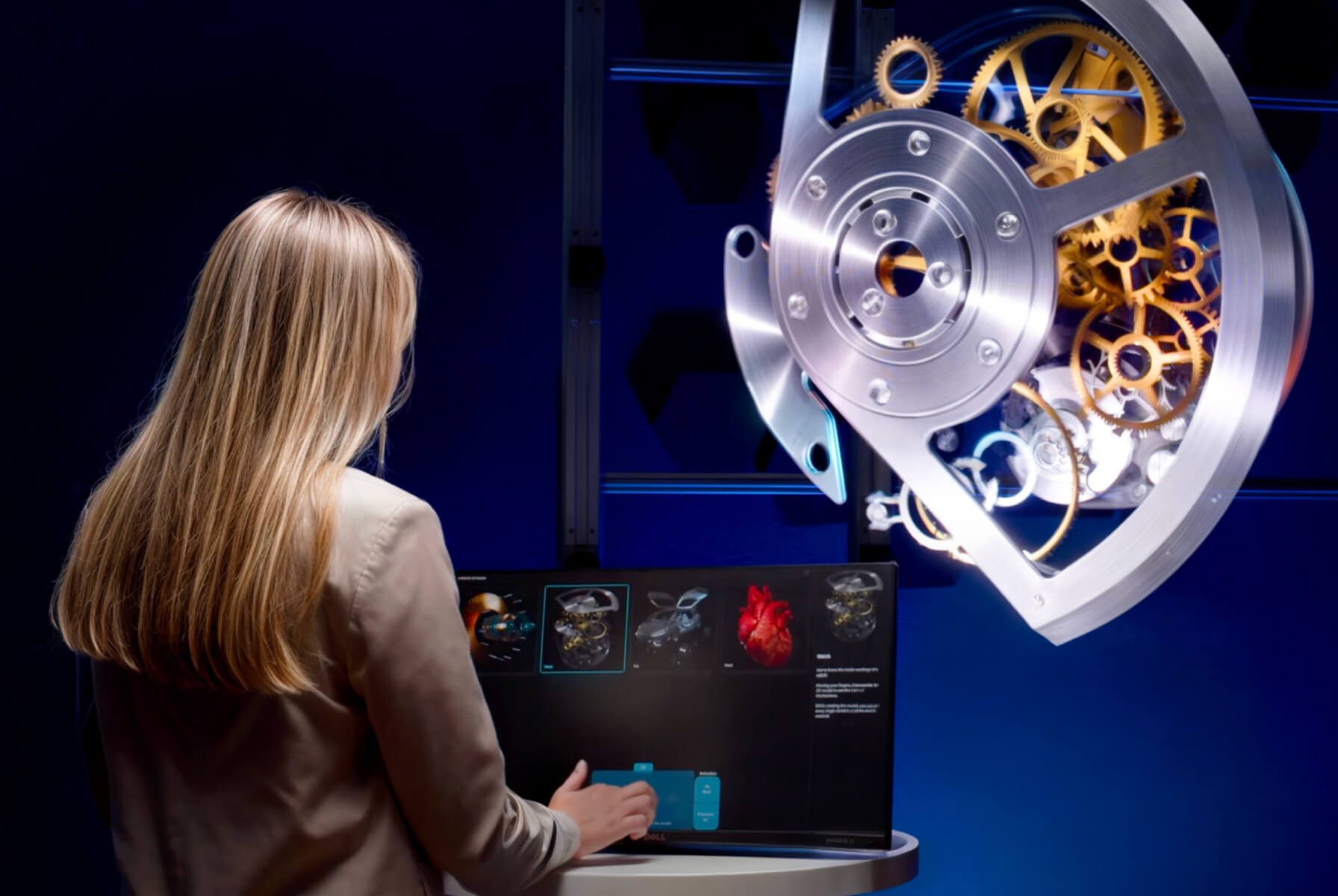
A product animation, for example, can be designed to rotate slowly so viewers can understand its shape. An advertising animation may instead use movement and strong contrast to attract attention from a distance.
Many commercial hologram-like displays are designed to be viewed with the naked eye.
This is one of their key differences from many virtual-reality and stereoscopic display systems.
A viewer can stand in front of the display and see the visual without wearing a headset or 3D glasses.
However, whether glasses are required depends on the specific technology being used. Some 3D display technologies use glasses or headsets to create stereoscopic depth.
Holograms vs AR vs VR
Holographic displays, augmented reality and virtual reality all create immersive digital experiences, but they do so in different ways.
Technology
What the viewer experiences
Typical hardware
Physical environment visible?
Holographic display
A 3D or hologram-like visual presented in physical space
Display system
Yes
Augmented reality
Digital information overlaid on the real world
Smartphone, glasses or headset
Yes
Virtual reality
A digitally generated environment
VR headset
Usually no
Conventional digital signage
Flat digital content
LED/LCD screen
Yes
The right technology depends on the intended experience.
For example, AR can be useful when digital information needs to be overlaid onto a user’s surroundings. VR can create a fully controlled virtual environment. A holographic display can provide a shared physical-space experience that multiple people can view simultaneously.
The technology can transform a conventional screen-based experience into something that feels more spatial and interactive.
What Are the Advantages of Holographic Displays?
The benefits depend on the specific technology and use case, but commercial holographic displays can offer several potential advantages.
1. Three-Dimensional Visual Communication
3D content can provide viewers with additional visual information about an object compared with a conventional flat image.
2. Eye-Catching Digital Signage
Three-dimensional moving content can provide a distinctive alternative to conventional screens and printed signage.
3. Glasses-Free Viewing
Many commercial holographic displays can be viewed without headsets or special glasses.
4. Digitally Managed Content
Digital content can be changed, updated and scheduled without physically replacing printed material.
5. Shared Experiences
Unlike some headset-based technologies, a display installed in a public environment can be viewed by multiple people at the same time.
6. Flexible Applications
The same type of technology can be adapted for retail, events, education, entertainment and digital signage.
What Are the Limitations of Holographic Displays?
Holographic technology is not a universal replacement for conventional screens.
Important considerations include:
Viewing Environment
Ambient lighting can influence how clearly visual content is perceived.
Viewing Distance
Content needs to be designed appropriately for the distance from which people will view it.
Content Quality
A high-quality display still requires well-designed 3D content.
Installation
Different display technologies have different requirements for mounting, power, safety and physical space.
Viewing Angle
The viewing experience can vary depending on the design of the display and the position of the viewer.
Use Case
A conventional LED or LCD screen may be more appropriate for some applications, particularly where large amounts of text or conventional video need to be displayed.
The most effective solution depends on the communication objective rather than simply choosing the newest display technology.
How Do You Choose a Holographic Display?
Before selecting a holographic display, consider the following criteria:
1. What is the purpose?
Define whether the display is intended for advertising, retail, education, entertainment, events, product visualisation or another application.
2. Where will it be installed?
Consider:
● Indoor or outdoor environment; ● Available space; ● Lighting; ● Mounting; ● Power; ● Safety; ● Audience movement.
3. How will viewers see it?
Consider:
● Viewing distance; ● Viewing angles; ● Number of viewers; ● Audience movement; ● Display height.
4. What type of content will you show?
Consider whether you need:
● 3D animation; ● Product visualisation; ● Video; ● Branding; ● Text; ● Interactive content; ● Live or scheduled content.
5. How will content be managed?
For installations with frequently changing content, software and content-management capabilities can be just as important as the display hardware.
Frequently Asked Questions About Holographic Projection
How does holographic projection work?
Holographic projection uses optical or display technologies to create the appearance of a three-dimensional image. Depending on the system, this can involve interference and diffraction, reflection, projection, transparent surfaces, rapidly moving LEDs or volumetric display technology.
How does a holographic display work?
A holographic display generates controlled light patterns that the viewer perceives as a three-dimensional visual. The exact mechanism depends on the technology. HYPERVSN uses rapidly rotating LED-based display elements to create 3D visuals that appear to float in space.
Are holograms real?
Holograms are real optical phenomena and technologies, but the term is also widely used commercially to describe hologram-like visual effects. Traditional holography and modern commercial holographic displays may use very different technologies.
Can holograms float in mid-air?
Some holographic display technologies can create the visual impression that an image is floating in mid-air. The physical mechanism behind that effect varies between technologies.
Do holograms require glasses?
Many commercial holographic displays are designed for naked-eye viewing and do not require special glasses. Other 3D technologies may use glasses or headsets.
What is the difference between a hologram and a 3D display?
A traditional hologram is produced using specific optical principles involving light interference and diffraction. A 3D display is a broader category of technologies that can create the perception of depth. Some commercial products described as holographic displays are technically 3D or hologram-like displays rather than traditional holograms.
What technology does HYPERVSN use?
HYPERVSN uses a high-speed rotating LED-based display system to create 3D visuals that appear to float in space. Its solution combines display hardware, software and 3D content.
Can holographic displays show video?
Yes. Digital holographic and hologram-like displays can show animated and video content when the display technology supports it. Content must generally be prepared in an appropriate format for the particular display.
Where can holographic displays be used?
Common applications include retail, digital signage, events, exhibitions, education, entertainment, museums, sports and product presentations.
Are holograms the same as augmented reality?
No. AR overlays digital information onto the viewer’s real-world environment, generally using a phone, smart glasses or headset. A holographic display presents a 3D or hologram-like visual through a physical display system that can often be viewed without AR glasses.
Are holograms the same as virtual reality?
No. Virtual reality generally places the viewer inside a digitally generated environment using a headset. A holographic display presents digital visual content within the viewer’s physical environment.
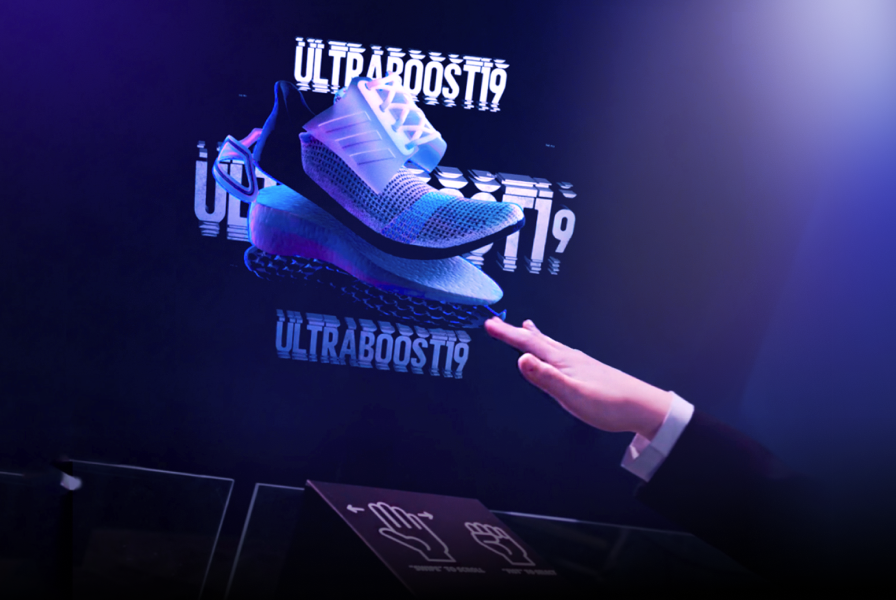
Can holographic displays be interactive?
Some holographic display systems can be integrated with sensors, cameras or other interactive technologies. The exact capabilities depend on the hardware, software and application.
The Future of Holographic Projection
Holographic technology continues to evolve as advances in displays, computer graphics, artificial intelligence, sensors and content creation make increasingly sophisticated visual experiences possible.
The future of holographic experiences is likely to involve more than simply making images appear three-dimensional.
could allow holographic experiences to become more responsive and personalised.
For businesses, this means holographic displays can increasingly be considered not only as advertising screens, but as platforms for communication, interaction and immersive experiences.
Conclusion: How Does Holographic Projection Work?
Holographic projection is not one single technology. Traditional holography uses the optical principles of interference and diffraction, while modern commercial holographic displays can use projection, reflection, transparent surfaces, rotating LEDs or other specialised display technologies to create three-dimensional visual effects.
HYPERVSN uses high-speed rotating LED-based display technology to create 3D content that appears to float in space. Its approach combines display hardware, software and specially prepared 3D content.
The most important factor when evaluating holographic technology is therefore not simply whether a product is called a “hologram.” Instead, consider how the image is generated, how it is viewed, what content it supports, where it will be installed and what experience you want to create.
As 3D content creation, AI and interactive technologies continue to develop, holographic displays offer businesses new ways to present products, communicate information and create memorable visual experiences.