OVERVIEW
Case Study Summary
Client: Swarovski Industry: Luxury Retail
Challenge: Capturing attention in high-footfall luxury retail environments and driving Gen Z engagement with a heritage brand at a commercially critical moment.
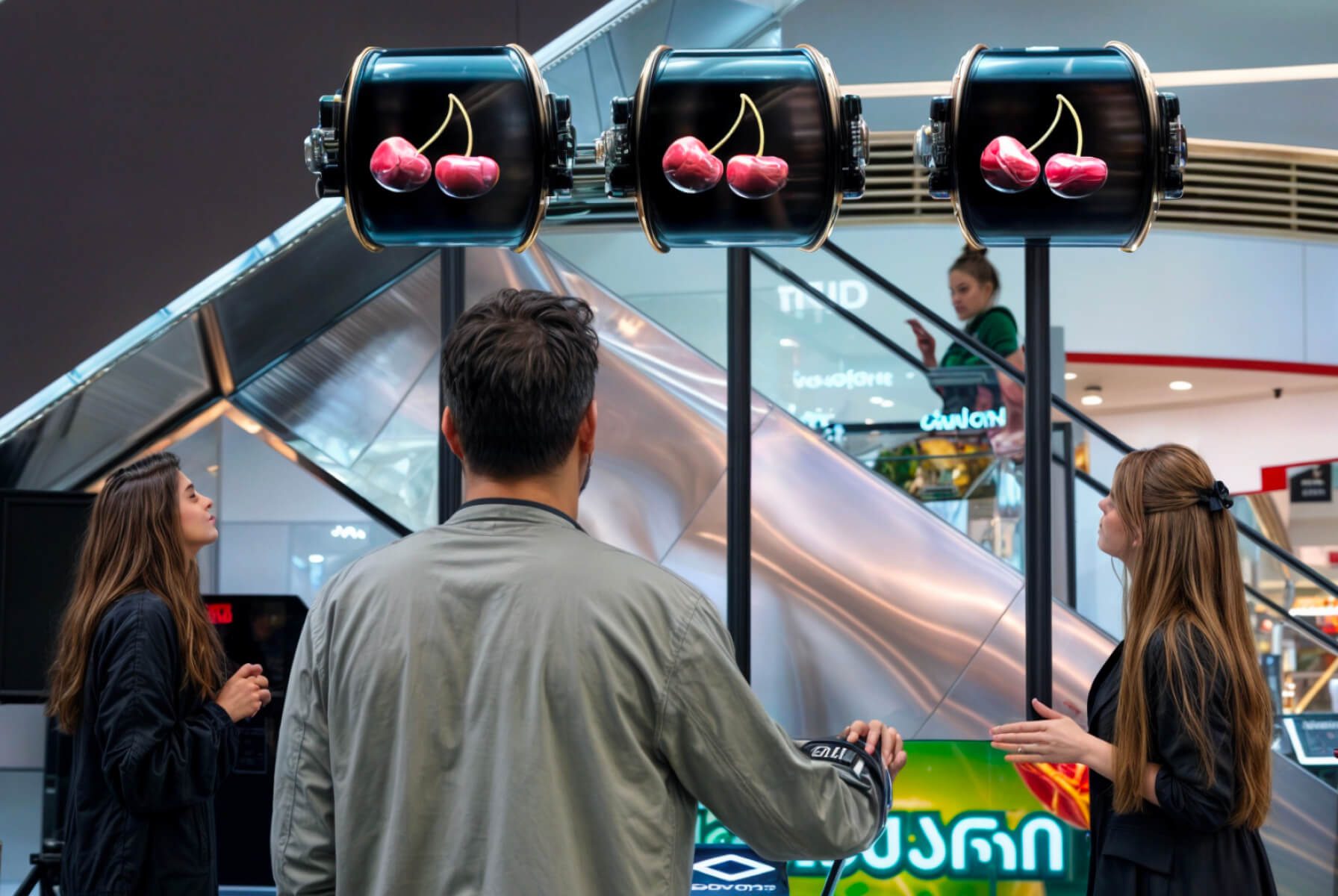
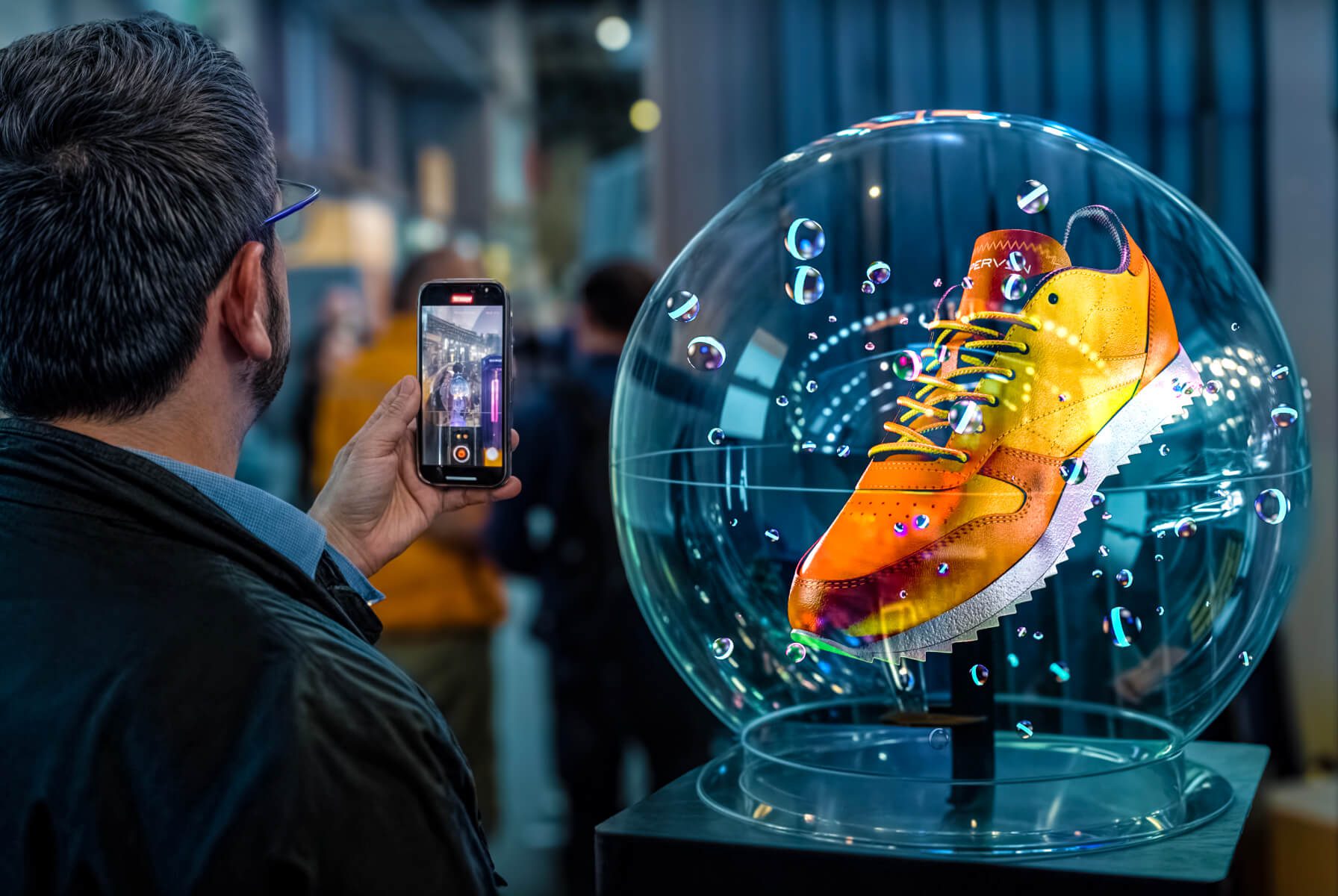
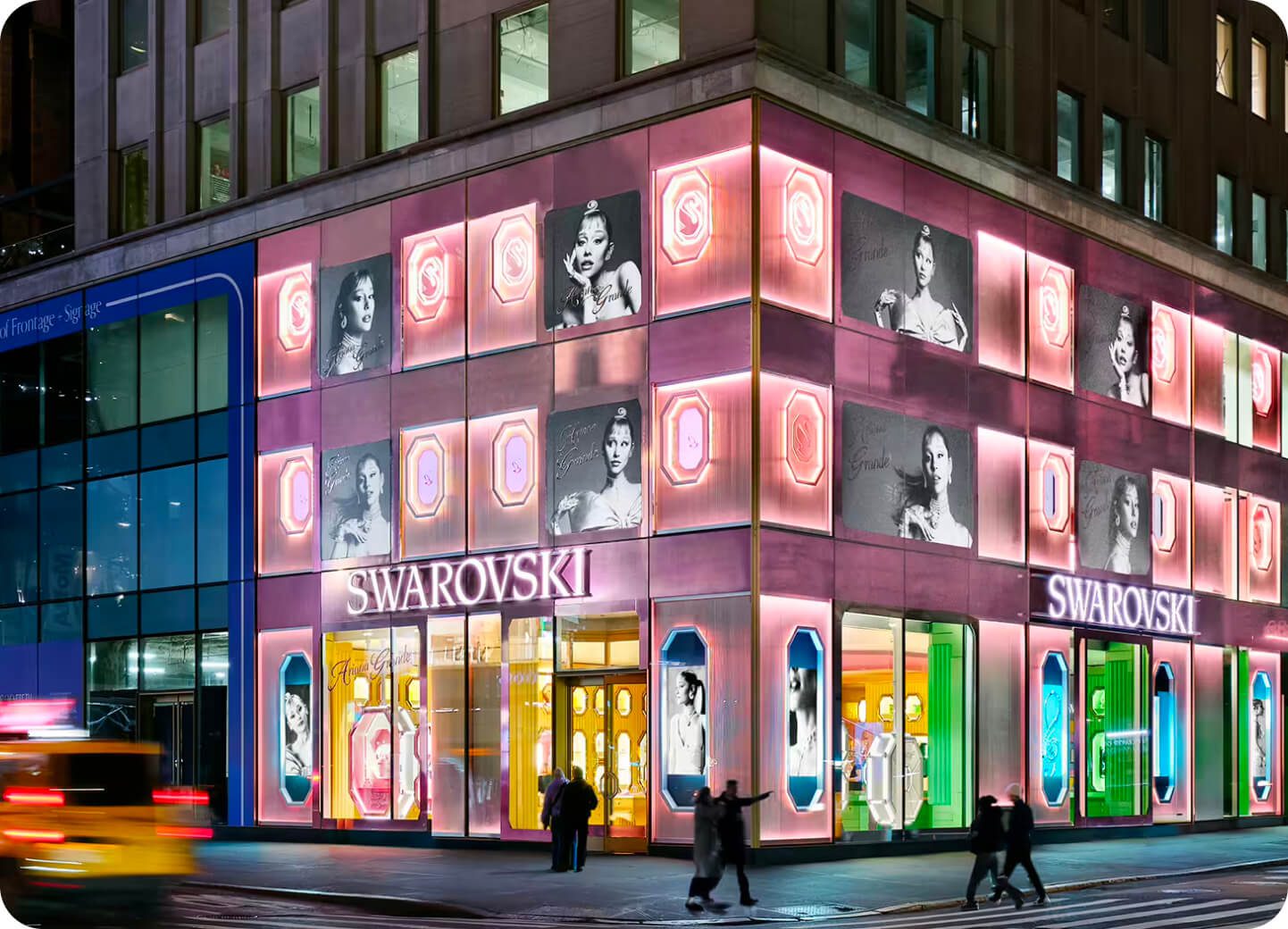
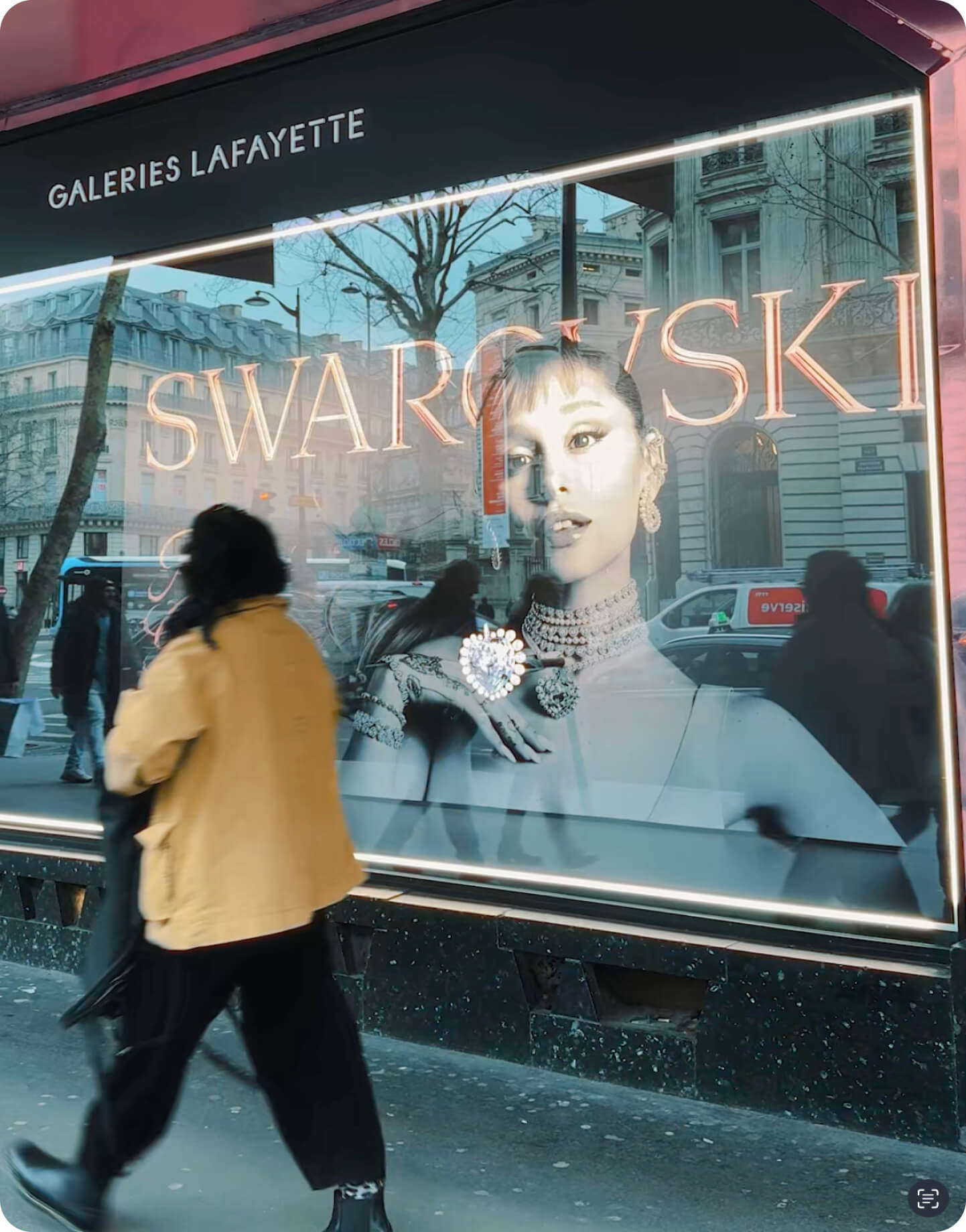
Solution: 3D holograms remain one of the most attention-commanding technologies available in physical retail environments. For Swarovski, partnering with HYPERVSN and Ariana Grande presented a rare opportunity to turn two of Europe’s most famous shop storefronts into immersive wonderlands.
Key Outcomes
A dynamic, novel way of translating a celebrity partnership and premium heritage positioning into an innovative store experience driving higher foot traffic.
A share-worthy campaign that generated over one million organic views across social media.
swarovski
About the Client
Country & Region
Founded in Austria in 1895 by Daniel Swarovski, Swarovski operates globally as a leader in luxury crystal jewellery, accessories and premium retail experiences. The brand maintains a strong presence across major shopping districts and luxury retail destinations worldwide, from Fifth Avenue in New York to the Champs-Élysées in Paris and premium shopping districts across Asia Pacific. Swarovski is part of the broader Swarovski Group, which includes Swarovski Optik and Tyrolit.
Sustainability
Swarovski has committed to reducing its environmental impact in the luxury retail sector. The Swarovski ReCreated™ line uses upcycled glass waste to create new crystal colours, reducing environmental footprints by 34% and demonstrating that innovation and sustainability go hand-in-hand in modern luxury retail. This commitment aligns with growing consumer expectations that luxury brands embrace responsible production and environmental stewardship.
Market Position & Scale
Swarovski crystals have adorned notable cultural moments, including Marilyn Monroe’s dress and Audrey Hepburn’s tiara. They are synonymous with precision and brilliance in the global luxury market. Swarovski crystals are made from a proprietary formula that includes quartz, minerals and lead, which are then precision-cut by computer-optimised machines, achieving diamond-like brilliance. Swarovski produces luxury crystal jewellery, accessories, home decor and lighting, and offers a variety of products, including watches, sunglasses and luxury tableware under its Crystal Business unit.
01. Challenge
Storefront Attention Deficit in a Changing Luxury Retail Industry
CHALLENGE
Navigating the Attention Economy
No matter where you are in the world, capturing customer attention in a busy shopping district has become increasingly difficult. Static window displays – even the most beautifully curated ones – compete with dense visual noise, digital signage, street-level distractions and the constant scroll of mobile devices.
For luxury brands like Swarovski, this challenge is particularly acute: the brand must communicate impeccable craftsmanship, heritage and modern appeal all within seconds to draw passersby into the store. A well-designed shop window stops shoppers in their tracks, communicating brand value and unique product positioning in seconds, and inspiring them to enter the store and explore further.
CHALLENGE
Digital Solutions for In-Person Engagement
Swarovski faced the reality that even elegant window displays featuring eye-catching crystals and aspirational imagery struggle to cut through the noise of contemporary retail environments. To truly capture attention, storefronts must transform from static marketing displays to dynamic, immersive activations that invite engagement and interaction. It isn’t enough to just feature products, which customers can easily purchase online. Retail storefronts must give shoppers a reason to enter their physical shopping space with the promise of something extraordinary. This is where retail innovation can help.
The global retail digital transformation market grew by 20.8%, from $235.92 billion in 2023 to $285.10 billion in 2024, driven by retailers’ urgent need to invest in attention-grabbing, technology-enabled solutions that deliver measurable competitive advantage. This growth is expected to continue, indicating a strong commitment to leveraging digital technologies. For a brand built on 130 years of visual brilliance, a digital upgrade represented an opportunity to connect with their customers – and attract new ones – with that same creative excellence expressed through a novel medium. The launch of Swarovski’s collection with global icon Ariana Grande – a firm favourite among younger, tech-savvy consumers – presented the ideal campaign to trial this approach.
Pain Point: Traditional shop storefront displays fail to differentiate in crowded retail environments, resulting in missed opportunities to attract foot traffic and communicate brand value to passing customers.
Crafting window displays that compete with visual clutter to attract attention.
Upgrading static creative to increase stopping power, dwell time and ultimately convert passersby into store visits.
02. Challenge
Prioritising Customer Experience While Embracing Innovation
CHALLENGE
Honouring Hertitage with a Modern Appeal
For a heritage luxury brand like Swarovski, the risk of adopting new technology is not just commercial – it is reputational. A solid brand image helps businesses differentiate themselves from competitors and establish trust with customers. Any innovation deployed in a Swarovski storefront had to earn its place: not as a gimmick, but as a format capable of doing justice to over a century of craftsmanship.
The challenge was finding a technology that could speak to two audiences simultaneously. On one side, the brand’s existing luxury customers, for whom premium perception and visual restraint are non-negotiable. On the other, Gen Z – a generation that, as research confirms, still prefers shopping in-store over online, but demands unique experiential activations when they visit. A static window display was never going to bridge that gap.
CHALLENGE
Technology That Portrays Authenticity
Swarovski’s partnership with Ariana Grande had already established powerful cultural proximity with younger audiences. But, in a digital-first world, cultural awareness alone does not convert to in-person engagement. The brand needed a medium that could translate the excitement of that partnership into a physical experience that felt contemporary and buzzworthy without compromising the premium, considered aesthetic that defines Swarovski’s store design.
Retail innovation enhances customer experience through technologies like augmented reality and AI-driven personalisation but for luxury brands, there is a fine line between innovative tech and novelty gimmick. The technology had to be precise enough to render Swarovski’s jewellery with the brilliance it deserves, restrained enough to feel at home in flagship shop windows, and compelling enough to stop a Gen Z shopper in their tracks and give them a reason to walk through the door.
Pain Point: New retail technologies can feel disconnected from brand heritage and premium positioning if not carefully executed, risking damage to the brand’s luxury perception and customer trust. Swarovski needed a technology that genuinely elevated their retail shops into innovative store environments.
Finding a format that upheld Swarovski’s premium heritage positioning while resonating with a digitally native audience.
Deploying innovation that felt intentional and brand-consistent, not experimental or gimmicky.
The Solution Forward-Thinking Retail Store Design
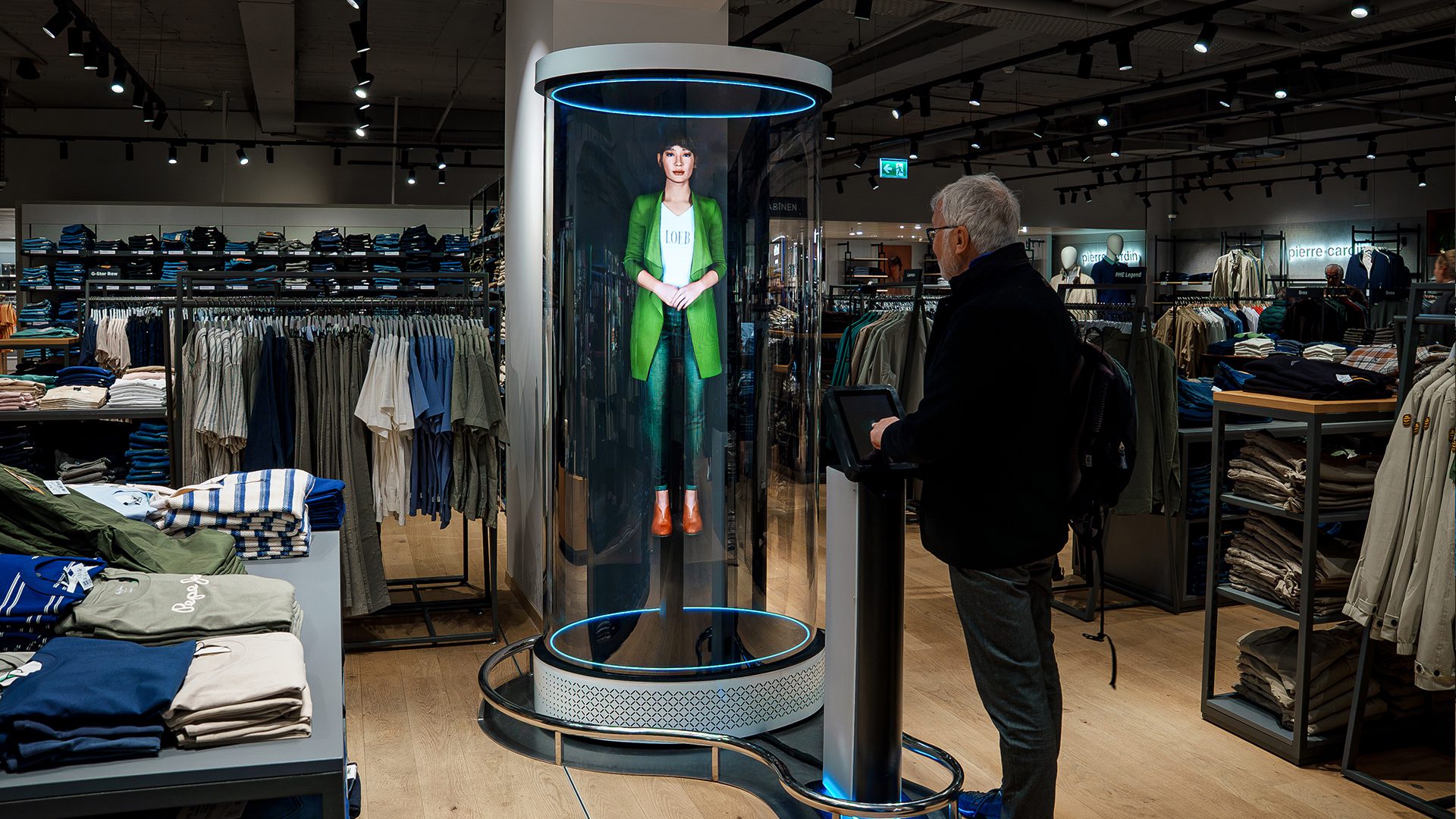
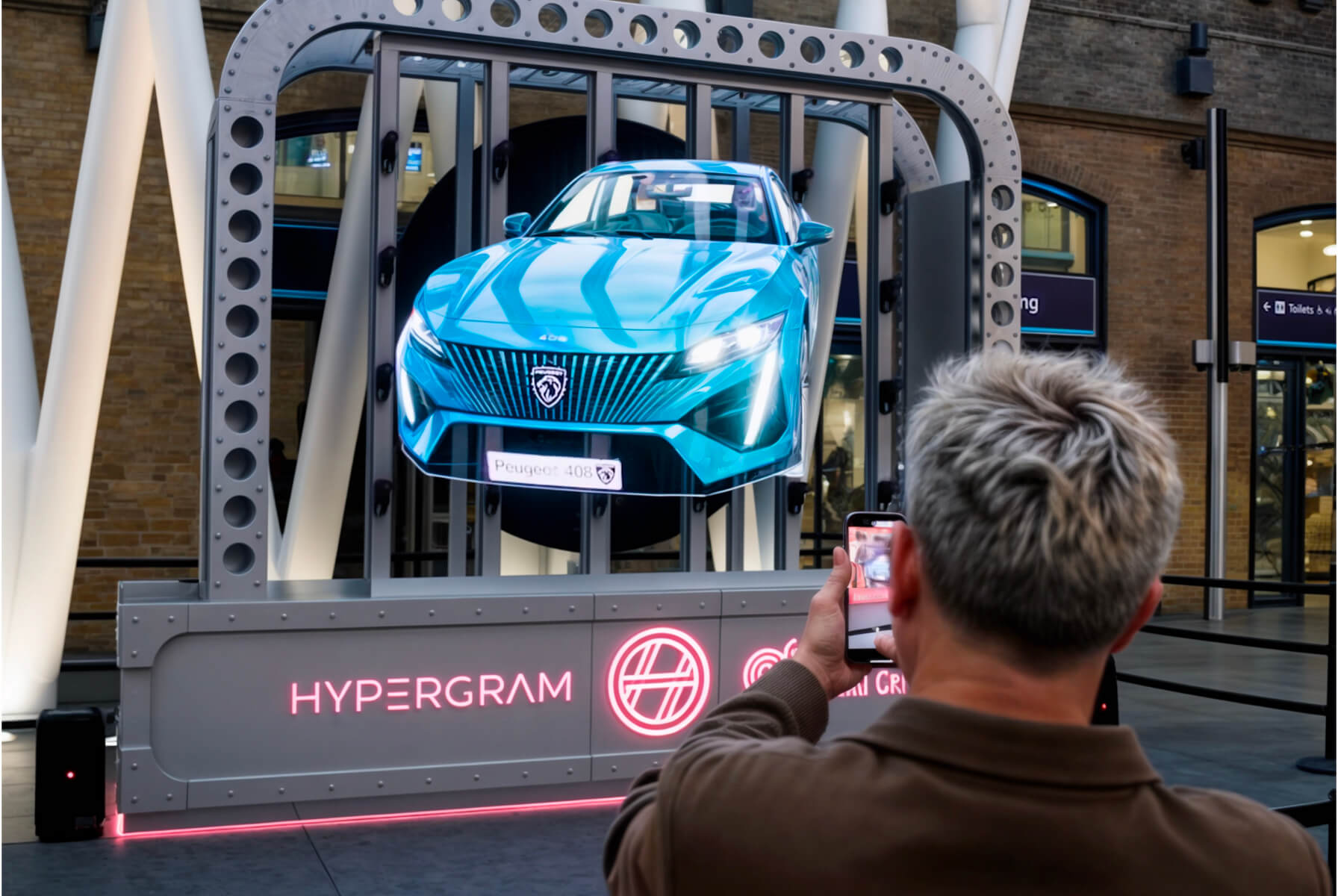
Visual merchandising techniques, such as window displays and product placement, are used to showcase products and entice customers. HYPERVSN’s 3D technology presented a way for Swarovski to do this at a level that would stop foot traffic across two of Europe’s most competitive luxury retail environments.
Research from the University of Bath found that product-focused holograms can drive sales uplifts of up to 62% compared to traditional displays. For a brand built on visual brilliance, no other solution could compete with crisp, pixel-perfect 3D crystals floating in mid-air.
Why HYPERVSN?
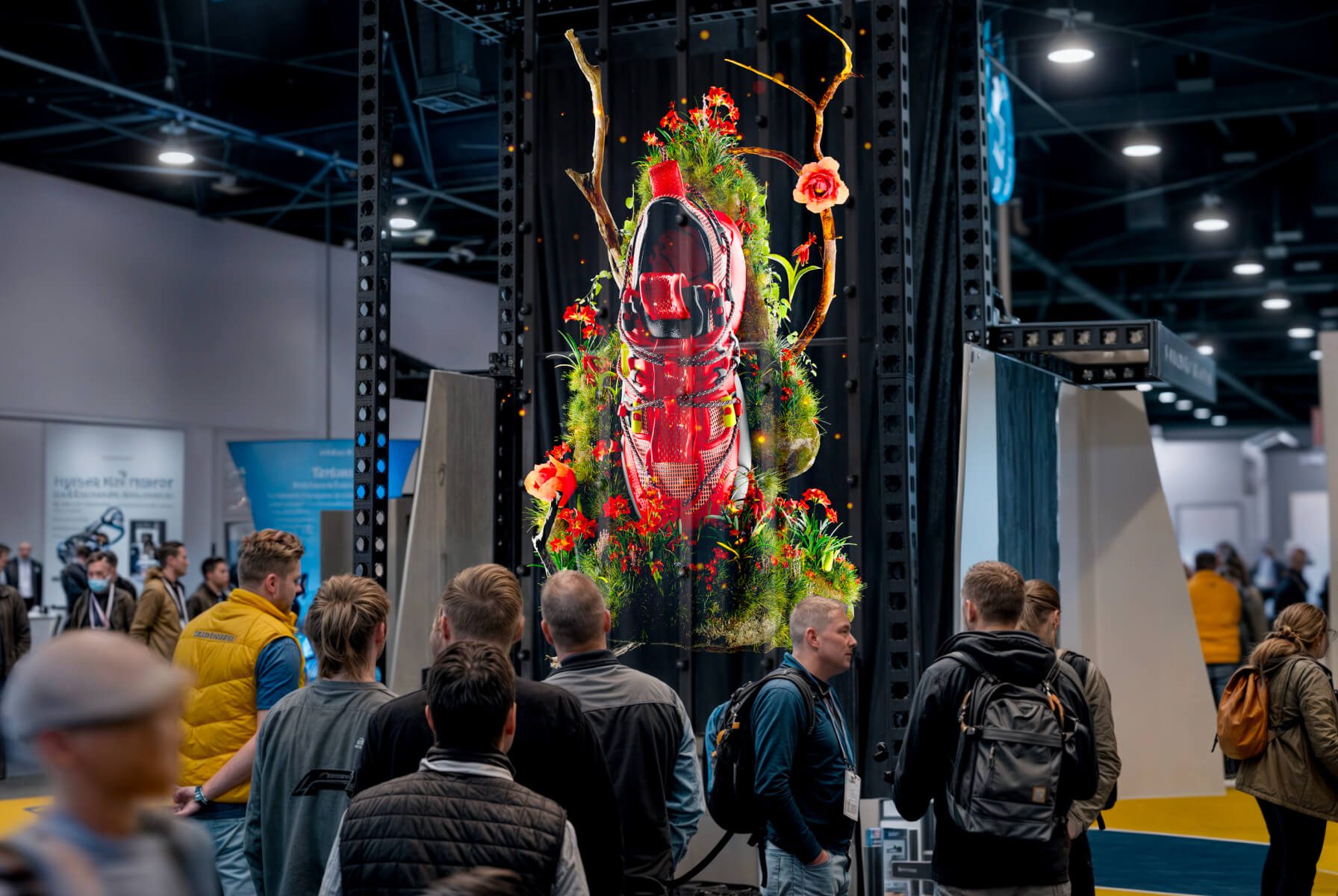
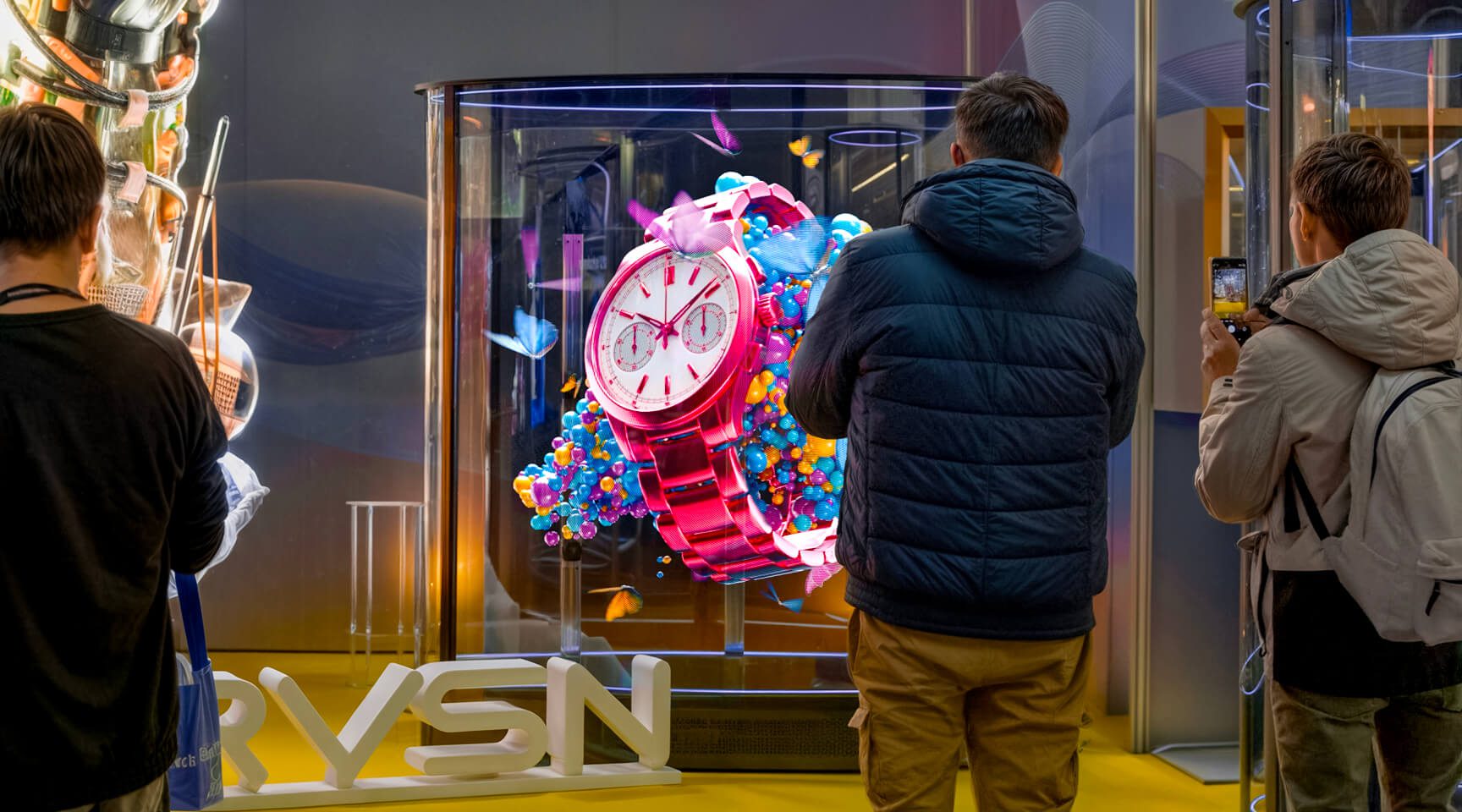
HYPERVSN’s ability to render objects with exceptional visual clarity made it uniquely suited to showcasing the intricacy and brilliance of Swarovski’s crystal pieces – qualities that traditional displays simply cannot replicate.
Hardware Configuration
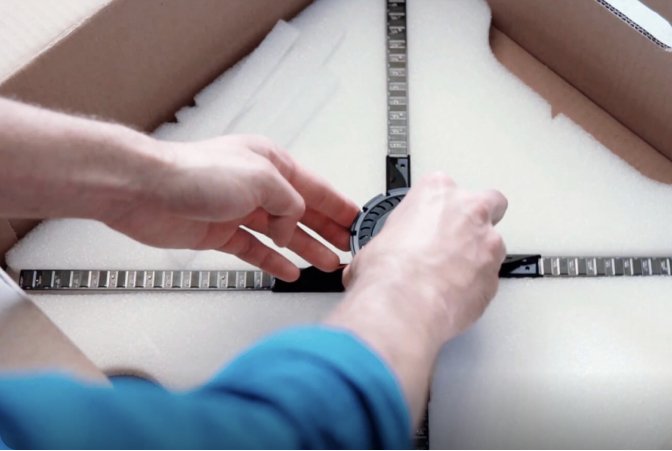
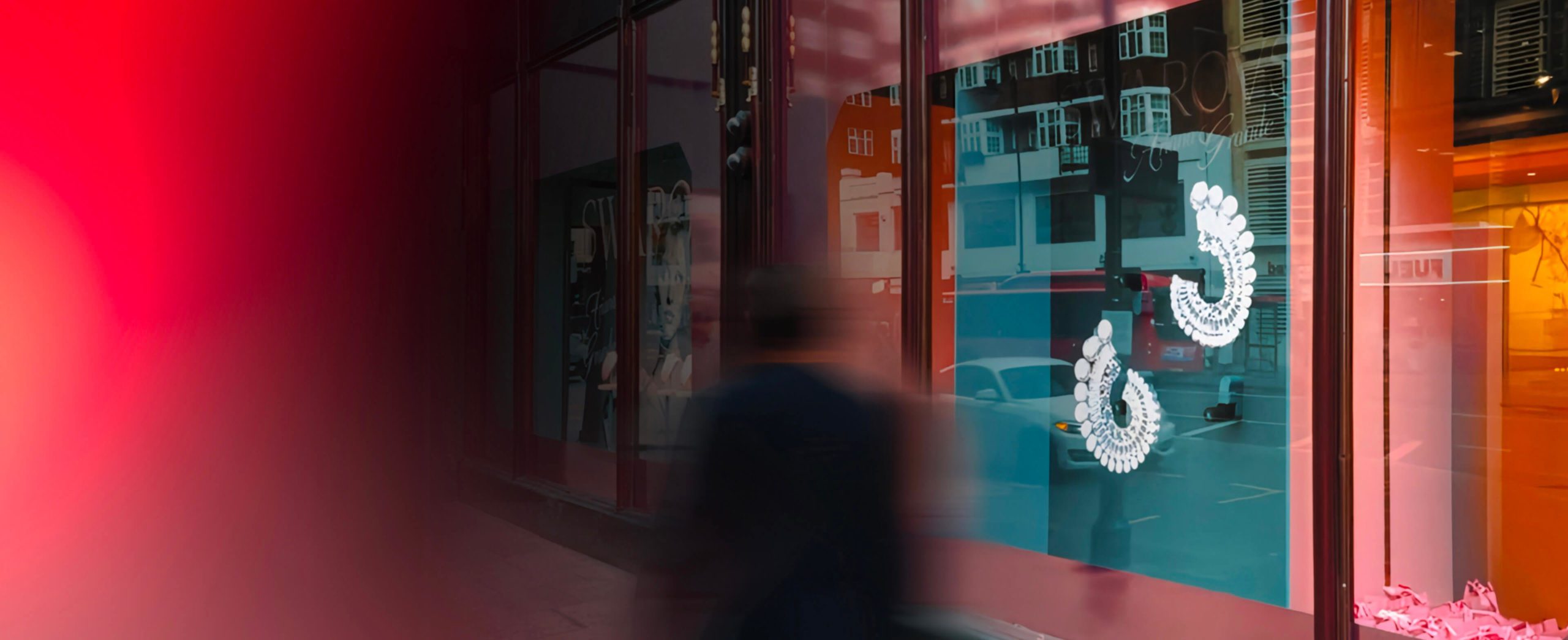
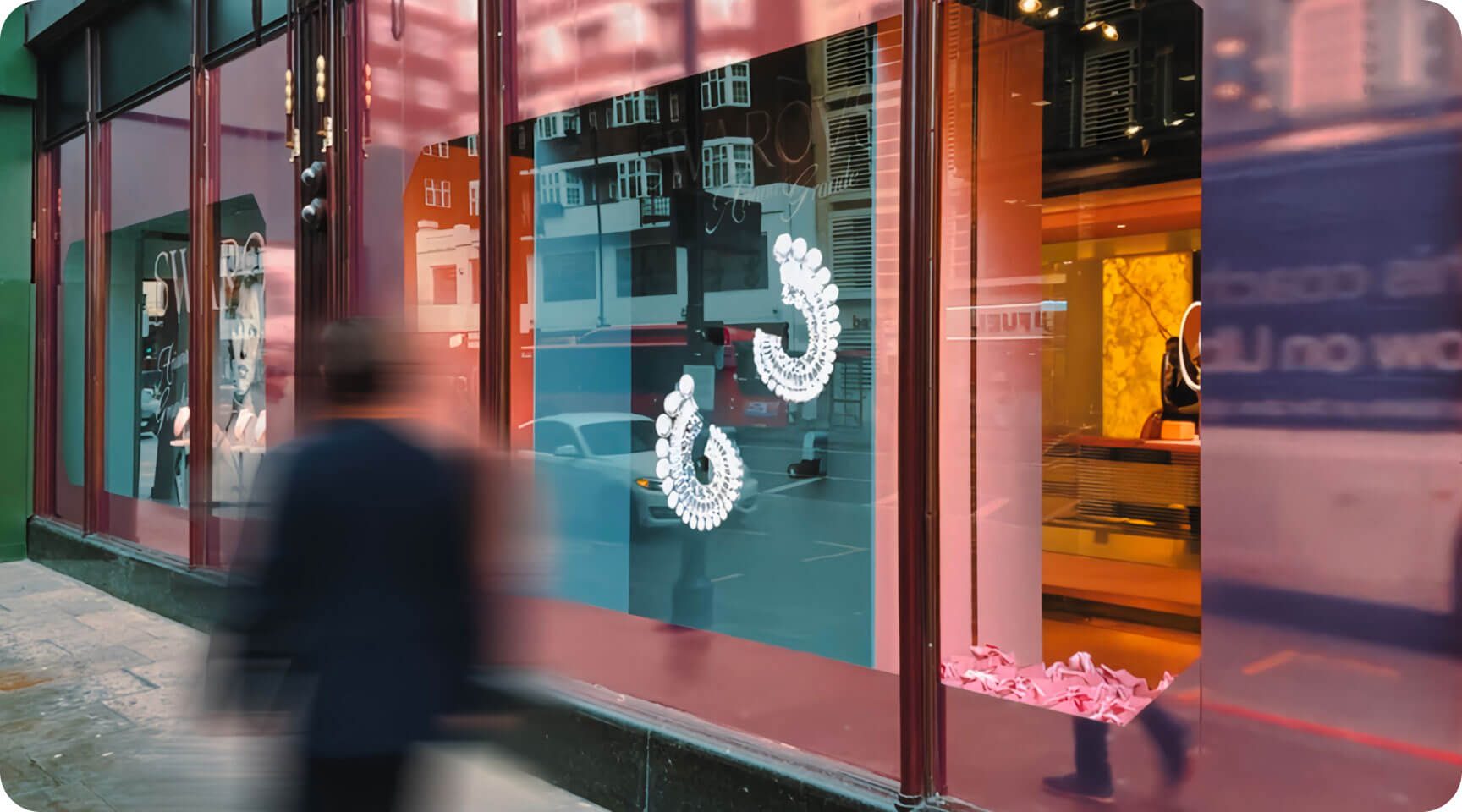
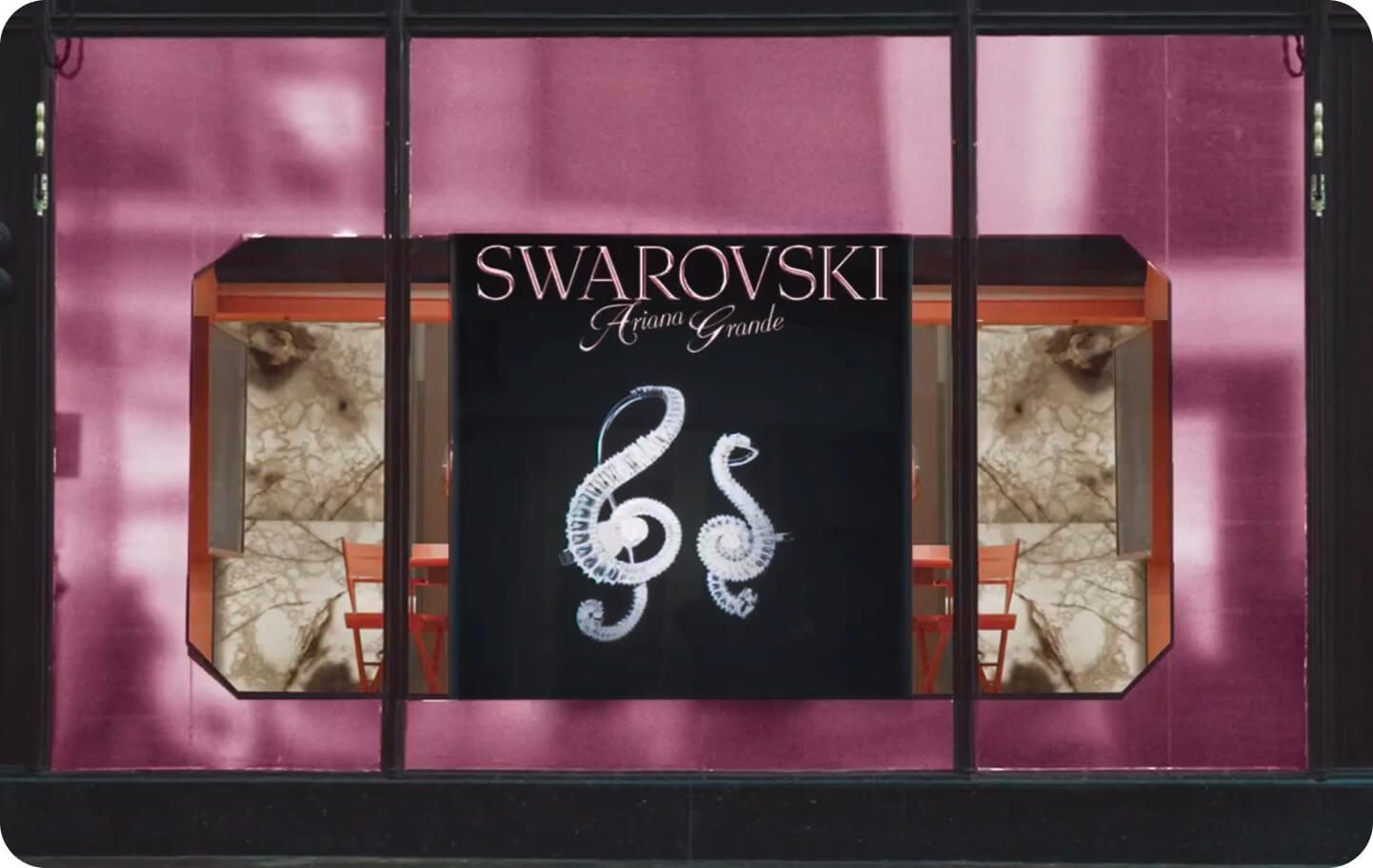
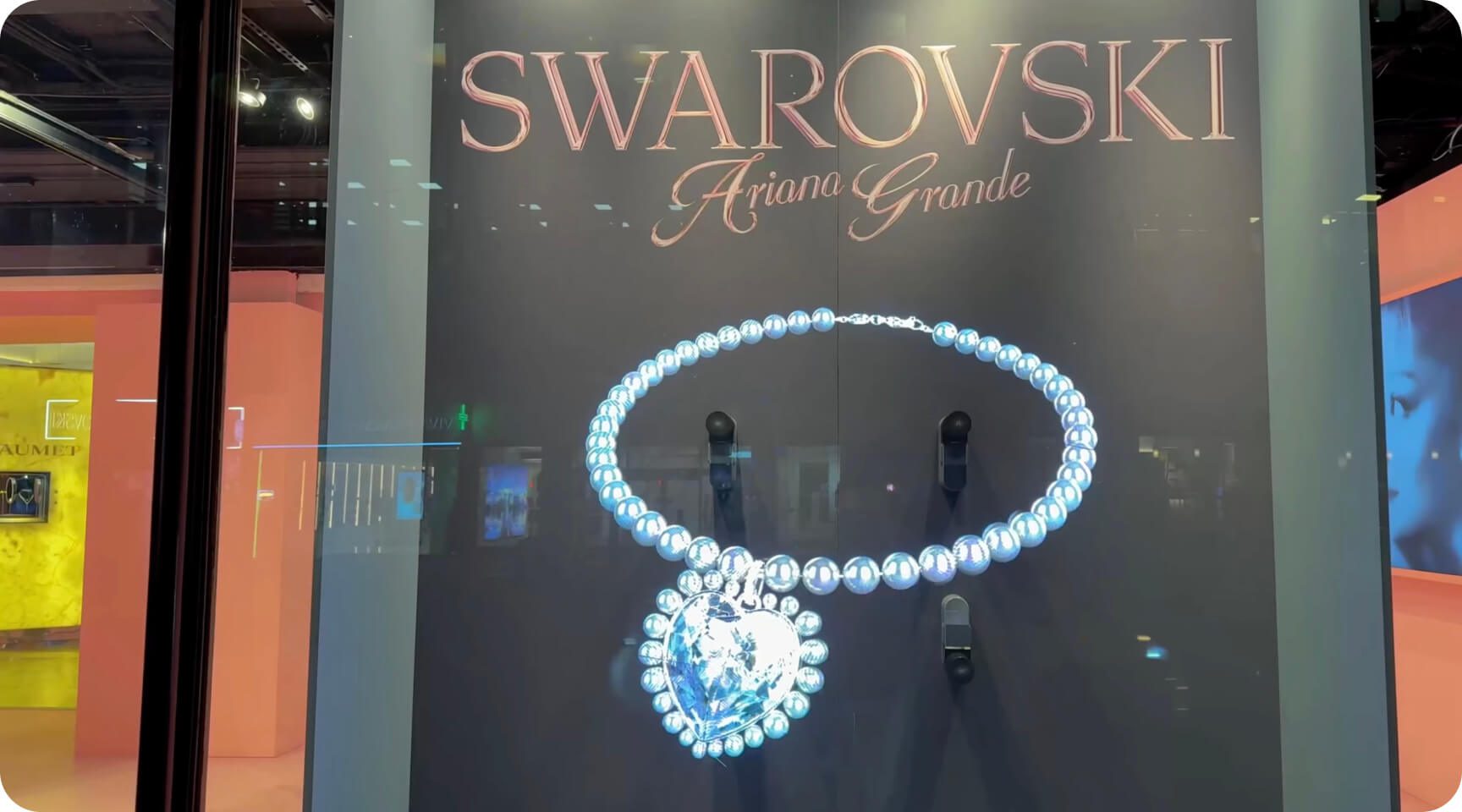
Eight HYPERVSN SmartV Walls were deployed across the two locations, strategically positioned to enhance the storefront windows while interacting with static 2D visuals to create a layered effect.
Content Format
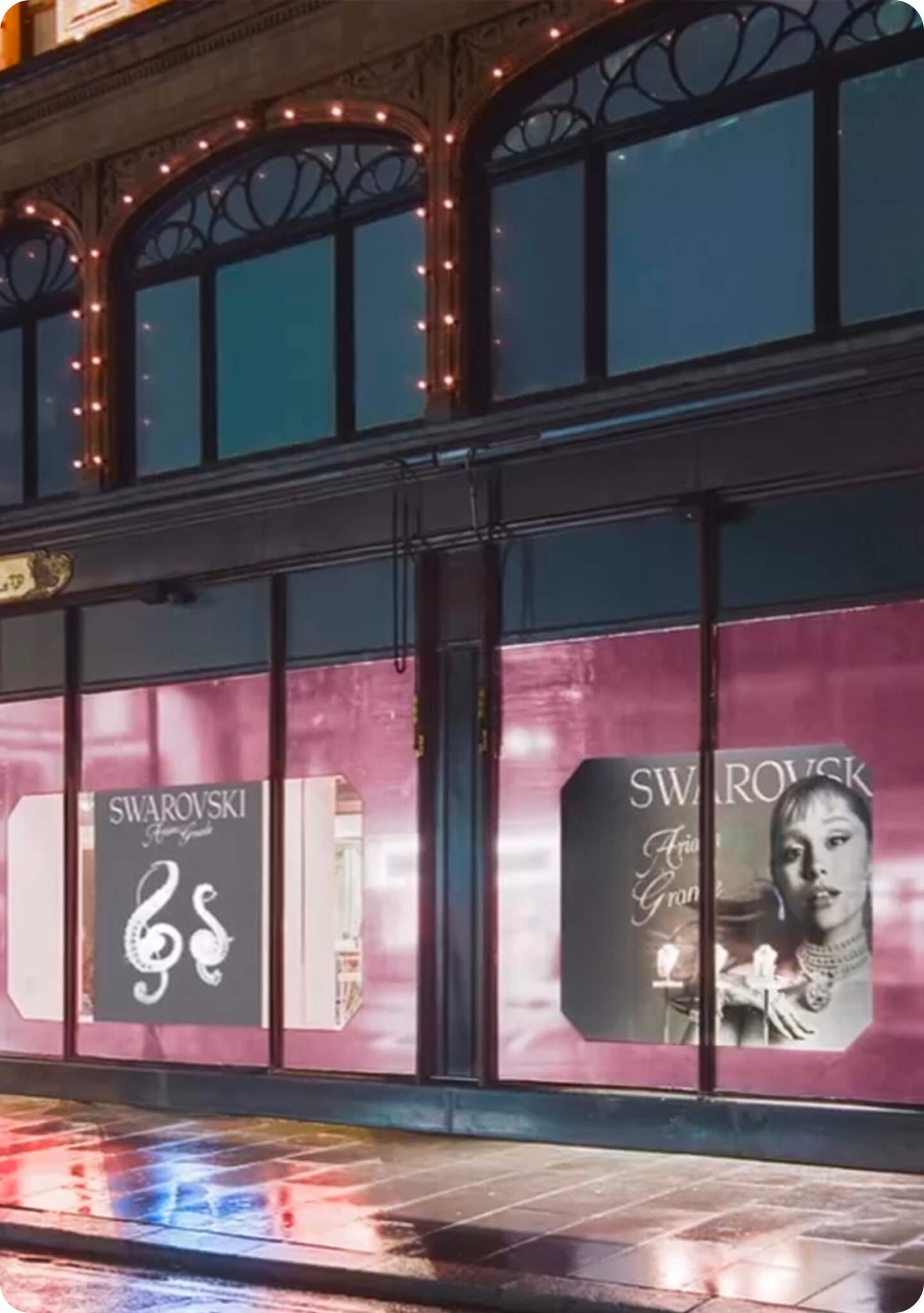
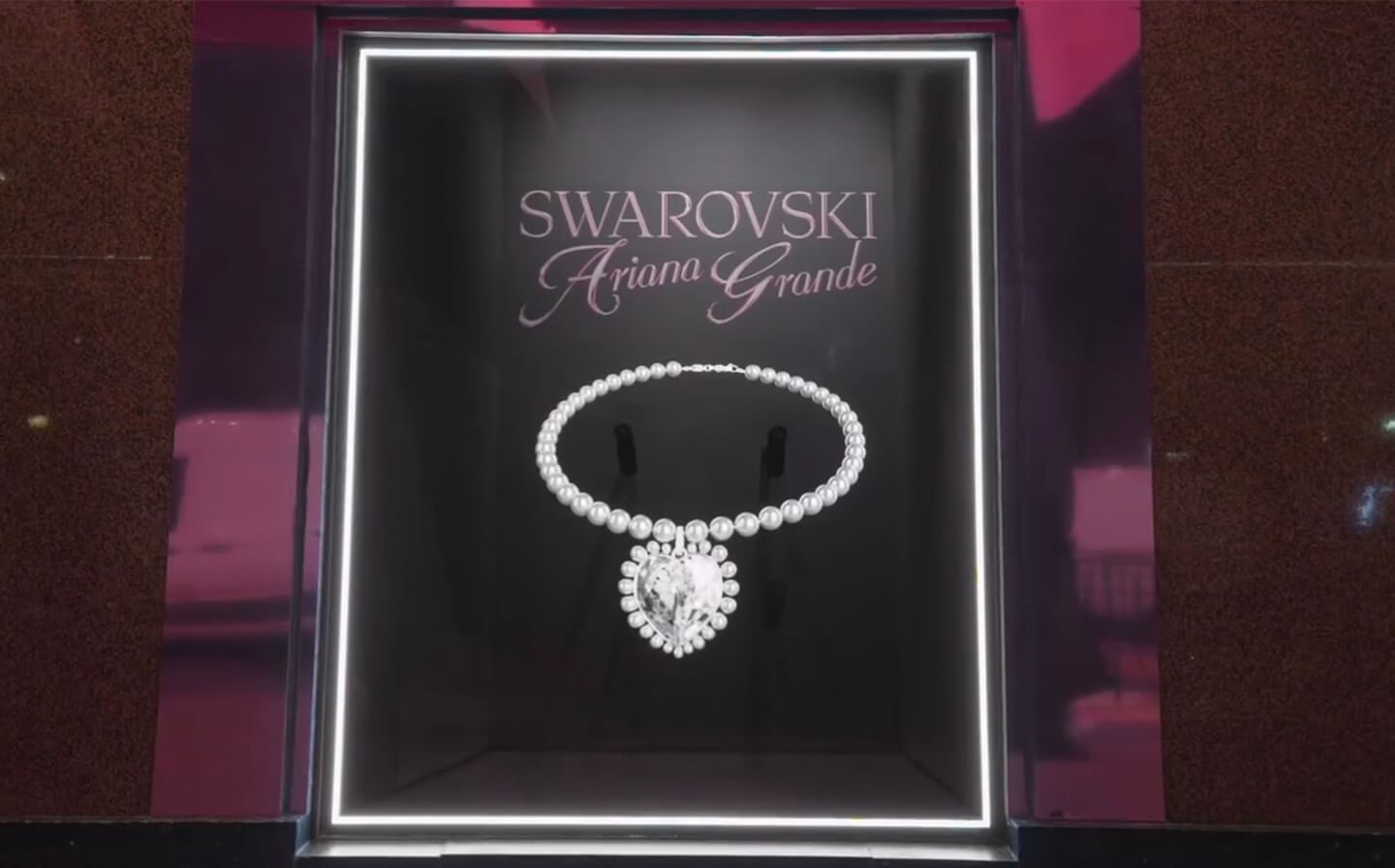
3D holographic product storytelling showcasing Swarovski jewellery in motion, including a signature ‘phygital’ sequence aligning a holographic heart pendant with campaign imagery of Ariana Grande wearing the same piece.
Placement Strategy
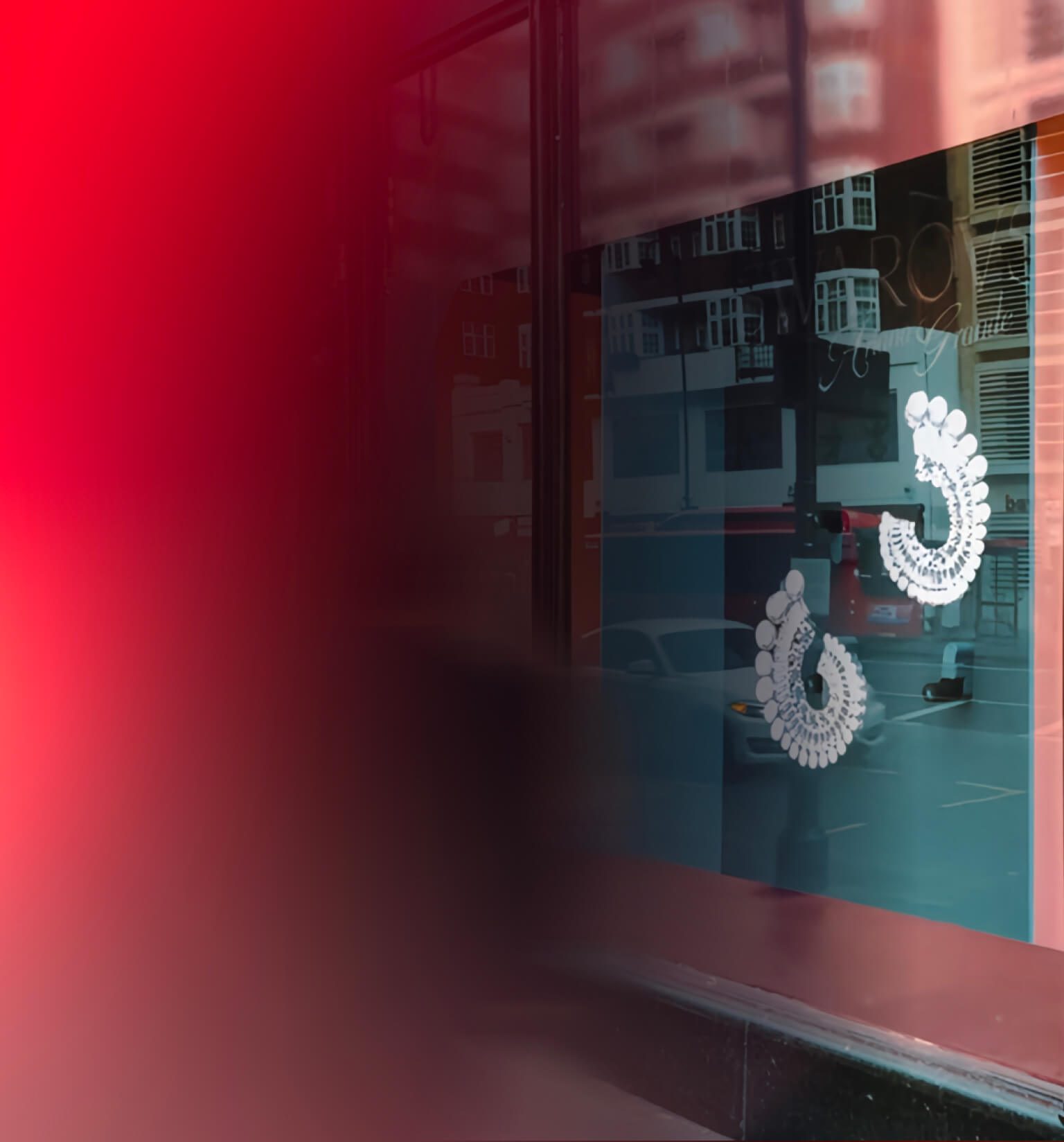
Shop windows at Harrods in London and Galeries Lafayette in Paris. Positioned within multiple shop windows, the holograms maximised visibility to passing foot traffic and created an immediate impression of an innovative store and premium brand positioning.
Traditional 2D Signage |
HYPERVSN 3D Holograms |
|---|---|
Engagement |
|
| Low, blends into background | High, stands out and elicits emotion |
Storytelling |
|
| Limited, static or 2D animations | Vivid, highly detailed 3D visuals |
Phygital Effect |
|
| Feels separate from or imposed on physical store | Augments and interacts with physical retail environment |
Shareability |
|
| Low | Highly Instagrammable |
How It Works
Retail Innovation Implementation
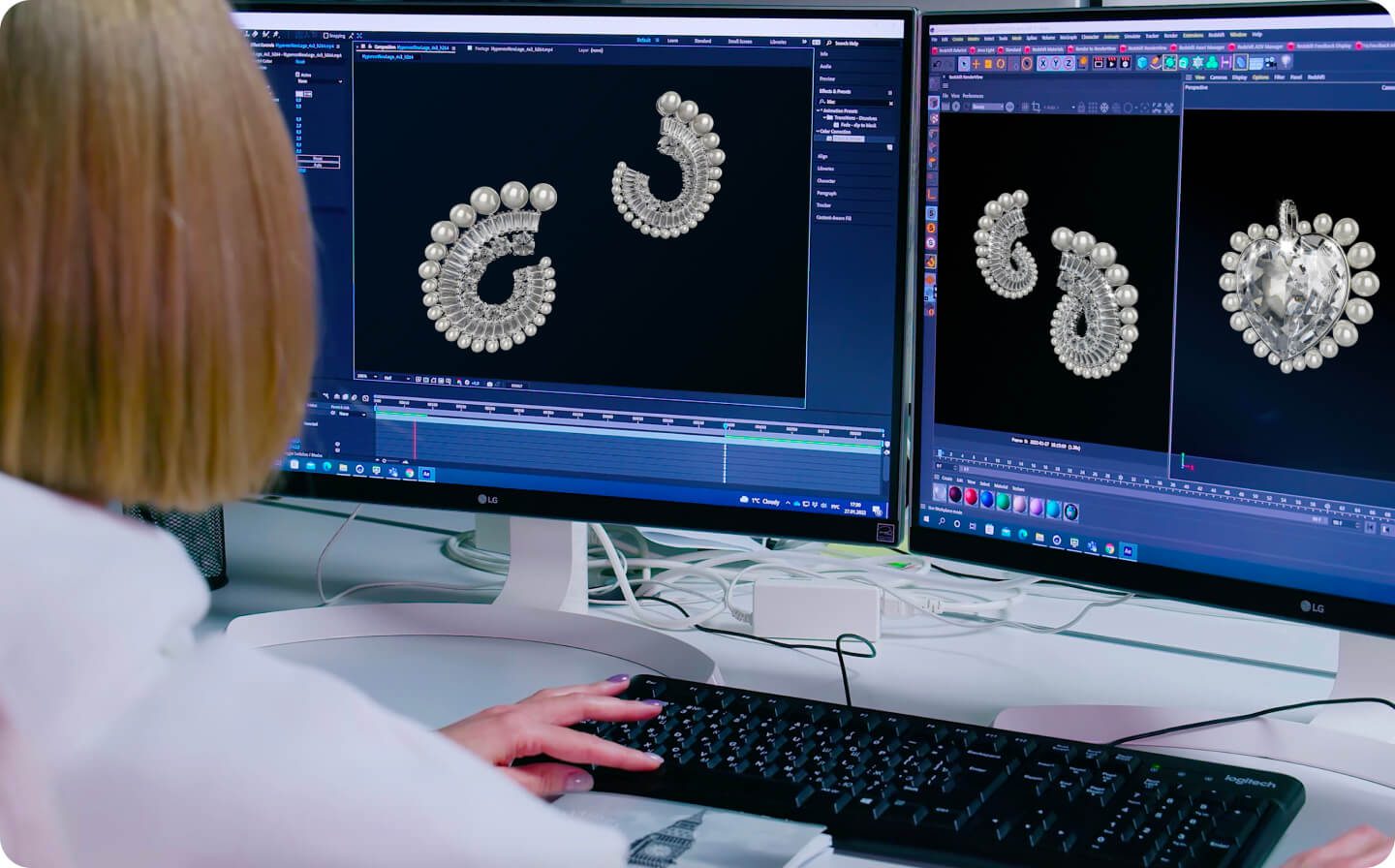
01. Content & Creative Production
HYPERVSN’s in-house design team transformed Swarovski’s jewellery into vivid, dynamic holographic visuals, rendering each crystal piece with the precision and brilliance that defines the brand. The standout creative sequence featured a holographic heart pendant positioned with exact spatial alignment in front of a large-format image of Ariana Grande wearing the same piece. At the correct viewing angle, the two merged seamlessly, creating a genuinely phygital moment that rewarded attentive viewers and generated extraordinary shareability.
02. Installation & Setup
The holograms were professionally installed at the shop storefront, with careful attention to sightlines. Their placement – within the shop windows – ensured safety for customers and protection for the equipment without the need for additional accessories. HYPERVSN’s comprehensive set-up support ensured seamless integration with the existing physical retail space, protecting both the premium aesthetic of the storefront and the technology itself.
03. Playback, Control & Updates
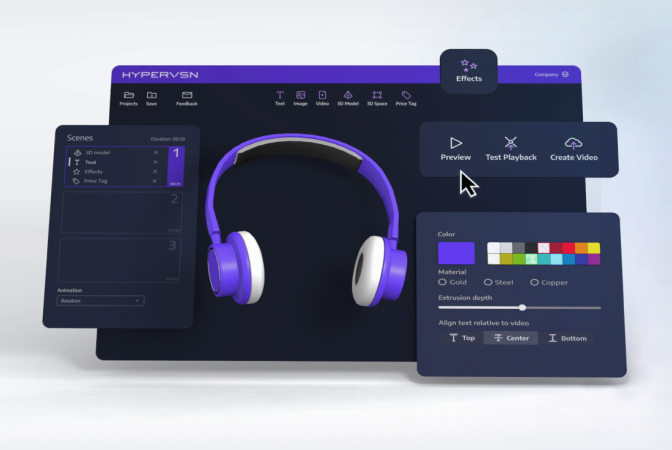
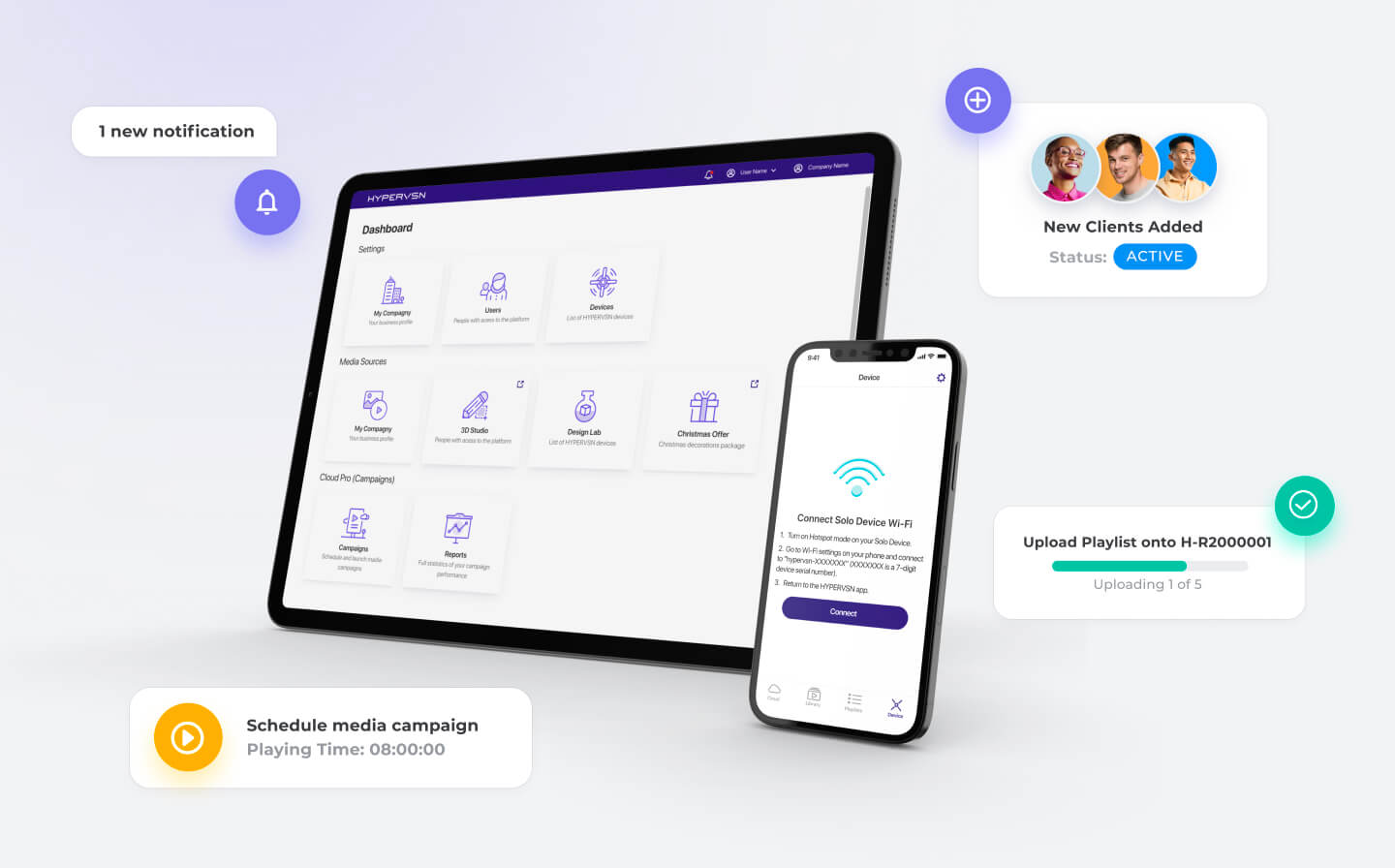
Content playback was managed remotely via the HYPERVSN CMS and mobile app, allowing Swarovski’s retail teams to schedule content updates and respond to real-time business needs without requiring on-site maintenance visits. This cloud-based control system gave the brand unprecedented flexibility and agility. This capability also eliminates the need for printed promotional materials and supporting collateral, reducing waste and environmental impact while improving operational efficiency.

Impact in Innovation
Retail Experiences That Drive Growth
Competitive Advantage
Only 6% of consumers have encountered a 3D hologram. By deploying the technology across two of Europe’s most visited luxury retail destinations, Swarovski established clear brand differentiation.
Brand Perception
The campaign reinforced Swarovski’s positioning as an innovative luxury brand willing to invest in cutting-edge technology, signalling to Gen Z a different approach from traditional luxury competitors.

Organic Social Reach:
The installations created genuinely share-worthy moments, amplifying campaign reach well beyond the physical locations through earned social media coverage.

Increased Dwell Time
Motion and depth in the holographic content maximised the probability of stopping passing consumers and sustaining engagement long enough to draw them inside. High dwell time in a retail store increases the likelihood of impulse purchases.
Enhanced Product Value
Visualising Swarovski crystals in crisp, pixel-perfect 3D created a premium presentation that no static display or 2D campaign could replicate, elevating perceived product quality before the customer even entered the store.
Emotional Connection
HYPERVSN data shows that 3D holographic content increases emotional response by up to 88% compared to 2D, creating a critical advantage for a brand whose purchase decisions are driven as much by feeling as by logic.
RESULTS AT A GLANCE
How Retail Marketing Impacts Customer Behaviour
The most immediate evidence of the campaign’s impact came through organic social amplification across Swarovski’s owned channels. Posts specifically featuring the holographic window installations across Instagram, Facebook and TikTok generated a combined total that, for a shop window display, was extraordinary.
Over 1 million combined views across owned channels
Approximately 50,000 likes and reactions
Over 1,000 shares and 500 saves
300 comments across platforms
The campaign was timed to coincide with Swarovski’s Valentine’s Day 2025 capsule collection launch, one of the most commercially critical moments in the retail calendar. Harrods on Brompton Road and Galeries Lafayette on Boulevard Haussmann represent two of the highest-footfall luxury retail destinations in the world during the pre-Valentine’s period, ensuring the installations reached consumers at precisely the moment of peak purchase intent.
This elevated the holographic displays from just visual storytelling to a functional point-of-sale acquisition channel. UK General Manager Craig Ash described the commercial result plainly: “the quickest rates of sale on this product that I can remember.”
Integration & Compatibility
Technology Used
This Swarovski retail innovation campaign used eight HYPERVSN SmartV Walls deployed across two locations: Harrods, London and Galeries Lafayette, Paris.
Safety and compliance notes: Proper installation is required to avoid malfunctions or hazards. To prevent consumers from touching the holographic devices, an appropriate distance and/or protective accessories are recommended. HYPERVSN provides set-up support and a range of stylish, practical accessories.
4K resolution with brightness of up to 3,000 nits
Patented technology
Cloud-based CMS for ultimate control
70% less energy consumption than traditional 2D LED screens
YOUR HOW-TO GUIDE
Replicate Swarovski’s Storefront Innovation
Retail marketing includes all the tactics used to present products or services to customers and persuade them to buy. Here is a practical, step-by-step guide to deploying 3D holograms as part of your retail marketing strategy.
Need Clarification?
Frequently Asked Questions
Start Your Project with HYPERVSN
Get in touch to discuss how 3D holography could transform your passenger experience and boost customer satisfaction.
HYPERVSN 3D Catalog
USD 1,200
Qty
HYPERVSN 3D Catalog
USD 1,200
Qty
HYPERVSN 3D Catalog
USD 1,200
Qty
Cart Subtotal:
USD 3,600Request a Callback
☎️

Start with clarity on what the installation needs to achieve. Is it attention capture for a seasonal campaign? A permanent brand storytelling fixture? A product hero moment tied to a specific launch? Understanding your customers is crucial for effective retail marketing. The most effective storefront holograms are built around a precise understanding of who is walking past, what stops them and what would compel them to walk in. Retail marketing strategies aim to attract new customers, retain existing customers, and increase sales – and your storefront hologram should be in service of one or more of these objectives from day one.