PUMA Uses 3D Holograms for Store Opening 

Explore how PUMA leveraged cutting-edge retail technology to impress customers and outshine competitors at their retail launch.

OVERVIEW

Case Study Summary

Client: PUMA Industry:  Fashion and Retail 
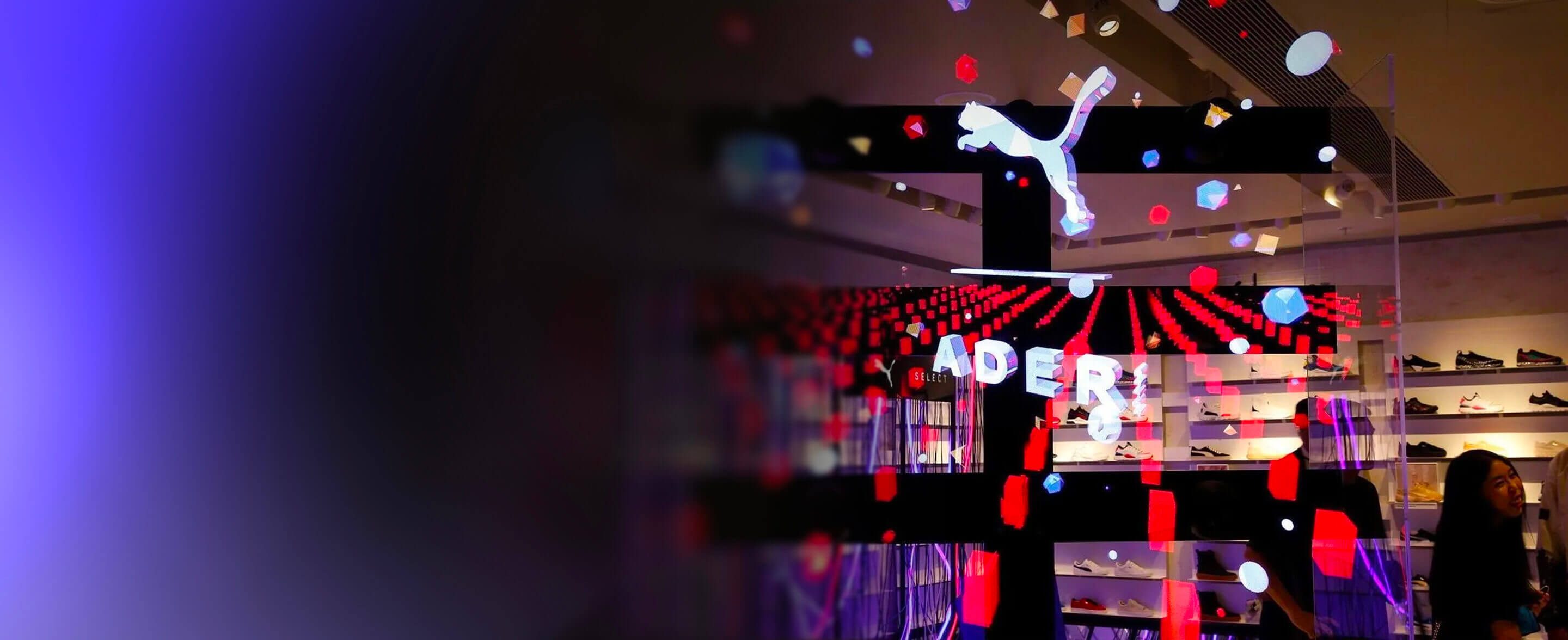
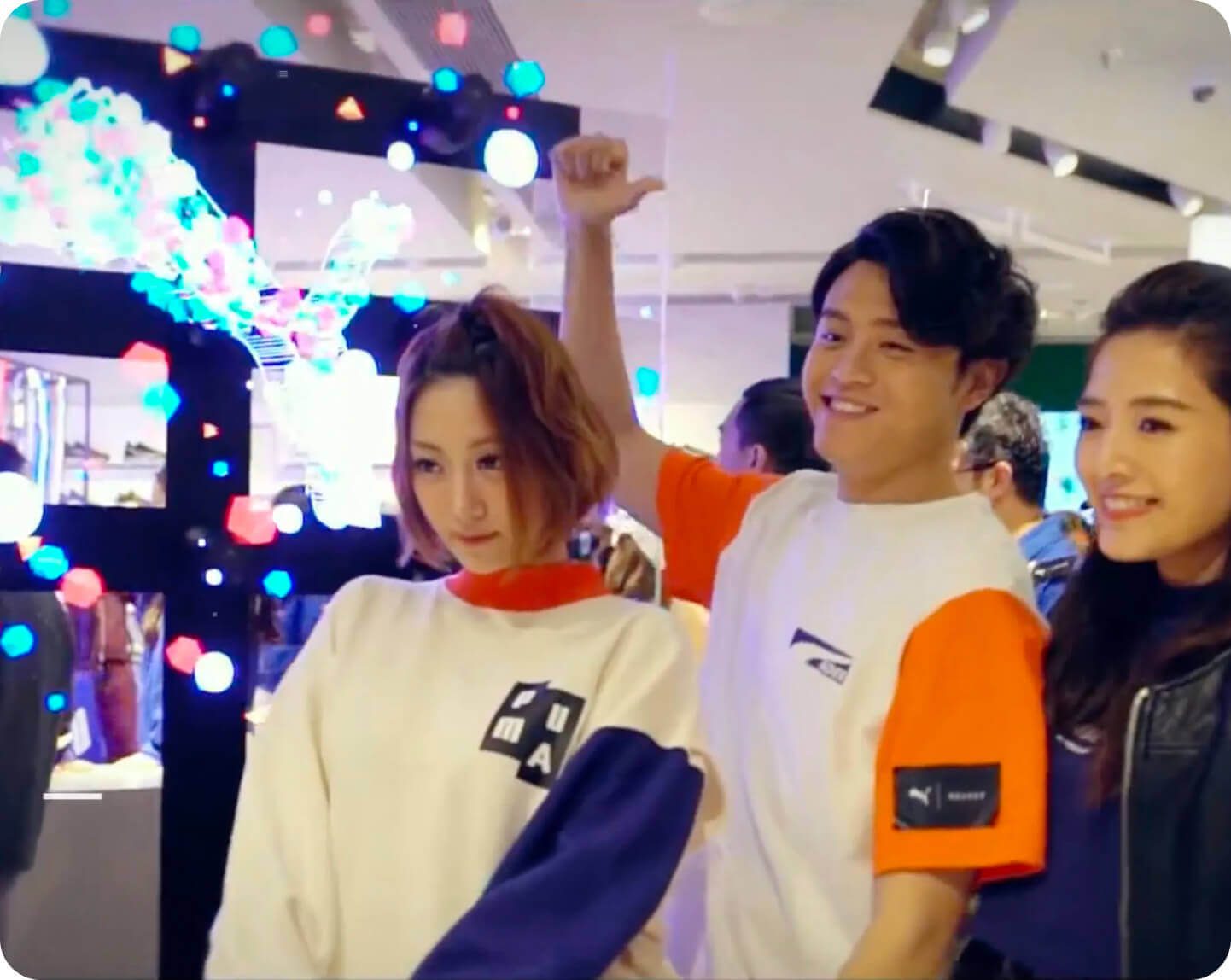
Challenge: Effectively utilising innovative technology in retail to stand out in a saturated market. Solution: Augmented reality is increasingly solidifying its place in retail with growing consumer demand. However, 3D holograms are still novel enough to grab attention and create a memorable immersive experience. PUMA chose this technology for their store launch in Hong Kong.

Key Outcomes


A dynamic, immersive experience driven by digital transformation. 

A memorable store launch with a competitive edge. 

PUMA

About the Client

Country & Region

PUMA is a German sportswear giant founded in 1948 by Rudolf Dassler after splitting from his brother Adolf, who started Adidas. With a presence in over 120 countries, the brand is a global powerhouse in both the fashion and retail sectors. 

Brand Identity

PUMA’s identity is defined by its slogan ‘Forever Faster’, reflecting its commitment to blending high-performance athletic gear with contemporary lifestyle fashion. Embedded within the sporting community, PUMA is a major supplier of national and club soccer team kits. 

Market Position & Scale

PUMA blends style and function well for everyday wear, aiming to compete with Nike and Adidas in both performance and lifestyle segments. As of 2024, PUMA’s revenue is primarily driven by three segments: Footwear (53.7%), Apparel (31.9%), and Accessories (14.4%). 

01. Challenge

Enhancing Customer Experience Through Digital Transformation 

Puma Store CHALLENGE

Evolving Customer Demands

In the modern retail industry, the bar for success has been raised by rapid digital transformation, introducing game changing retail technology onto the market. Retail technology includes every system, tool and technical practice that advances shopping experiences and strengthens market competitiveness. Brands that fail to invest in these technologies will be left behind. The global retail digital transformation market grew by 20.8% from $235.92 billion in 2023 to $285.10 billion in 2024. This increase in investment from retailers correlates with greater expectations from consumers. Studies show that consumer expectations are considerably higher than they were just a few years ago. As a result, retailers face increasing pressure to adapt to changing consumer expectations for speed and convenience. 71% of consumers expect the businesses they purchase from to get to know their individual interests. In addition, customers expect seamless transitions between online and offline channels, making omnichannel integration a priority for retail innovation.

Puma Customers
Puma Store CHALLENGE

Brand Aligned Retail Technology

For PUMA, this means that their in-store experience must be efficient, engaging and aligned across every retail space worldwide. When planning this store launch, PUMA faced the challenge of ensuring that their physical stores didn’t feel like a step backward from their slick, data-driven online presence. Their chosen retail solutions had to do more than just create a smooth purchase experience – they had to create an augmented reality, inviting shoppers into the world of PUMA in a visceral, unforgettable way.
Pain Point: Traditional, static retail designs often fail to deliver the high-energy “wow” factor that the PUMA demands. Therefore, digital transformation needed to go beyond efficiency to influence retail marketing and visual identity.

Implementing innovative retail technology that captures the speed and motion of the PUMA brand.

Positioning PUMA as a leader in retail innovation.

Puma buyers

02. Challenge

Achieving Competitive Differentiation in the Saturated Retail Industry 

Puma Store CHALLENGE

Innovation in Retail

Retailers that prioritise innovation in technology can adapt faster, operate more efficiently and stay ahead of shifting market dynamics. In both online and offline shopping, PUMA is often positioned directly alongside other global sportswear giants. To drive growth, the brand must go beyond just products to offer a customer experience that establishes a unique competitive advantage. In fact, 73% of customers now say customer experience (CX) is the number one thing they consider when deciding whether to purchase from a company.  Companies that embrace retail innovation in areas like customer experience are outperforming peers, setting the stage for both disruption and opportunity. AI-driven shopping and personalised recommendations are effective innovations that enhance customer experiences. Personalisation in particular has become a core driver of retail innovation, powering more tailored shopping experiences. 60% of consumers have stated that they will become repeat customers after a personalised shopping experience. 

Puma Store
Puma Store CHALLENGE

An Experience That Stands Out

Digital innovation is also advantageous to a company’s survival by improving data-driven decision making and operational efficiency. Retailers investing in unified platforms can connect digital browsing with in-store fulfillment, creating a smoother purchasing journey. It is clear that innovative retail solutions are the key to gaining – and maintaining – competitive advantage. For PUMA, this store launch presented an opportunity to take a highly visual approach to standing out with retail technology.
Pain Point: Customer engagement is at an all-time low. Brands must invest in creating standout customer experience to remain relevant and gain competitive advantage. PUMA needed a solution to breakout from the sea of sameness in the sports retail industry.

Implementing a visual anchor that instantly distinguishes PUMA from competitor brands.

Creating a unique and compelling in-store experience.

HYPERVSN Wall
The Solution

Forward-Thinking Retail Design

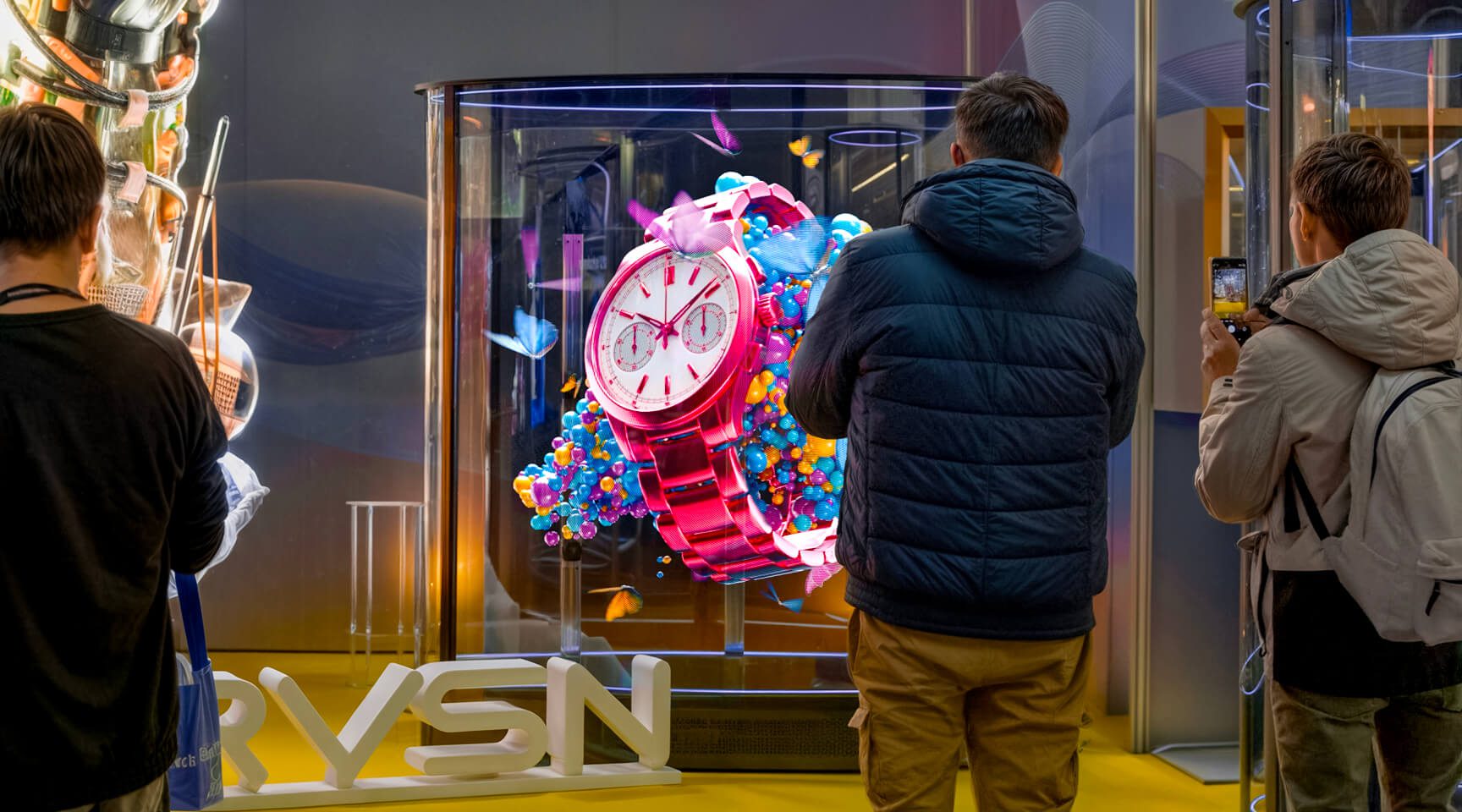
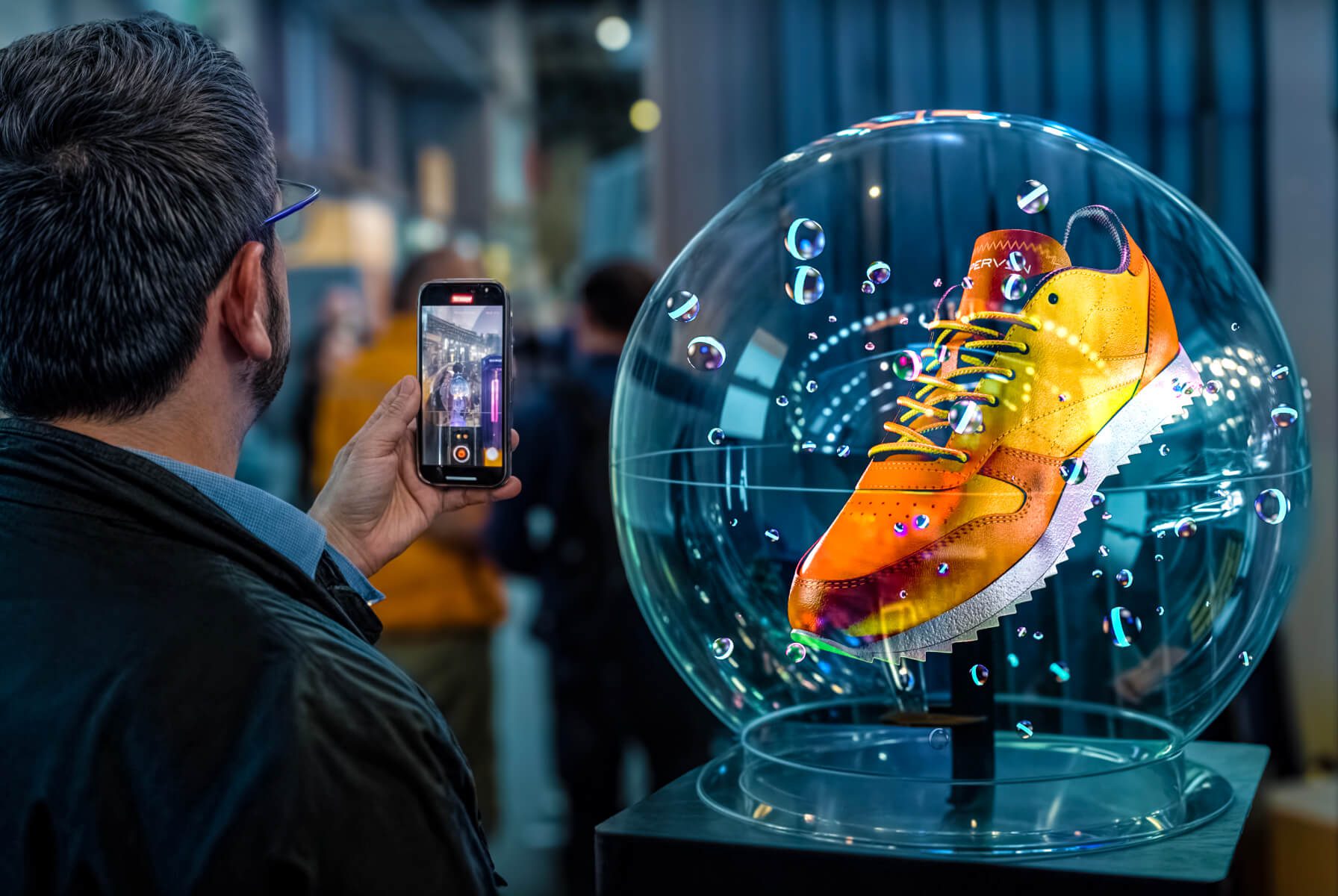
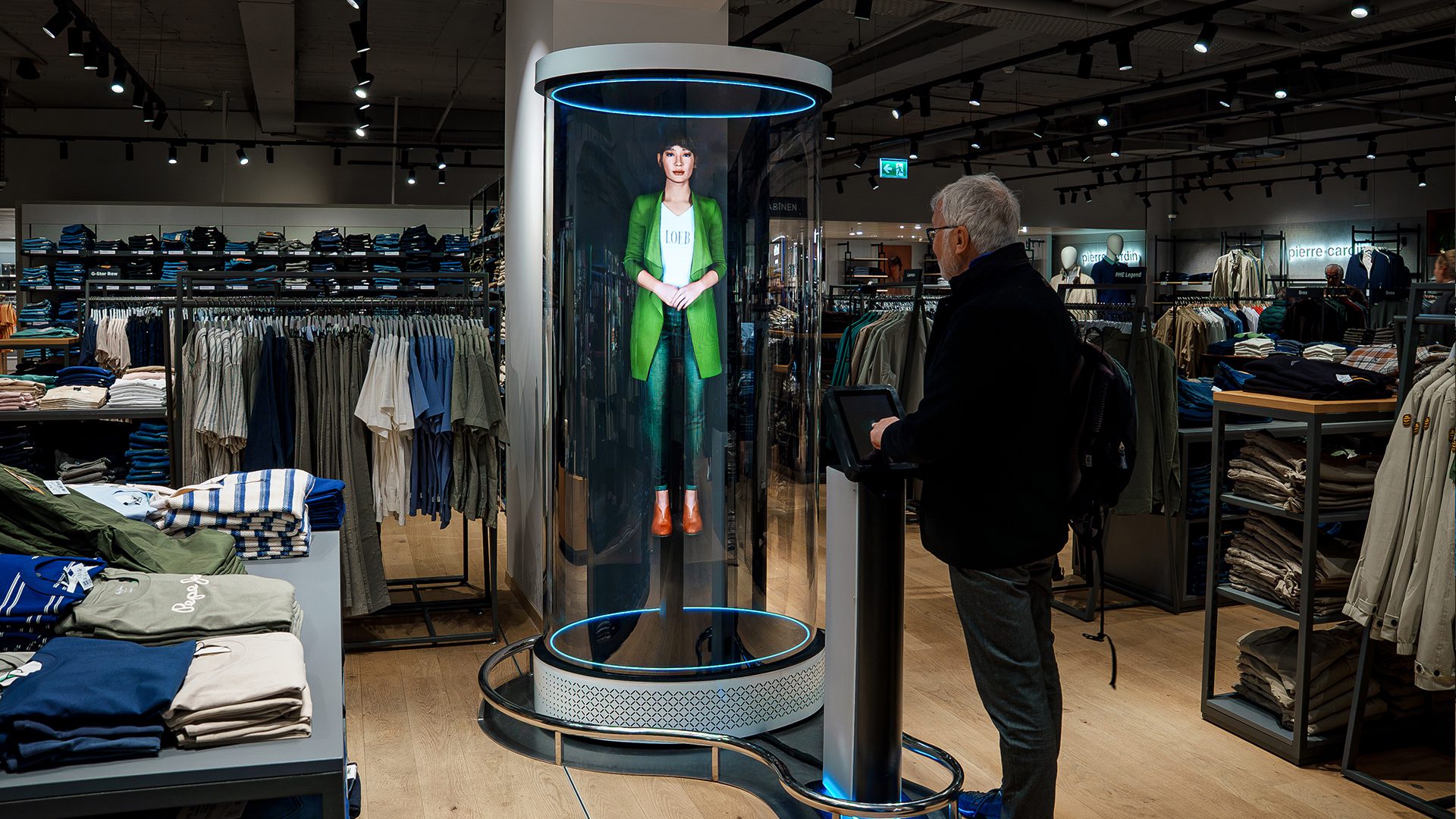
Digital transformation in retail is driven by the need for improved operational efficiency and customer experiences. Studies show that 3D holograms can boost engagement, dwell time, sales and overall customer satisfaction. 

Why HYPERVSN?

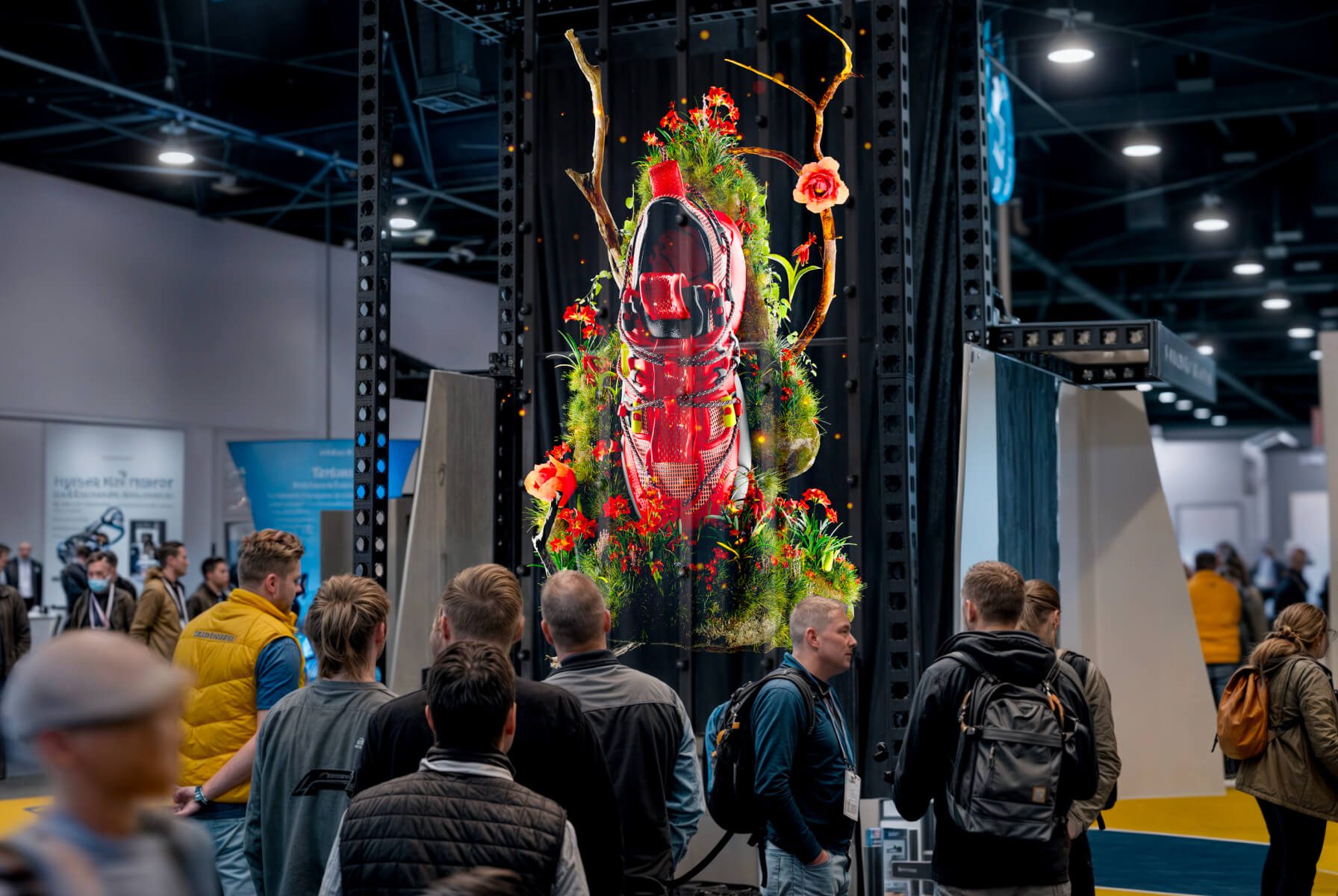
PUMA chose the market leader in immersive experiences powered by 3D holography. 

Hardware Configuration

9-unit HYPERVSN SmartV Wall. 

Content Format

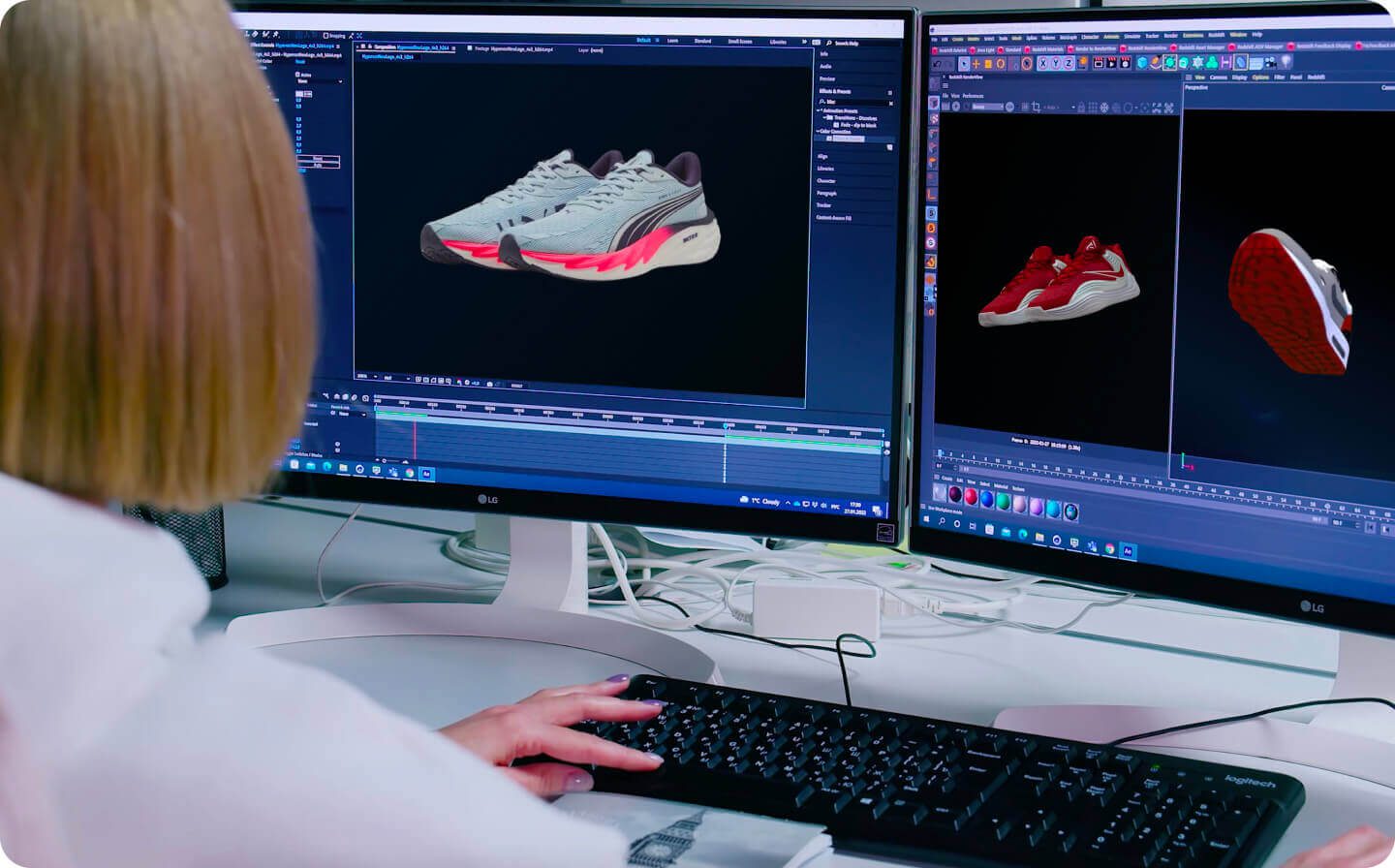
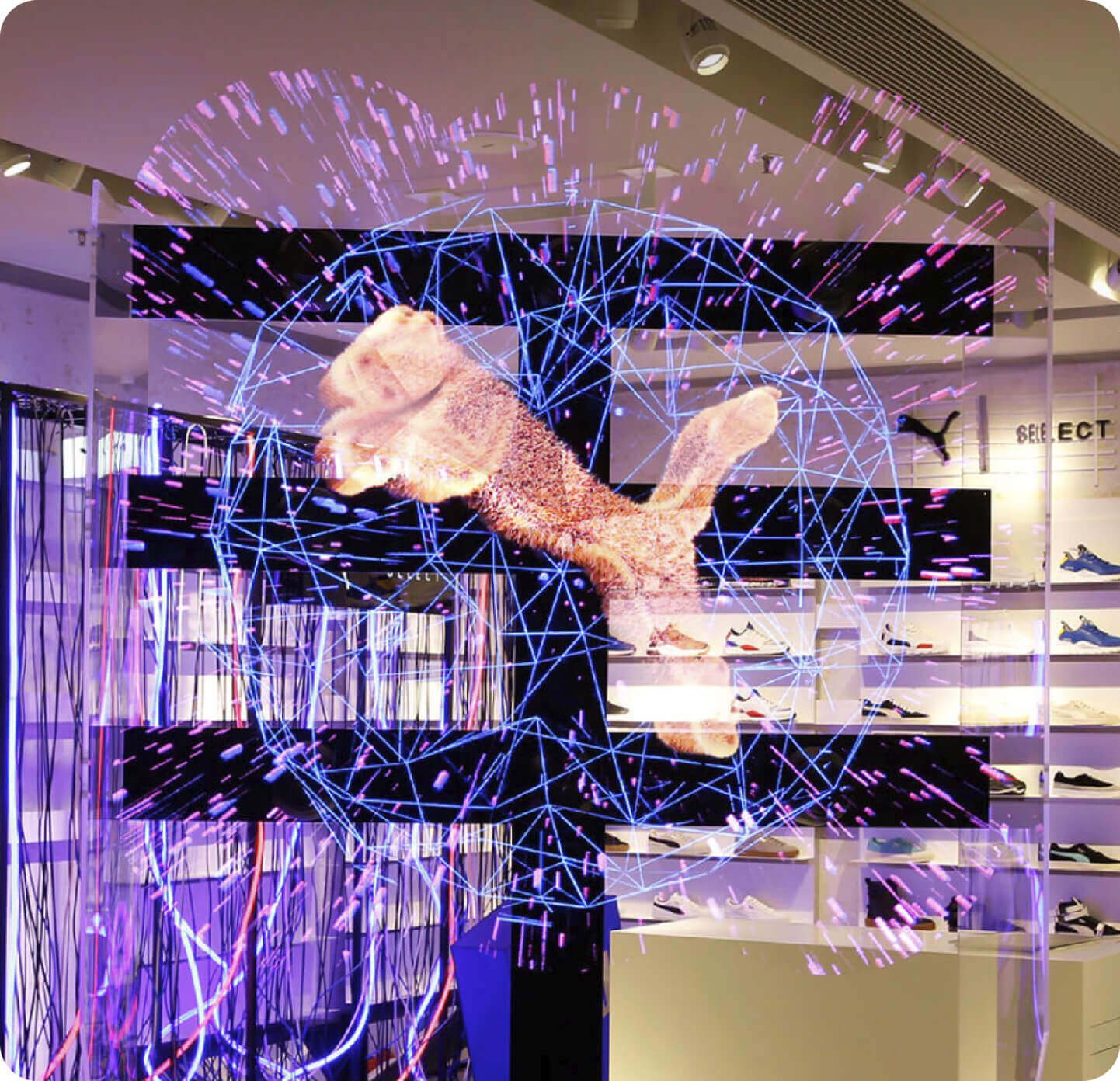
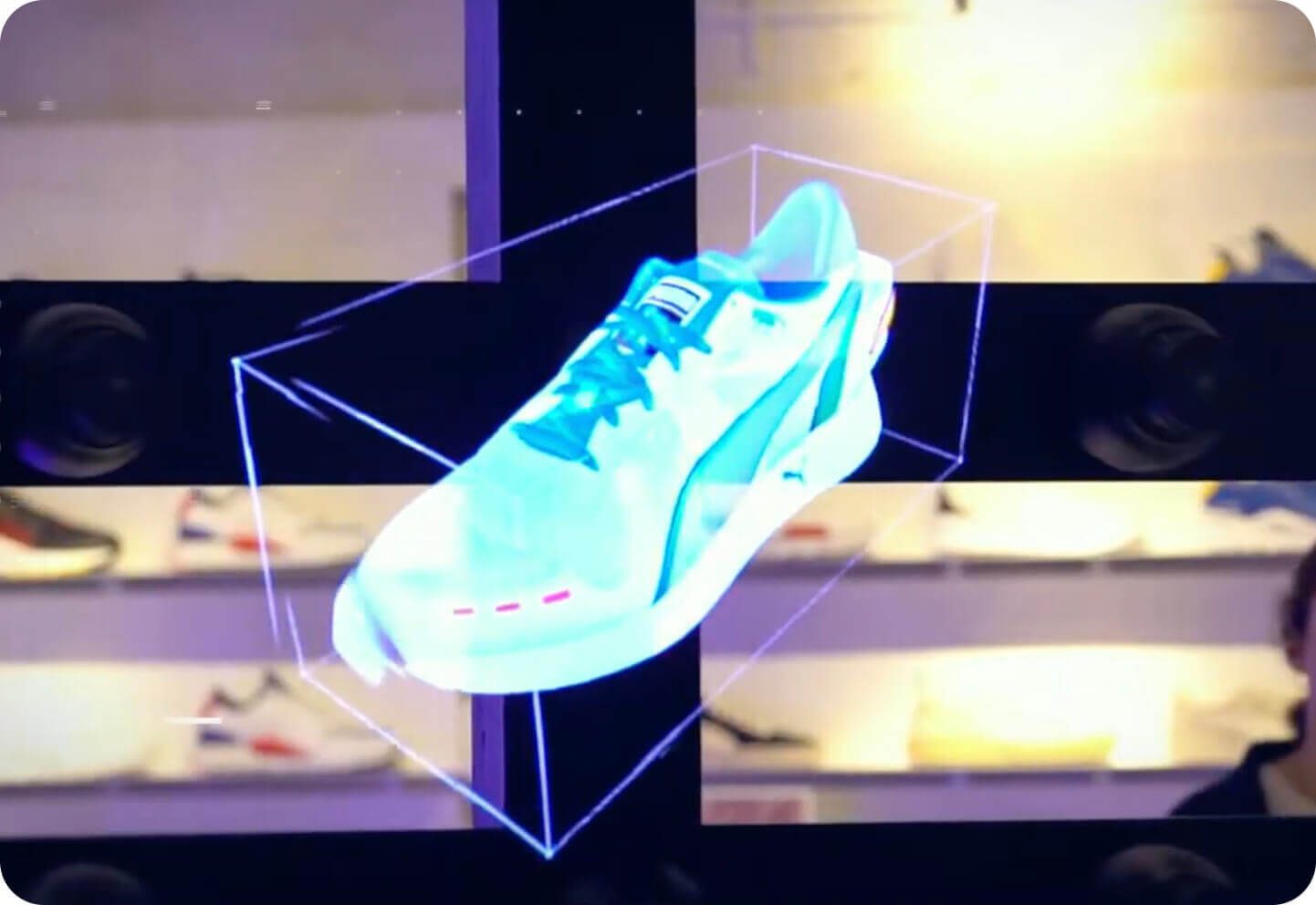
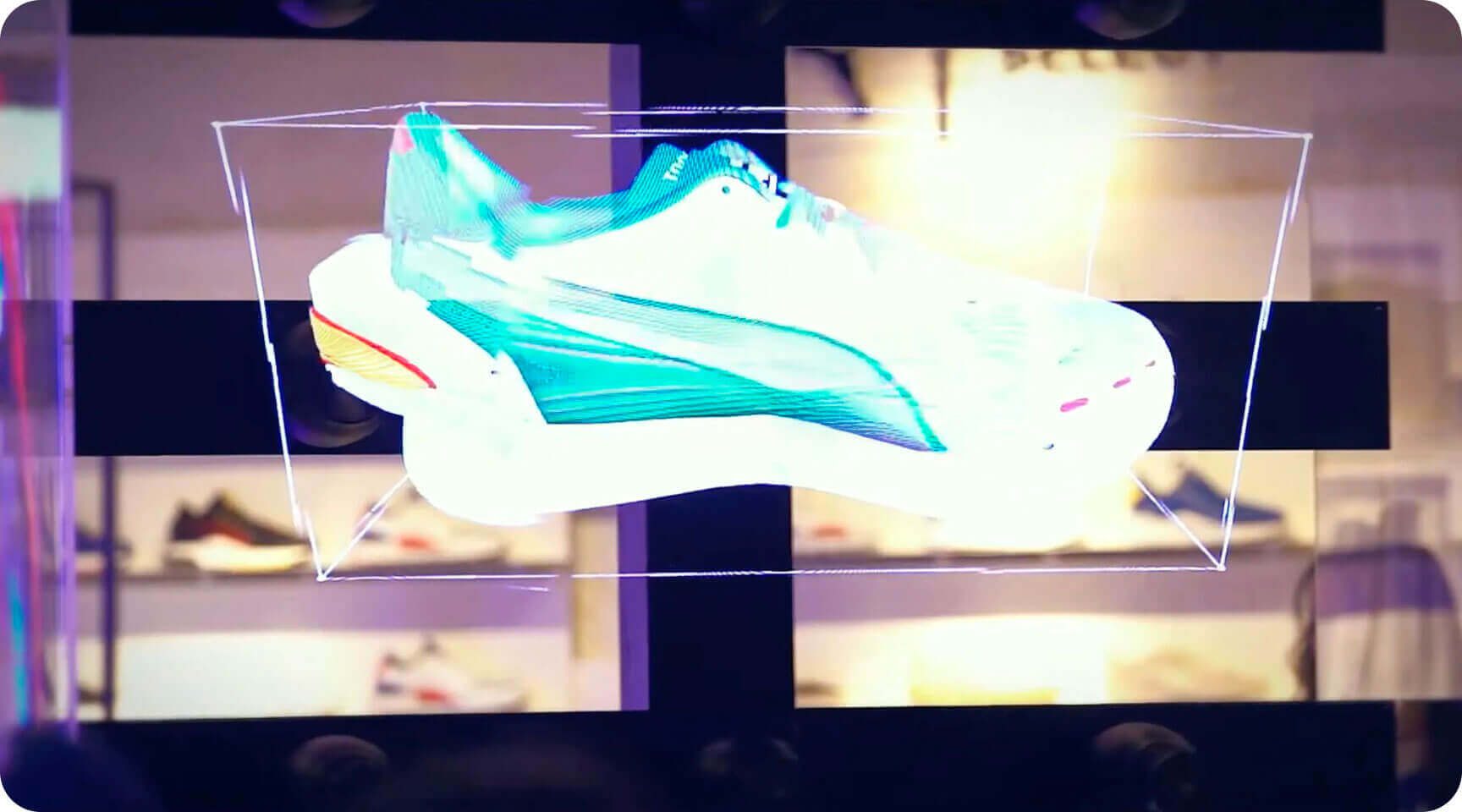
3D holographic visual storytelling showing both brand messages and product models. 

Placement Strategy

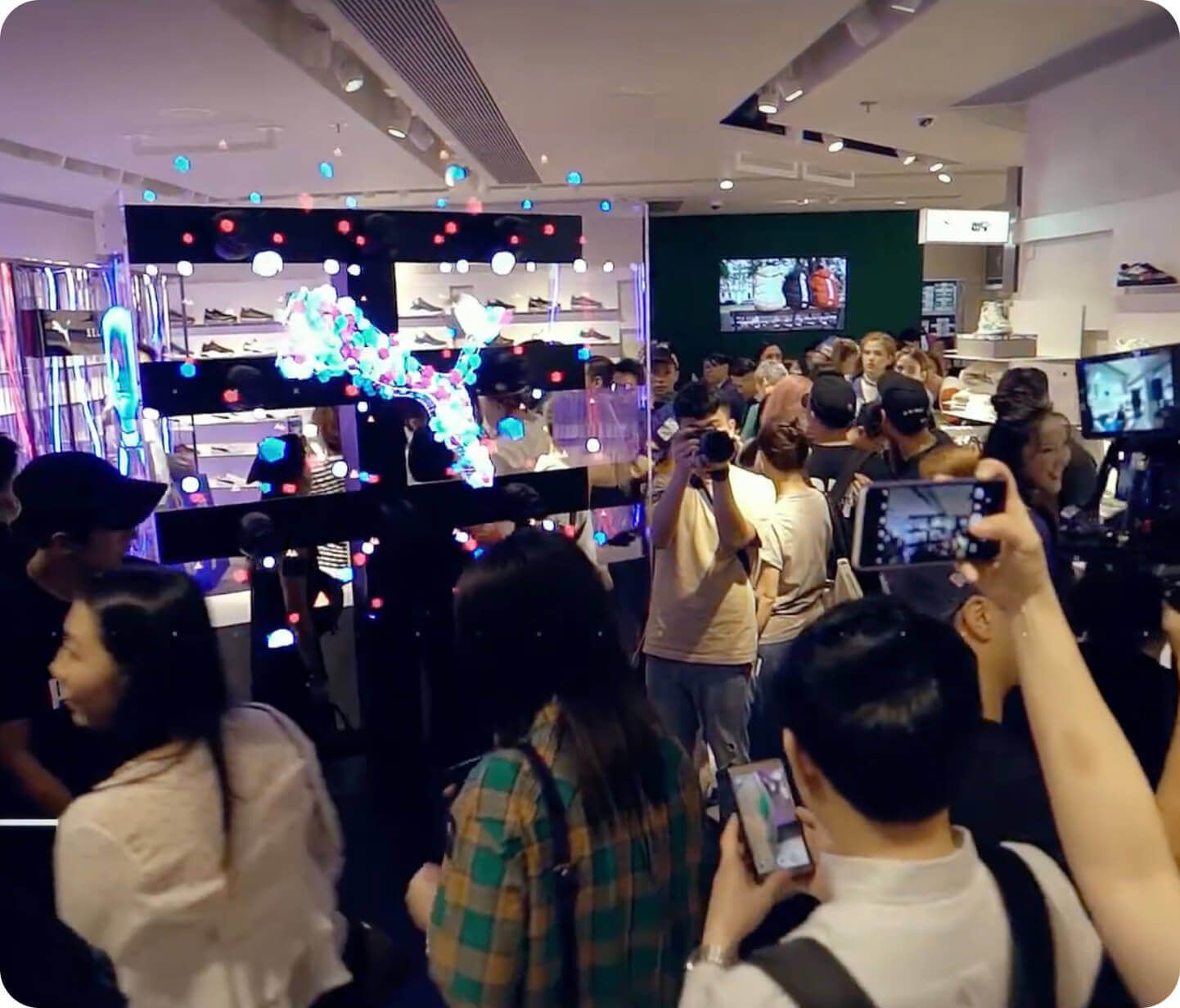
Placed in a central part of the store to act as a centrepiece, attracting attention both inside the store and from passersby. 

Traditional 2D Signage

HYPERVSN 3D Holograms

Engagement

Low, blends into background High, stands out and elicits emotion

Storytelling

Limited, static or 2D animations Vivid, highly detailed 3D visuals

Phygital Effect

Feels separate from or imposed on physical store Augments and interacts with physical retail environment

Shareability

Low Highly Instagrammable

Impact in Innovation

Retail Technology That Drives Growth

Interactive

Active Engagement

While 2D signage is easy to miss, PUMA’s 3D hologram made customers stop and stare, actively receiving their brand message.

Reach

Organic Social Reach

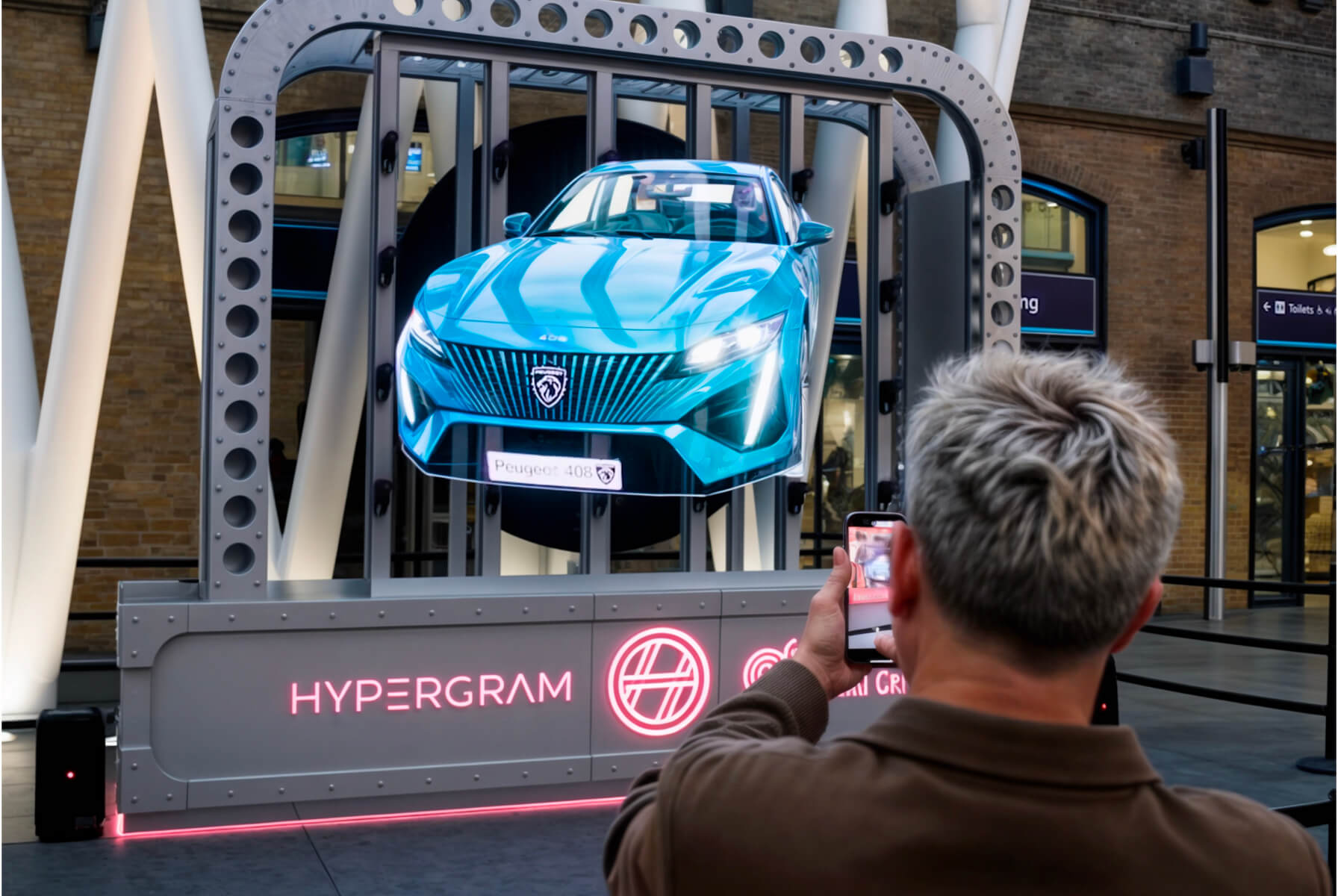
The installation created shareable moments, with shoppers amplifying the launches reach through social media.

Stars

Increased Dwell Time

By capturing shoppers’ attention, the immersive installation increased dwell time, creating greater opportunity for sales.

Increase Arrows

High-Impact Store Opening

The launch of a store can influence future success or failure. The 3D hologram gave this launch the “wow” factor, ensuring buzz and online engagement.

Customers

Competitive Advantage

Only 6% of consumers have encountered a 3D hologram. This installation ensured PUMA stood out from other similar brands and retail spaces. 

eye

Brand Perception

The hologram aligned with PUMA ‘s positioning as an innovative, stylish brand.

Beyond the Visuals

Demand Forecasting and Modern Point of Sale Systems 

Puma Store THE FUTURE OF FRICTIONLESS RETAIL 

The True Potential of Digital Transformation

To truly drive growth in the current retail landscape, a brand’s digital transformation must extend beyond the shop window and into the very fabric of its operational core. The visual impact of 3D holographic immersive experiences is most effective when supported by a robust, data-driven technical infrastructure.   The point of sale is no longer just a place to process transactions. Instead, it has become a critical data hub and the heart of the phygital customer journey. Modern point of sale systems are evolving to support cloud-based systems and omnichannel experiences, allowing brands to synchronise inventory and facilitate ordering and delivery across all channels simultaneously. This level of omnichannel integration ensures that if a customer is enticed into the store by a vivid 3D hologram, the transition from engagement to conversion is completely frictionless. By upgrading legacy point of sale systems, retailers can enhance security, increase flexibility, and improve business performance, ensuring that every retail store offers a unified experience that wins competitive advantage.  

Puma Logo
Puma Store THE FUTURE OF FRICTIONLESS RETAIL 

Innovating Every Aspect of CX

AI-driven demand forecasting can reduce supply chain errors by 20-50% and lost sales by 65%, ensuring that the high-performance products featured in holographic displays are always available for immediate purchase. Advanced forecasting tools improve inventory accuracy, preventing both overstock and shortages, which is vital for maintaining the operational efficiency required for a major flagship location.  By merging eye-catching 3D holography and next-level customer service with the precision of demand forecasting and a unified point of sale, brands transition from operating retail spaces to defining the future of the retail industry, one satisfied customer at a time. 

Puma sneakers
Integration & Compatibility

Technology Used

This PUMA retail marketing campaign used a 9-unit HYPERVSN SmartV Wall. 
Safety and compliance notes: Proper installation is required to avoid malfunctions or hazards. To prevent consumers from touching the holographic devices, an appropriate distance and/or protective accessories are recommended. HYPERVSN provides set-up support and a range of stylish, practical accessories. 

4K resolution with brightness of up to 3,000 nits 

Patented technology 

Cloud-based CMS for ultimate control 

YOUR HOW-TO GUIDE 

Leverage Augmented Reality Like PUMA

The integration of digital channels and advanced analytics is redefining how retailers achieve competitive advantage. Here’s our step-by-step guide on how to use 3D holograms in your digital transformation strategy. 
  • Step 1: Be Analytical

    The best retail marketing is driven by data. Retailers using AI analytics see 5-6% higher sales and profit growth than their competitors. Understanding your customer will influence which retail solutions you invest in and how you use them to drive growth. 

  • Step 2: Go Interactive

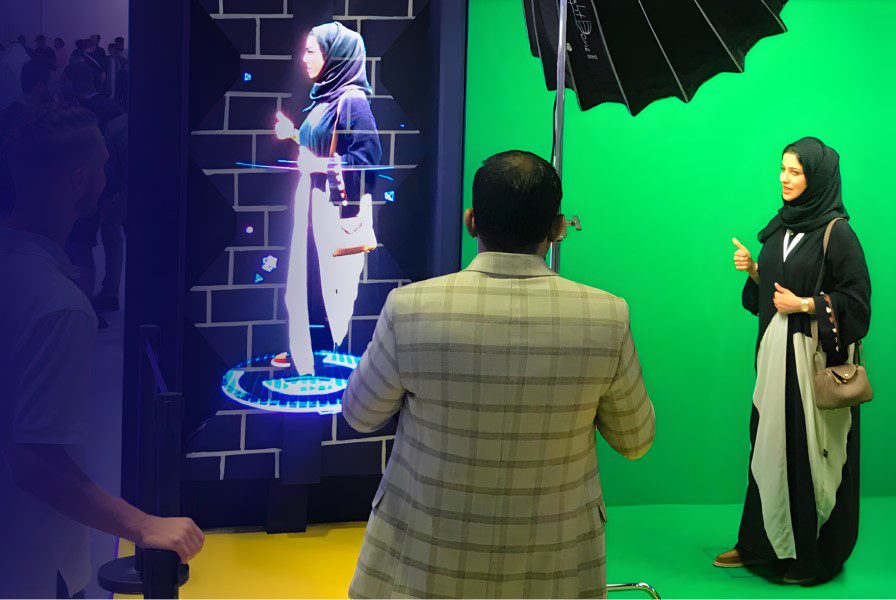
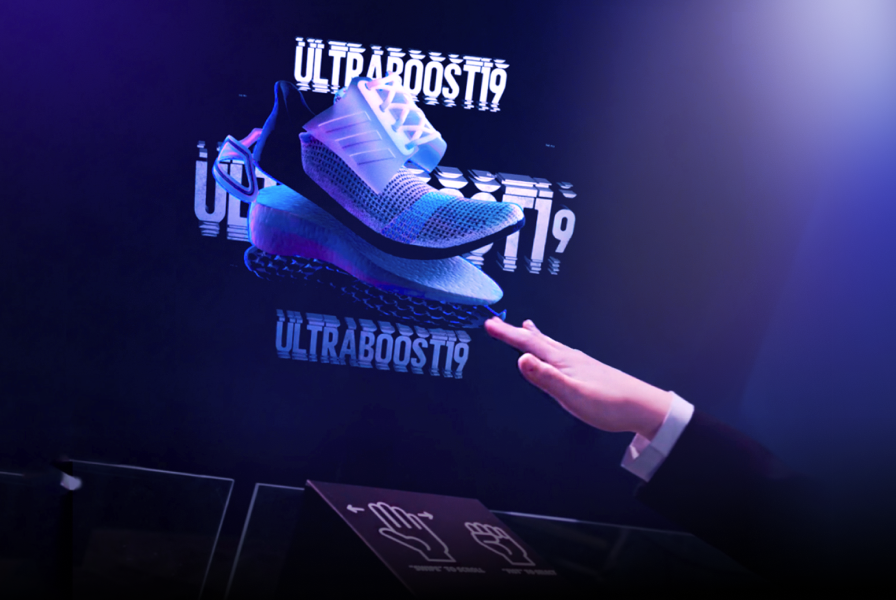
    Interactivity invites the consumer to actively engage with the technology. The most widely used application of augmented reality in retail is virtual try-on, which enhances customer comfort before purchase. For PUMA, interactivity came from customers engaging with and taking photos with the hologram. 


  • Step 3: Integrate Promotions

    3D holograms are ideal for sharing text content as well as visual storytelling, allowing you to educate consumers on offers and promotions. Retailers can analyse customer behaviour to offer customised recommendations and targeted promotions that increase engagement and conversion rates. Different techniques, such as add-on, upsell, or cross-sell can be used to enhance sales volume and improve the customer experience. Retailers can also use loyalty programs to encourage repeat patronage and enhance customer retention. 

  • Step 4: Invest in Omnichannel CX

    Deploying 3D holograms should be just one part of a larger strategy for delivering unmatched customer experience. Retailers that offer robust omnichannel experiences have been shown to boost their revenue by 19%. By investing in unified platforms, you can connect digital browsing with in-store fulfilment, creating a smoother purchasing journey. Providing this excellent level of customer service creates more opportunities to build enduring customer relationships with the potential to turn customers into sources of referral or retail advocates. 

  • Step 5: Measurement and Iteration

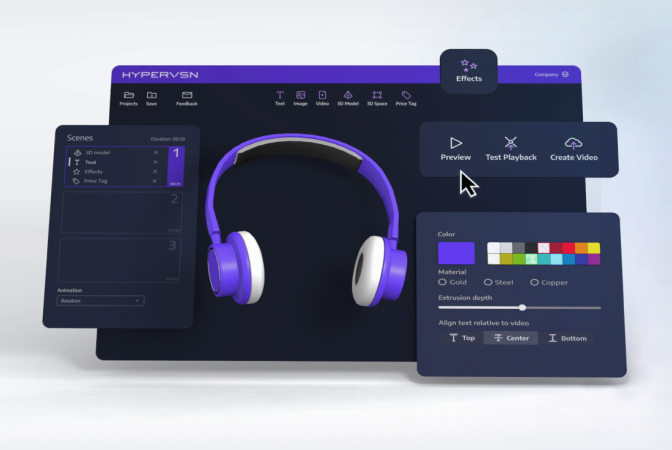
    The HYPERVSN CMS allows clients to manage and amend campaigns remotely. Utilise this functionality to ensure that your campaign is responsive. Make updates based on performance, feedback or seasonal trends.  

Need Clarification?

Frequently Asked Questions

  • What is PUMA?

    PUMA offers footwear, apparel and accessories for sports like soccer, running, basketball and motorsports. The brand introduced the “Atom” football boot in 1948 and the Super Atom in 1952, the world’s first boot with screw-in studs. PUMA Suede Classic is a timeless lifestyle sneaker first released in 1968. Today, PUMA features advanced technologies like Nitro Foam in its running and training shoes and has strong ties to motorsports, being a dominant supplier for Formula 1 teams and NASCAR. PUMA launched its largest-ever global campaign, “Go Wild,” in March 2025 to celebrate everyday runners and self-expression. 

  • Why did PUMA choose HYPERVSN for their store opening?

    PUMA selected HYPERVSN to align their physical retail presence with their “Forever Faster” brand identity. By using 3D holographic technology, PUMA created a futuristic visual magnet that captures the speed and agility of their products. They chose the market leader in immersive tech to ensure their retail marketing mix stood out in a saturated market. The 9-unit wall allowed them to showcase their products and brand story in a way that traditional signage simply cannot match. 

  • How does digital transformation improve the retail industry?

    Digital transformation is essential for retailers to maintain a competitive advantage and improve operational efficiency. Modern retail technology involves adopting solutions like AI models that analyse and operate on data to perform demand forecasting, eliminate stock shortages, and automate purchase orders. AI algorithms can also be used to create personalised product recommendations based on prior purchasing behaviour. Omnichannel integration allows all retail channels to synchronise inventory and facilitate ordering and delivery, ensuring a seamless experience for the customer. For a brand like PUMA, these innovations are advantageous to survival, as they improve data-driven decision-making across their global fleet of stores. 

  • What are 3D holograms?

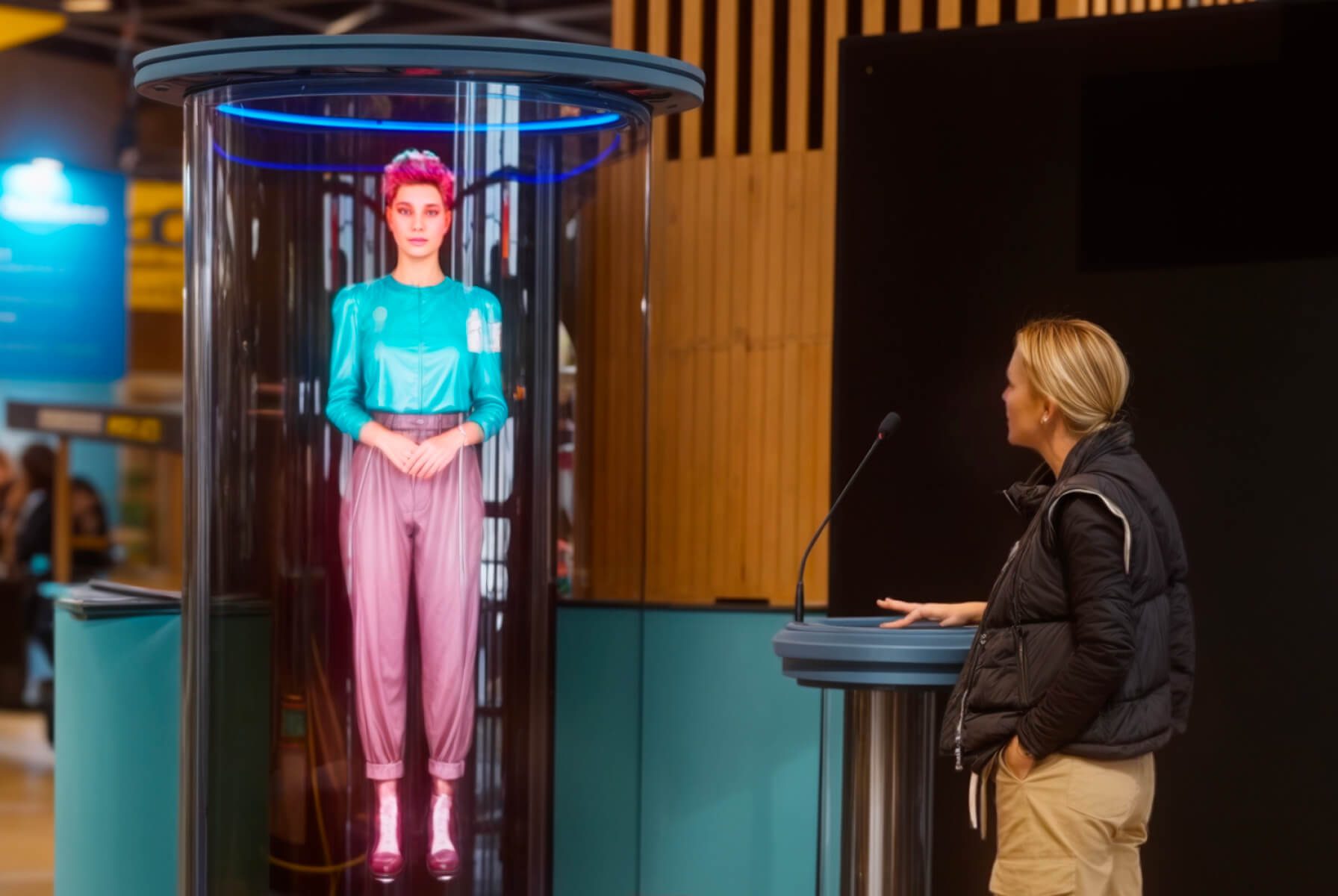
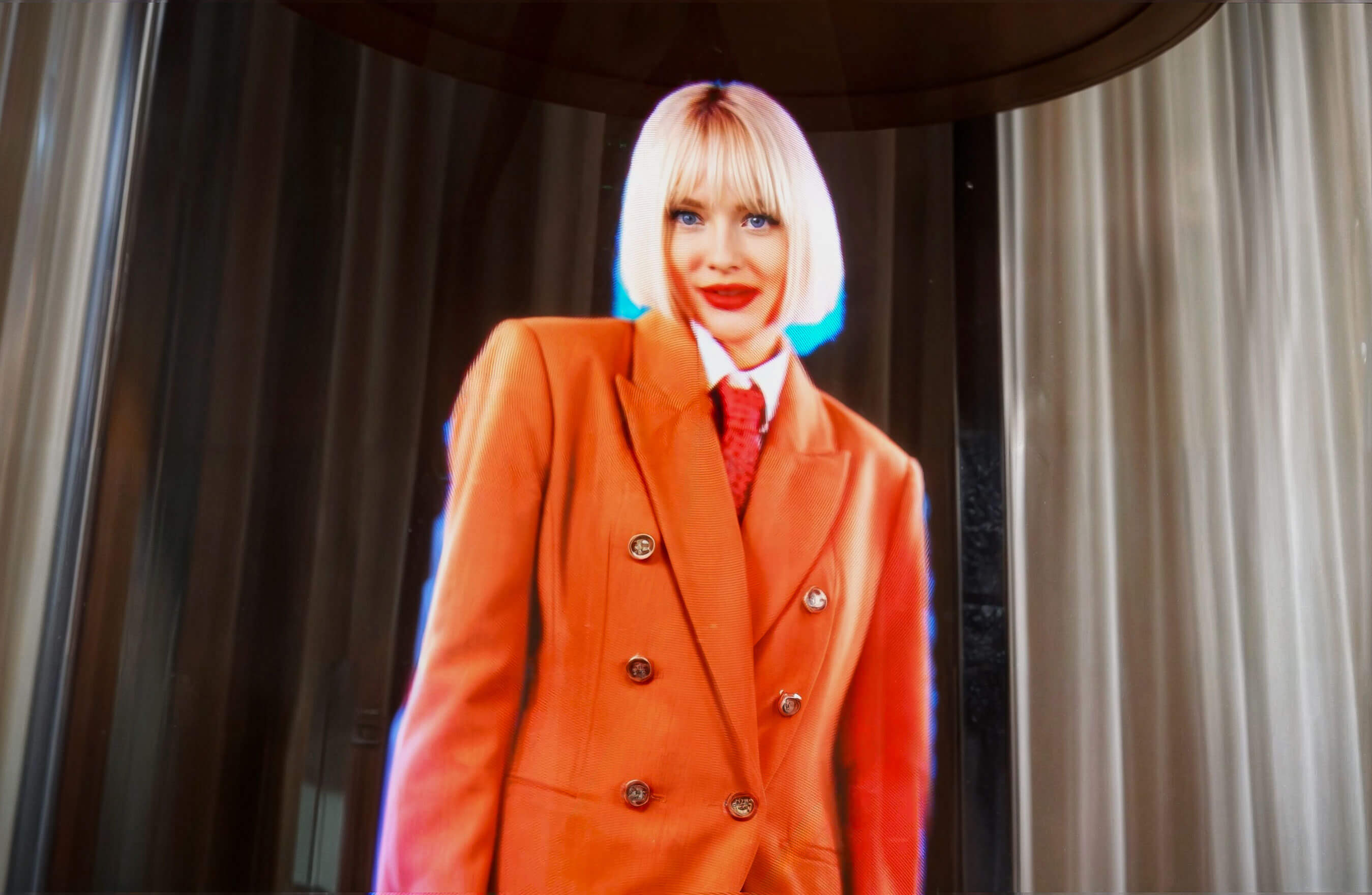
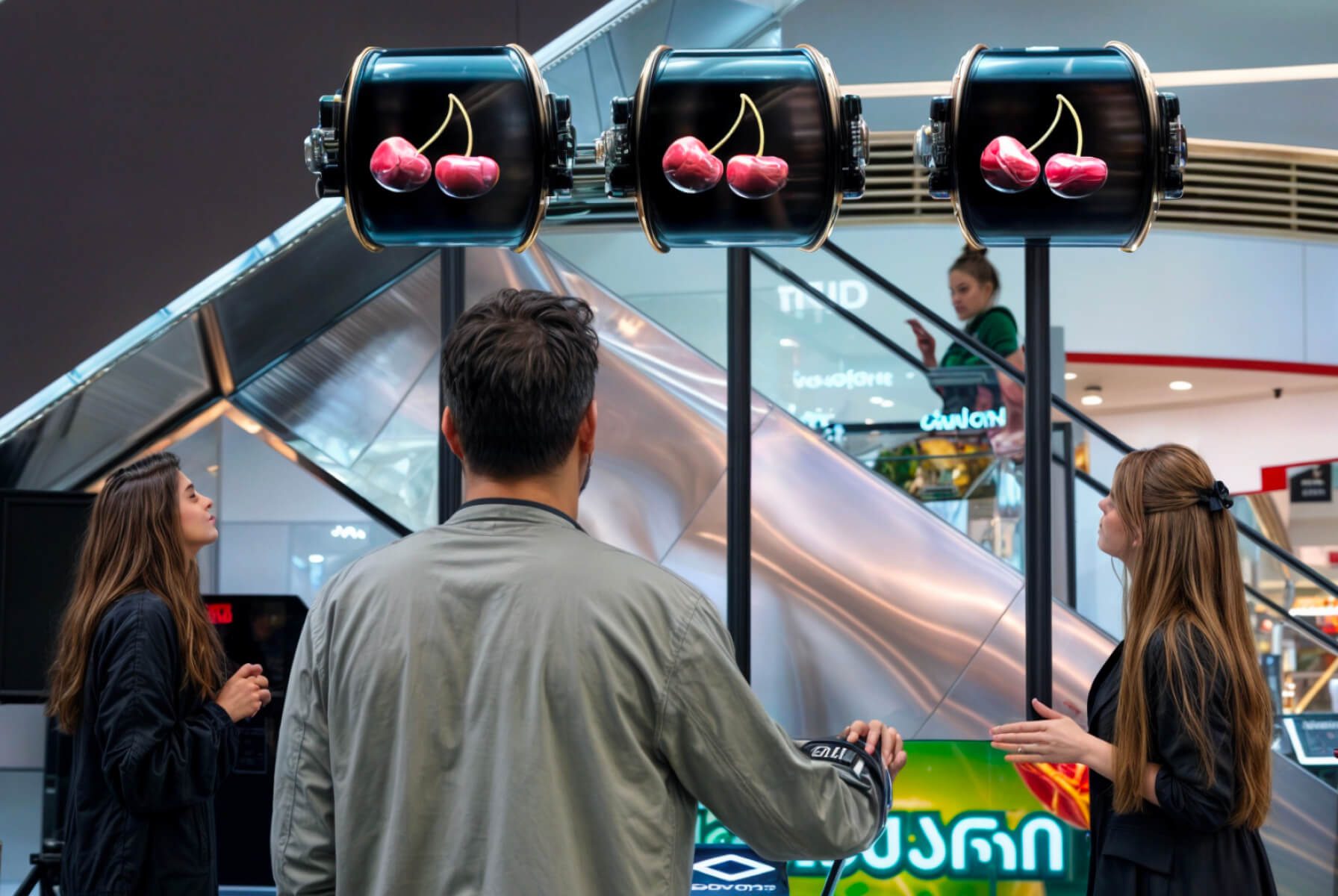
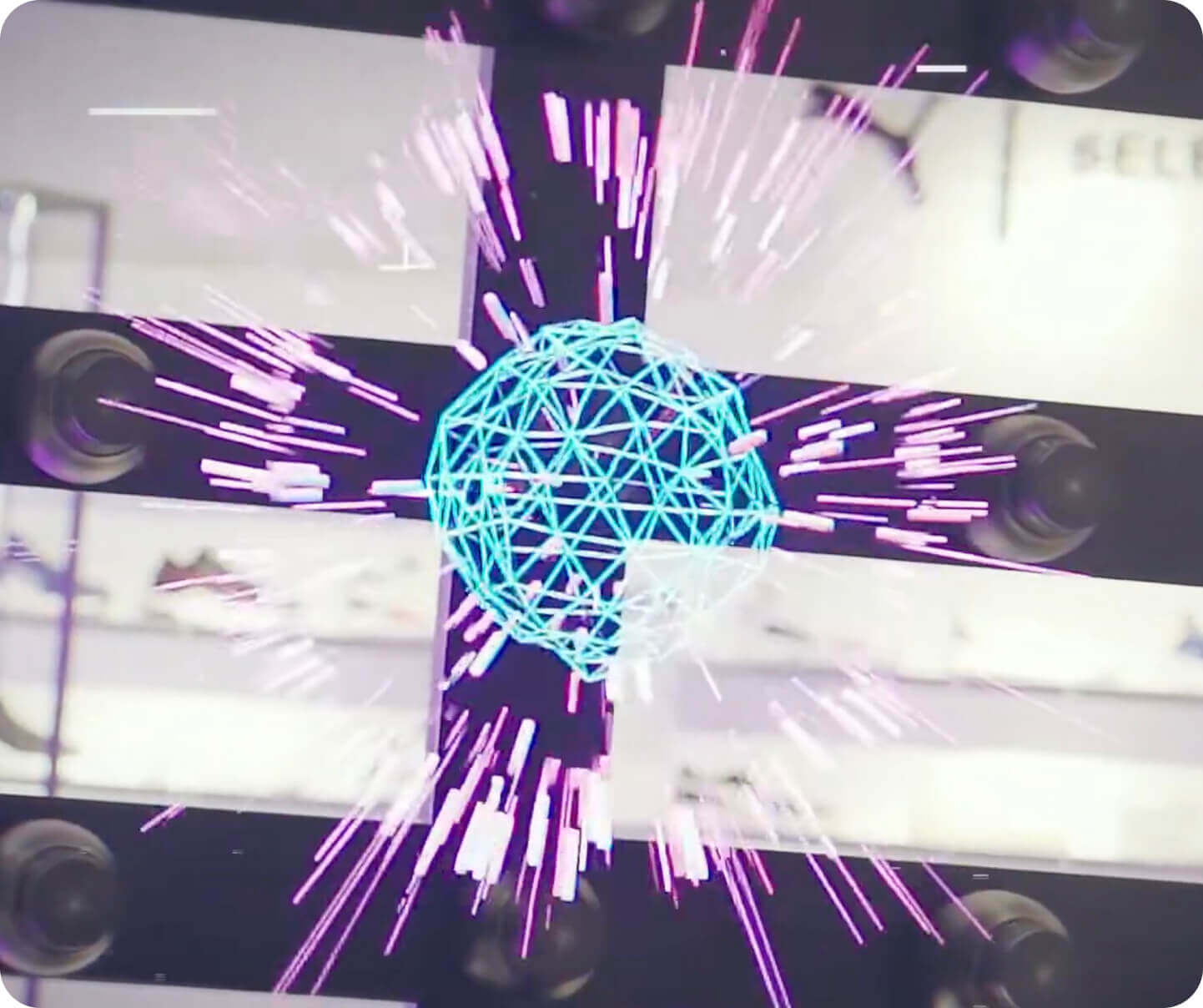
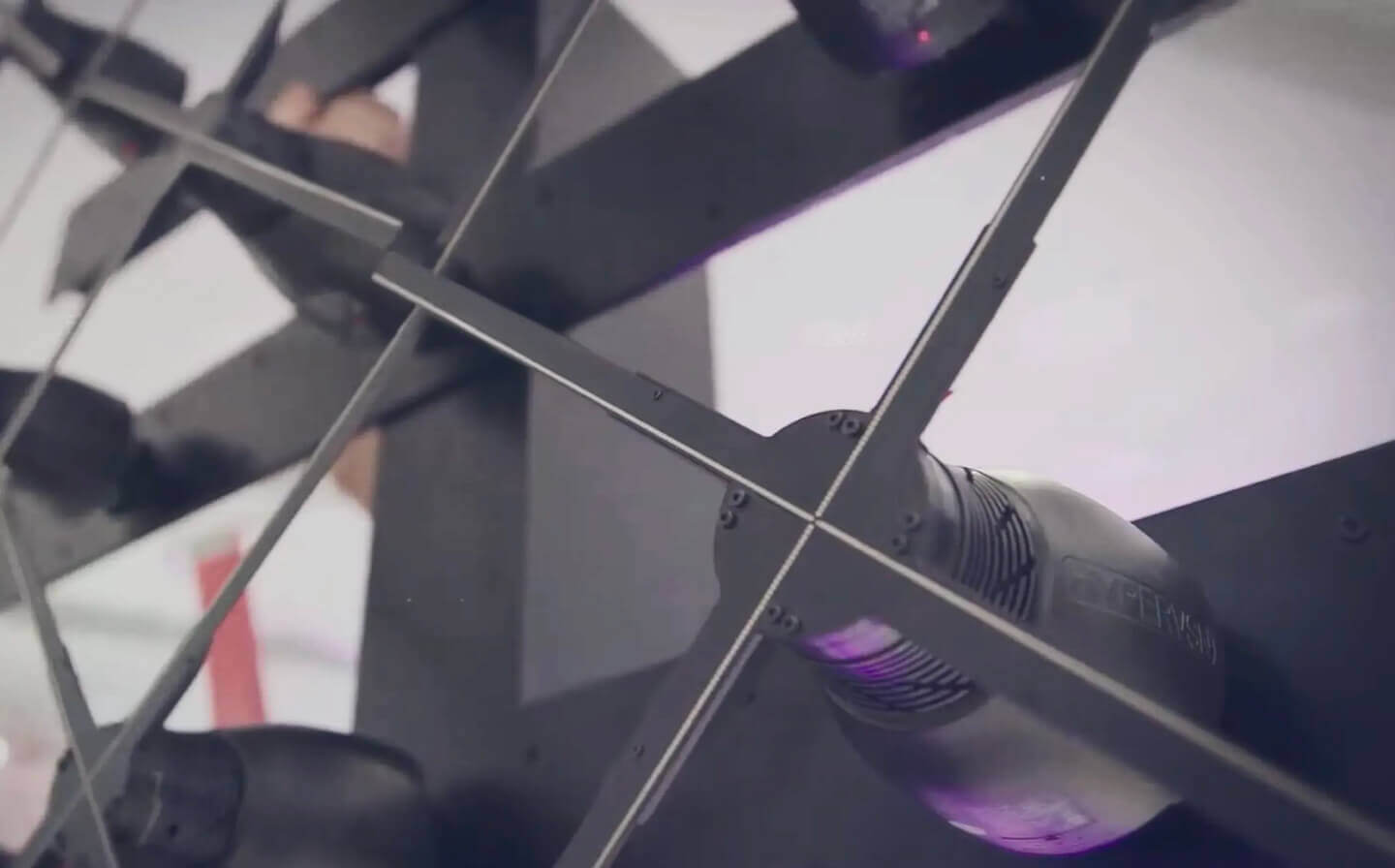
    HYPERVSN 3D holograms use proprietary technology to generate sharp, vivid images that appear to be floating in mid-air. Our devices use high-speed LED-based rotors spinning at speeds that make the blades invisible to the human eye, leaving only high-definition 3D holographic content. Unlike traditional 3D displays, our solutions don’t require specialist glasses or headsets – the 3D effect is visible to the naked eye. With a brightness of 3,000 nits, these displays remain vivid even under intense lighting and bright, outdoor environments. Combining our hardware with exceptional 3D design, we create immersive experiences that enhance consumer experiences through digital signs and billboards, helping to increase footfall in physical stores. 

  • What impact do holograms have on retail?

    Holograms enhance retail by offering interactive and visually compelling customer experiences that drive foot traffic and brand recall. They augment physical displays with dynamic, engaging content that transforms shopping into an immersive experience. More than just visuals, dynamic 3D holograms can elicit a huge emotional response, helping brands to build lasting connections with loyal customers. 

  • What role does AI play in supply chain management?

    Supply chain volatility, inflation and labour shortages are significant challenges facing the retail industry, making AI a critical tool for resilience. Retailers that invest in supply chain agility are outperforming their peers, as AI-powered analytics provide deeper visibility into the supply chain and AI-driven demand forecasting can reduce errors by 20-50%. This level of supply chain optimisation is essential for higher sales and revenue growth, particularly for successful Buy Online Pick Up In Store (BOPIS) operations. 

  • How is technology helping PUMA achieve its sustainability goals?

    Sustainability is a competitive differentiator in the retail industry, and PUMA has made it a core priority, achieving a milestone where 9 out of 10 products were made from recycled or certified materials by 2024. Retailers that embed sustainability into their operations align with customer values and position themselves for long-term growth. For example, Eco-friendly packaging and responsibly sourced materials appeal to socially conscious consumers. Circular economy models, such as resale or rental programs, extend product life cycles and reduce waste, aligning with green values. Sustainable innovation enhances brand loyalty and regulatory compliance, and retailers are increasingly using technology to enhance their sustainability efforts. For example, AI systems can enhance energy efficiency and increase transparency regarding environmental commitments. By choosing HYPERVSN holograms over traditional printed 2D signage or LED screens, PUMA again committed to making the more sustainable choice during their store opening. 

  • How can retail technology make an impact behind the scenes?

    Technology in retail influences every stage of the customer journey, from before they even begin to browseAI plays a crucial role in preventing payment fraud by detecting and mitigating suspicious activities in real-time. Supply chain volatility, inflation and labour shortages are significant challenges facing the retail industry. Automation in supply chain management reduces errors and accelerates fulfilment. Advanced forecasting tools improve inventory accuracy, preventing both overstock and shortages. Automated stores and Micro-Fulfilment Centres (MFCs) utilise automation to streamline operations from inventory to customer checkouts Retailers that prioritise supply chain optimisation can achieve higher sales and revenue growth. 

  • How does retail store strategy feature in retail marketing?

    The retail marketing mix typically consists of six broad decision layers including product decisions, place decisions, promotion, price, personnel and presentation. Retail stores are a representation of every element of this mix, particularly place decisions. Retailers often seek to differentiate along customer service lines, offering various levels of service from self-service to full-service operations. But they must decide whether to provide a full-service outlet or minimal service outlet, such as no-service in the case of vending machines. Retailers must balance the customer’s desire for full-service against the customer’s willingness to pay for the cost of delivering supporting services. And, where full-service is not available, retail technology goes a long way to ensuring the customer still enjoys an efficient and satisfying purchase experience. 

Start Your Project with HYPERVSN

Get in touch to discuss how 3D holography could transform your retail innovation strategy.

4 Item in cart

HYPERVSN 3D Catalog

USD 1,200

Qty

Remove Item

HYPERVSN 3D Catalog

USD 1,200

Qty

Remove Item

HYPERVSN 3D Catalog

USD 1,200

Qty

Remove Item

Cart Subtotal:

USD 3,600