









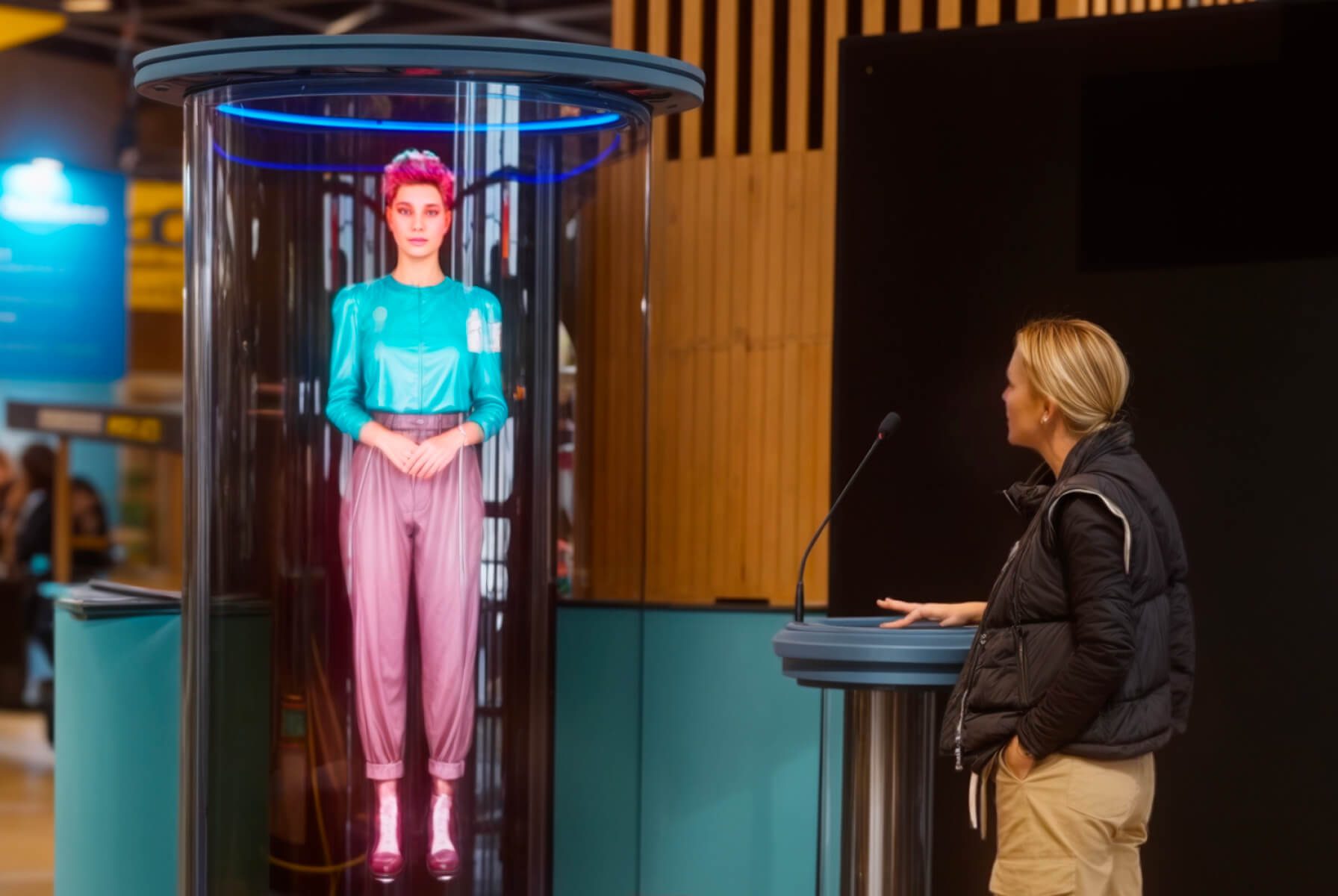














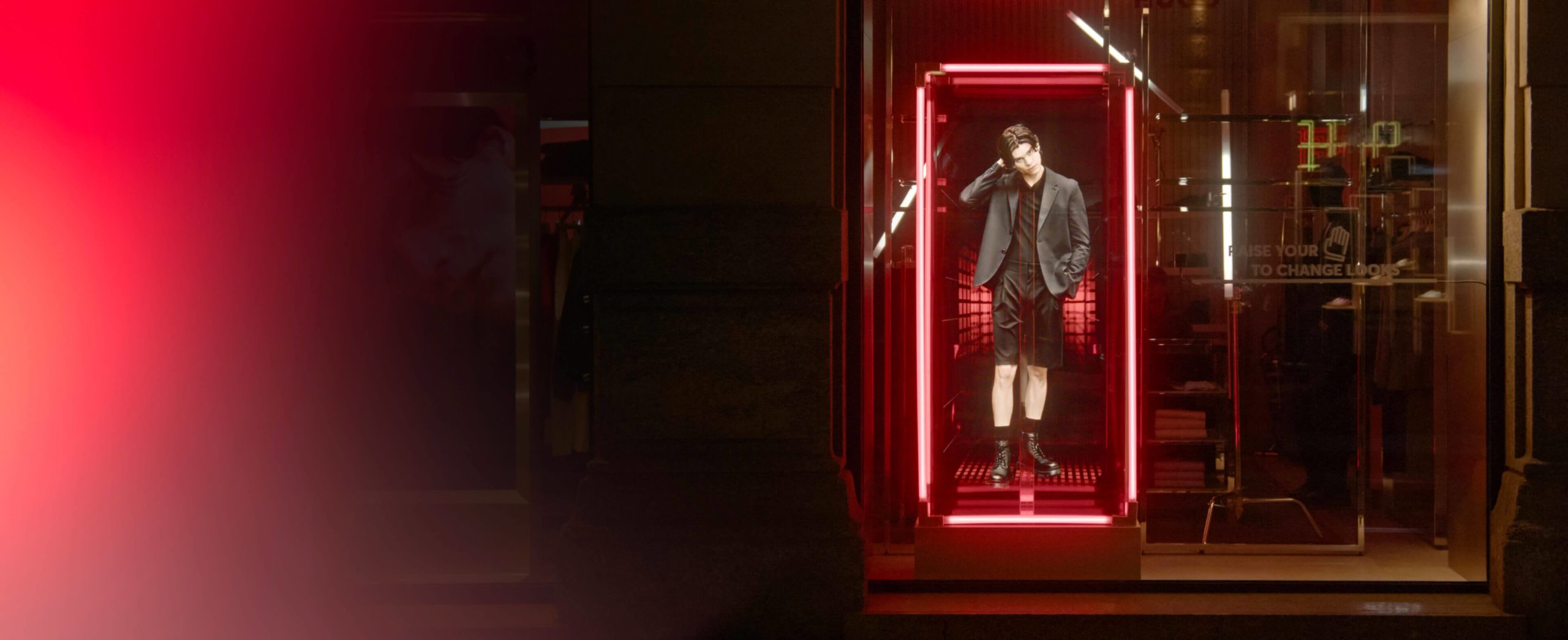
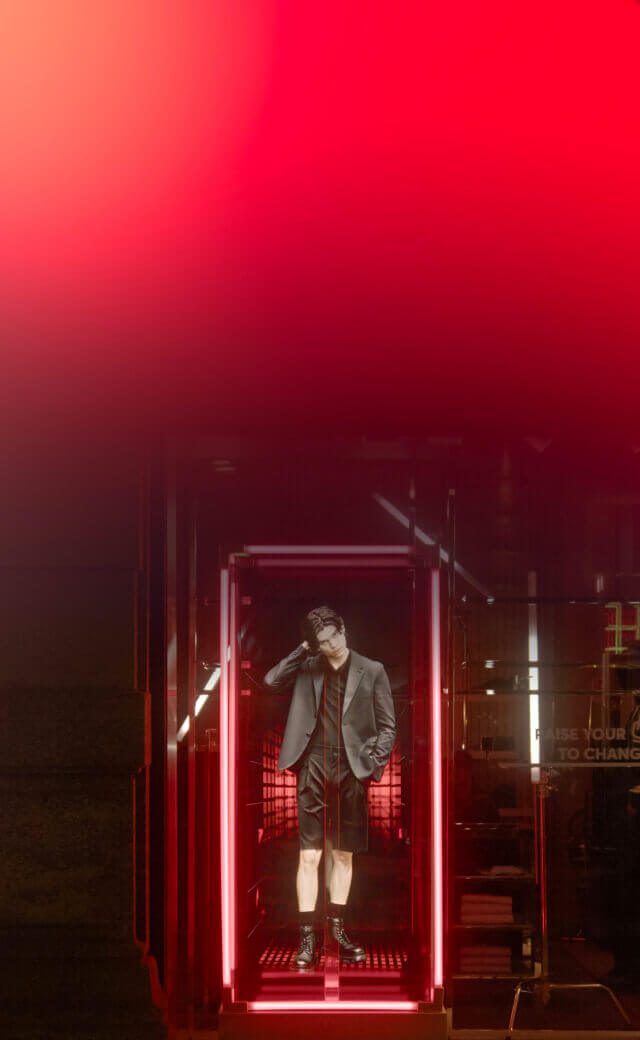
HUGO's holographic influencer for desktop HUGO's holographic influencer for tablet
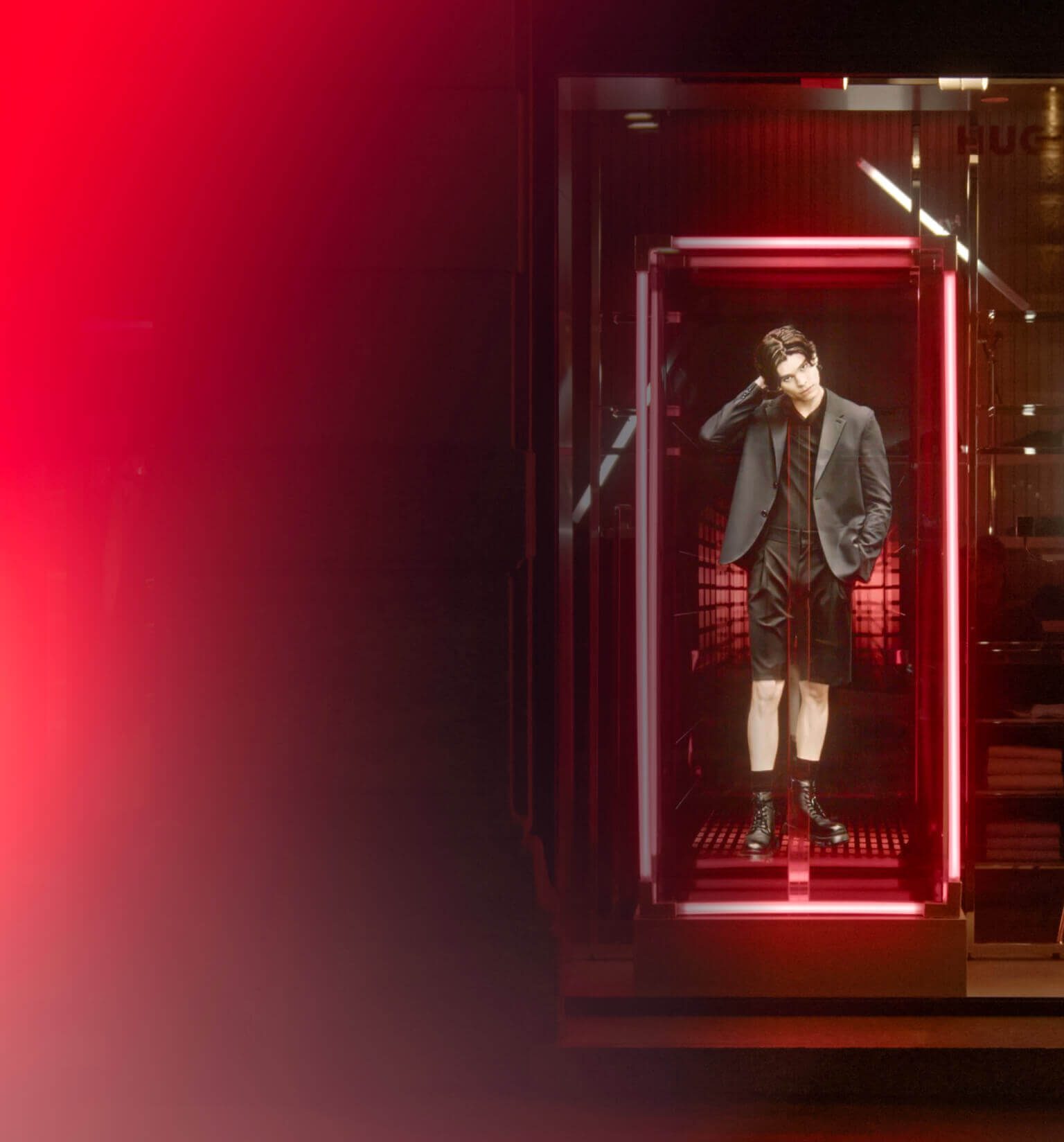
HUGO's holographic influencer for mobile

Hugo Boss Elevates Retail Innovation with an Interactive Holographic Window

Explore how HUGO – the Gen Z focused sub-brand of Hugo Boss – used a holographic double of influencer JeanCarlo Leon to set a new benchmark for interactive fashion retail innovation.

OVERVIEW

Case Study Summary

Client: Hugo Boss / HUGO Industry: Luxury Retail 
Challenge: Standing out in a competitive, high-traffic shopping district and translating digital-first brand storytelling into a compelling physical retail experience.
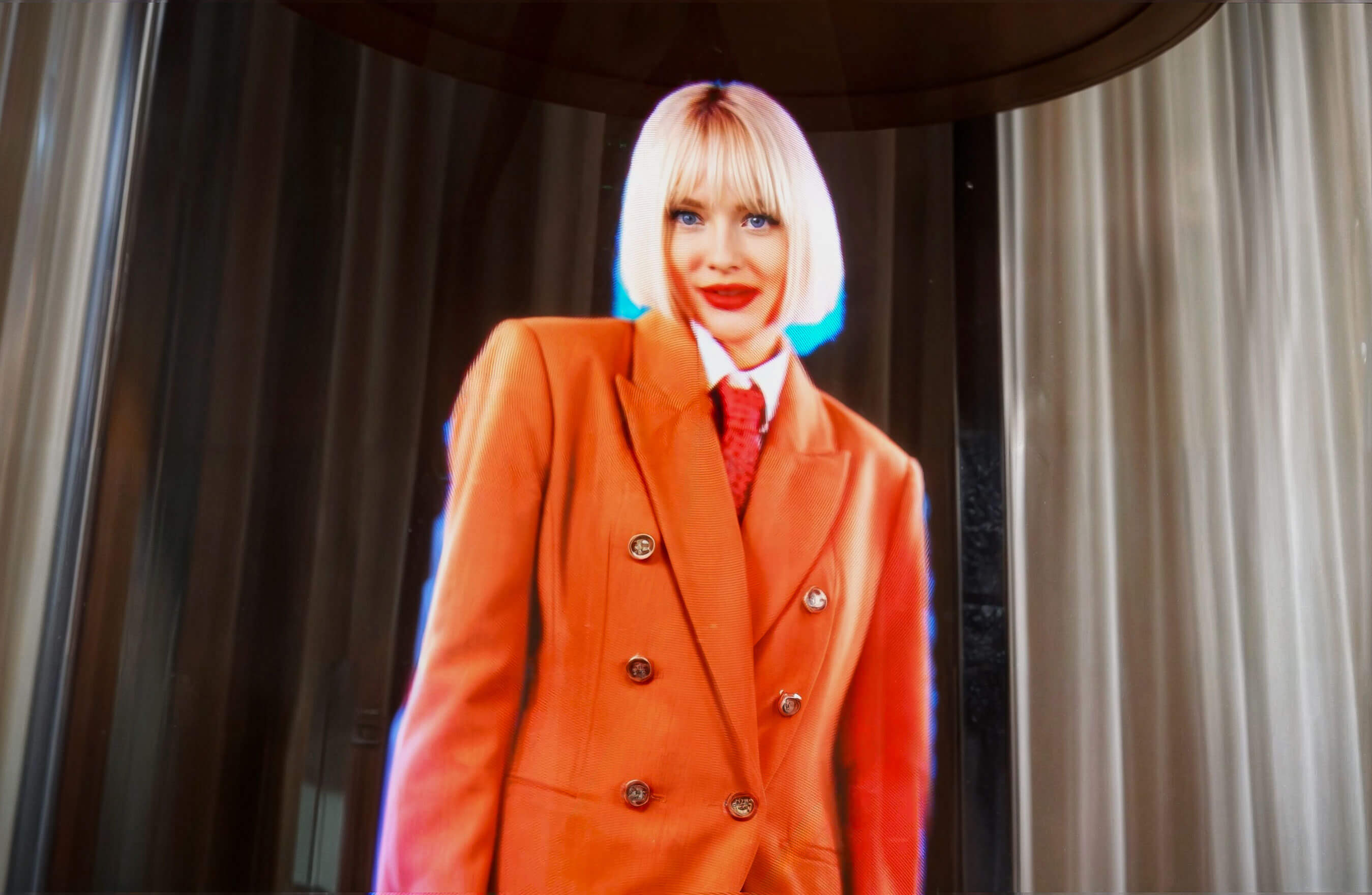
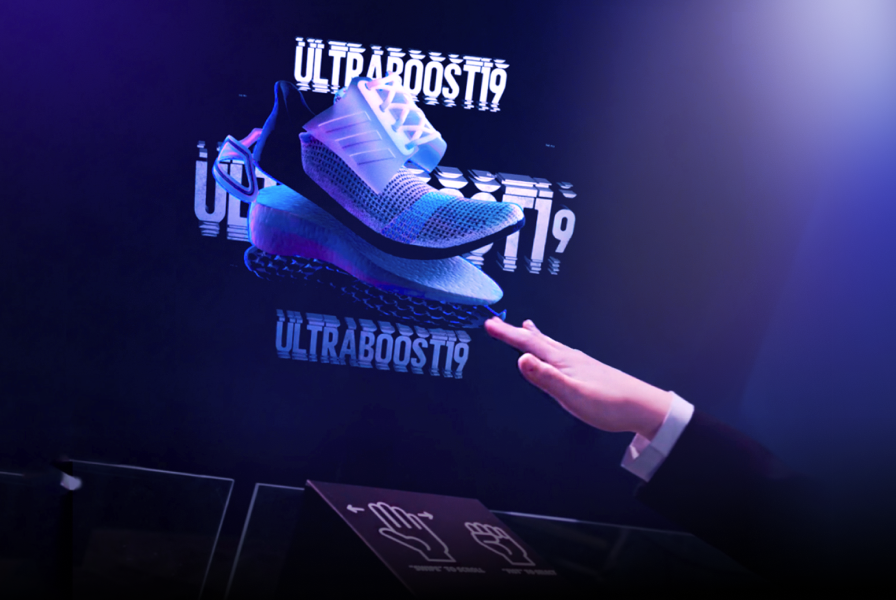
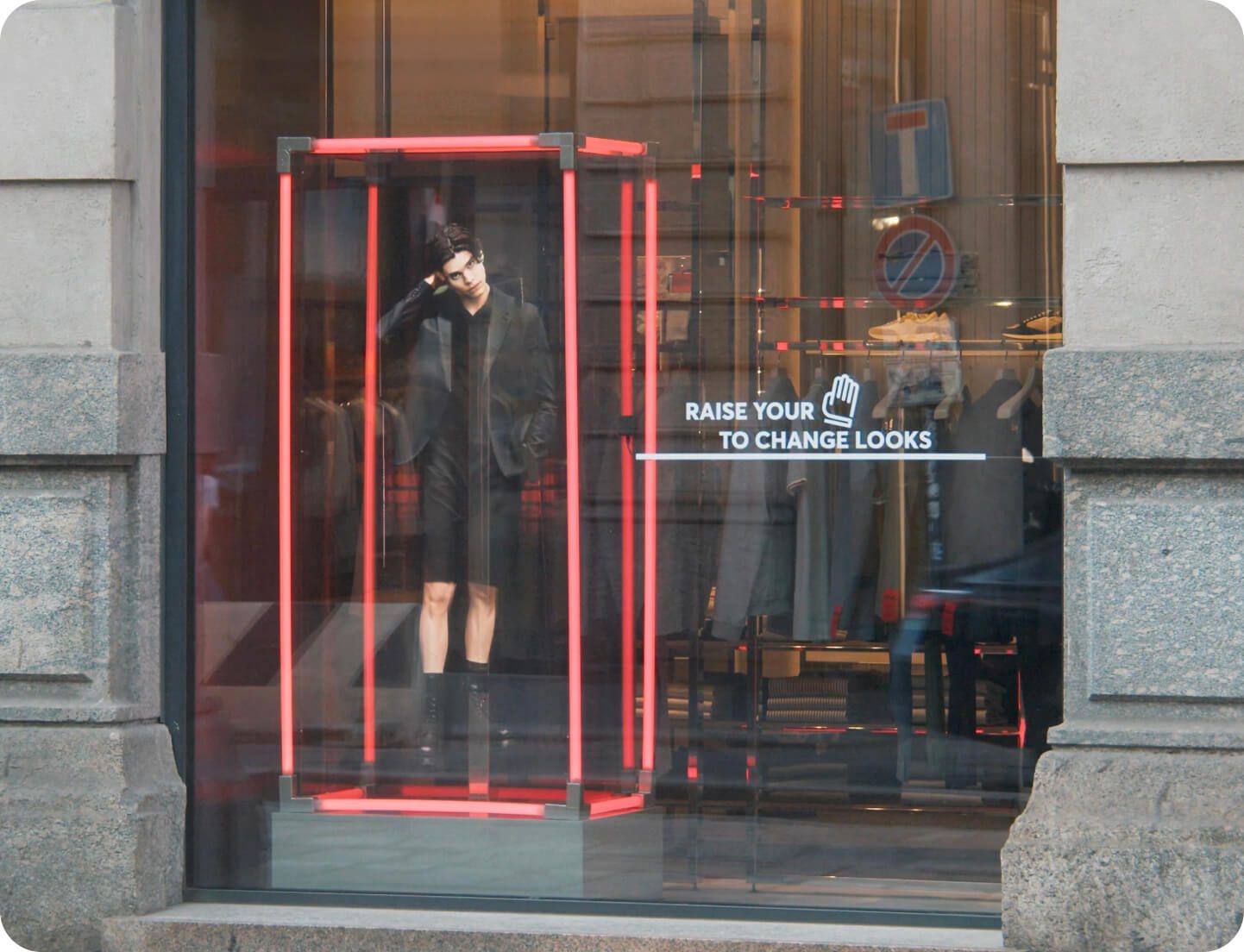
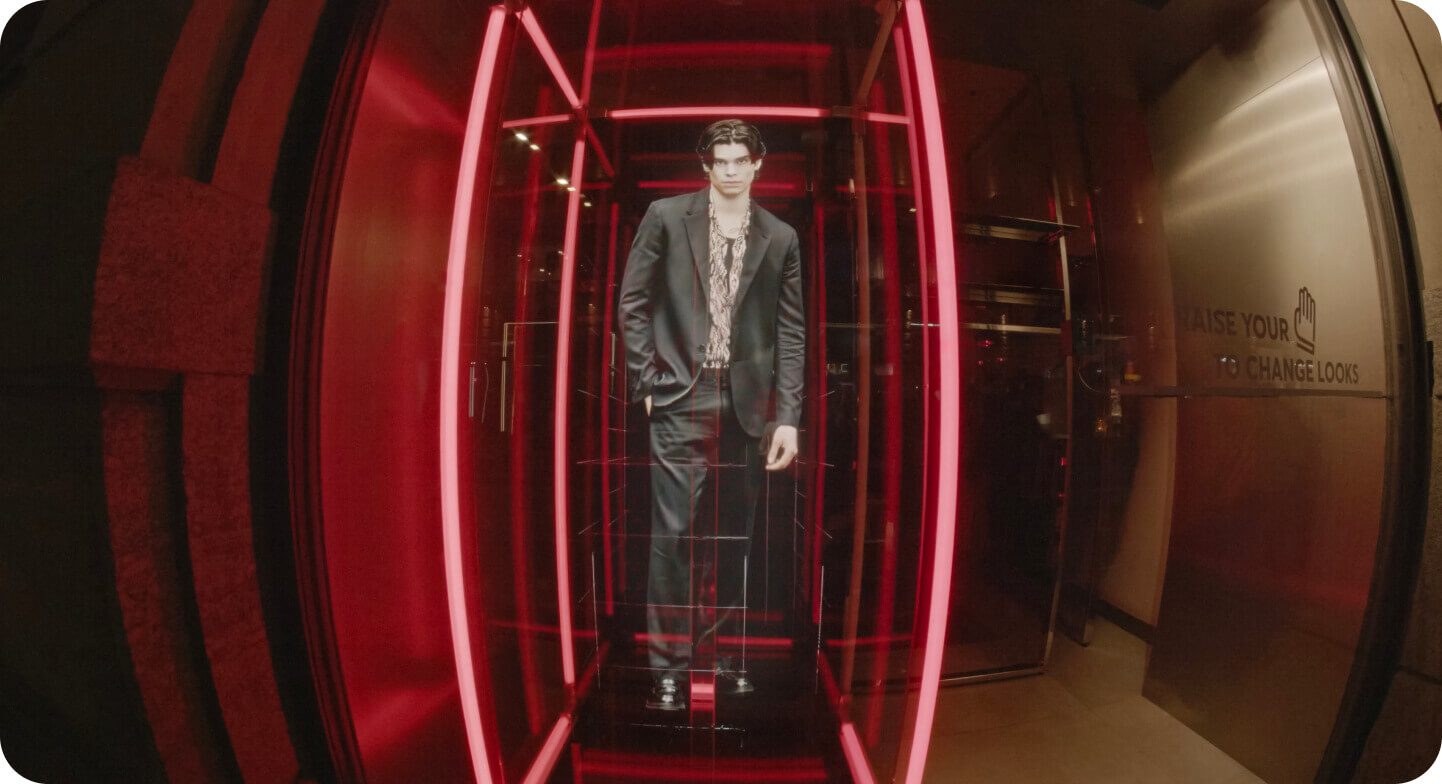
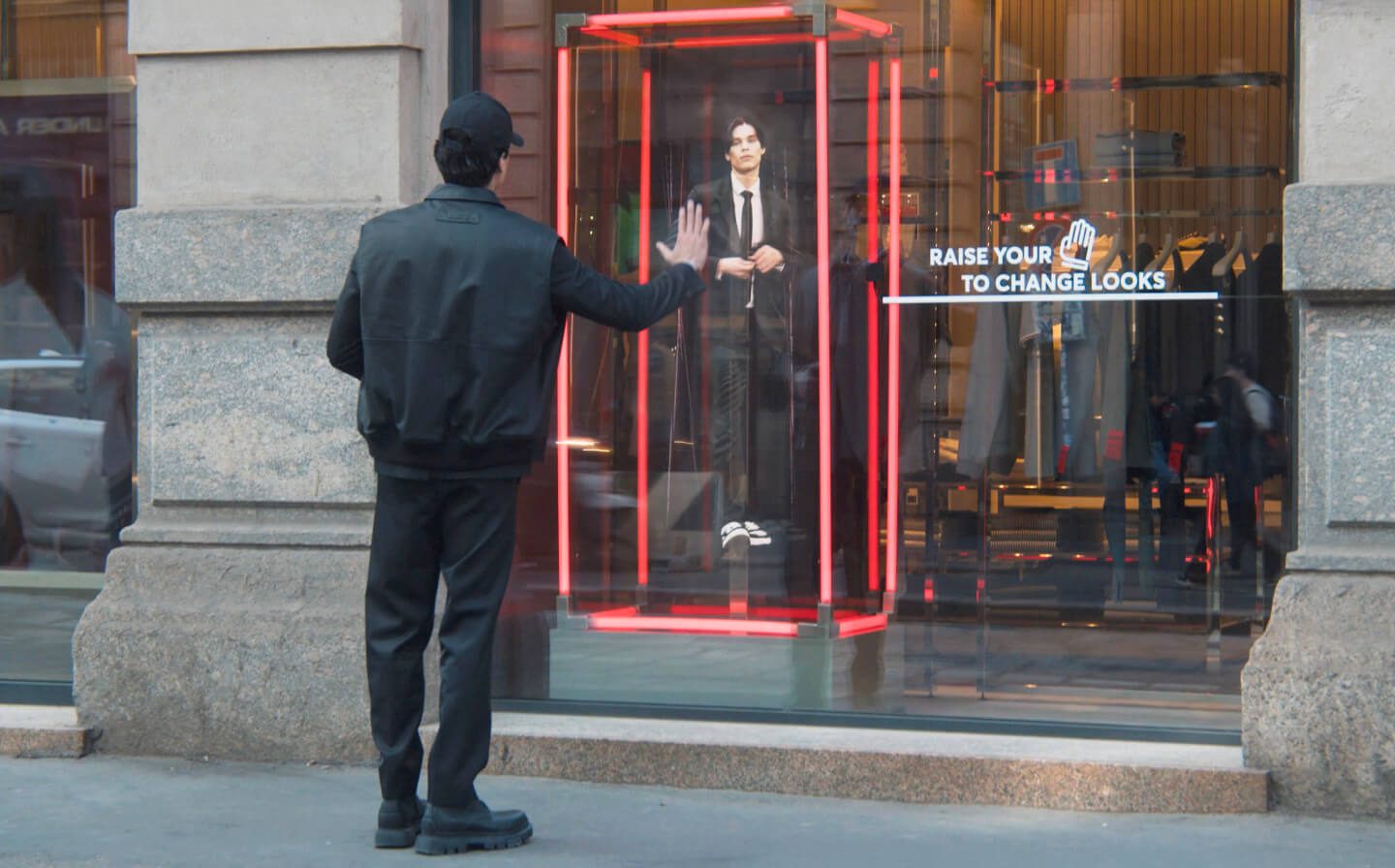
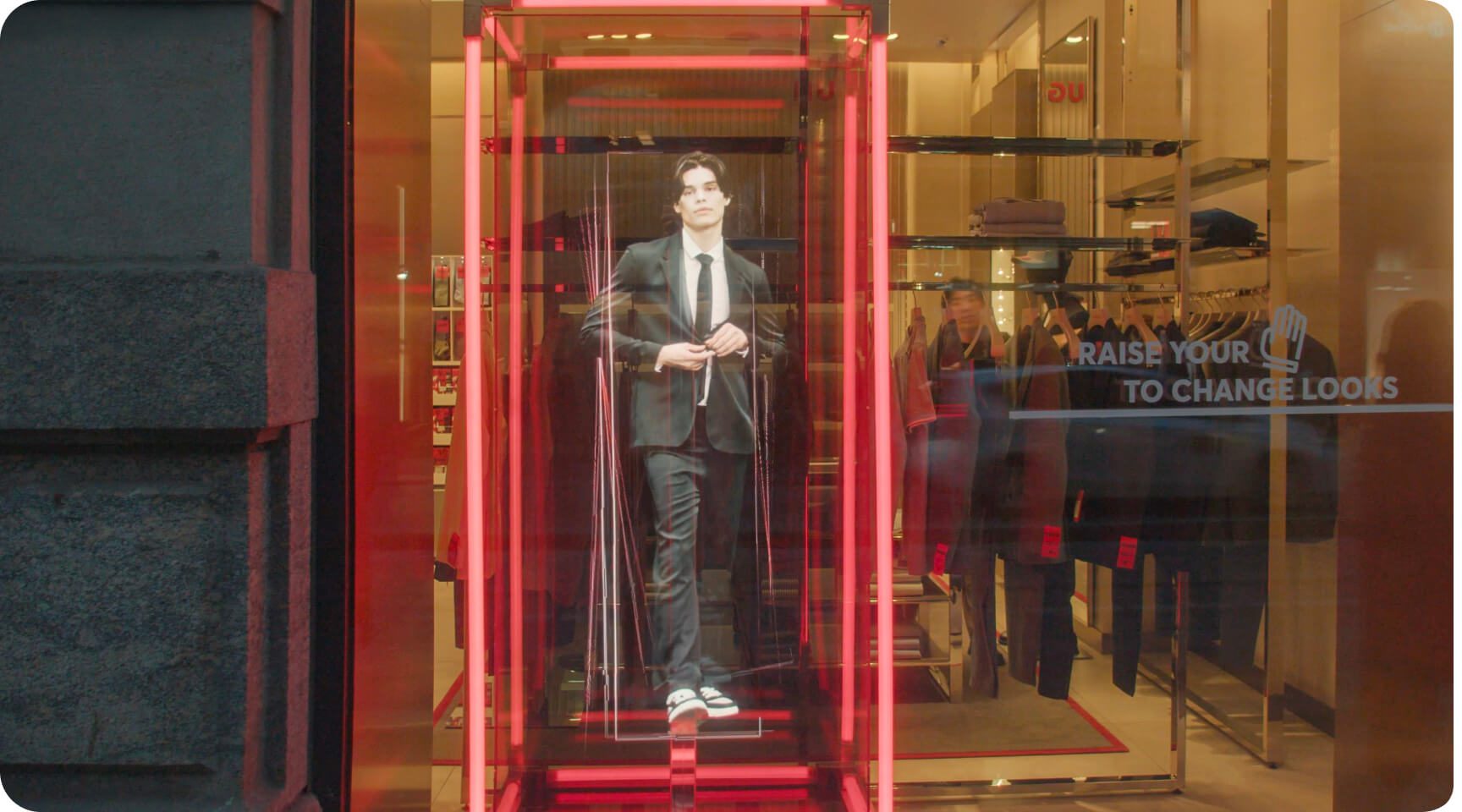
Solution: The novelty of 3D holograms stops people in their tracks, while interactivity encourages them to stay and engage. HUGO chose HYPERVSN’s Holographic Human technology to create a digital twin of influencer JeanCarlo Leon, letting passersby swipe through his Hugo Boss looks simply by raising a hand.

Key Outcomes


A holographic digital twin of a social media influencer with gesture-controlled personalisation, creating an interactive shop window experience.

A premium, highly shareable campaign that positioned Hugo Boss as a leader in fashion retail innovation without compromising its luxury aesthetic. 

HUGO BOSS 

About the Client

Country & Region

Hugo Boss AG is a globally recognised fashion group headquartered in Metzingen, Germany, with flagship stores across Europe, North America and Asia-Pacific. The group operates two distinct consumer-facing brands: BOSS and HUGO. This case study activation took place at their HUGO Milan store. 

Innovation Focus

HUGO’s digital native audience discover brands online, engage through social media and expect physical retail to match the energy of the brand’s digital presence. For HUGO, this means that their approach to in-store innovation must reflect the positioning of their online presence.  

Market Position & Scale

Founded in 1923 as a tailor company, Hugo Boss has grown into one of the world’s leading fashion retailers. With revenues exceeding €3 billion annually and stores in over 100 countries, the brand represents a cornerstone of European luxury fashion. HUGO is the younger, bolder face of the group.  

01. Challenge

Standing Out in the Luxury Retail Industry

Arrow CHALLENGE

Differentiation in a Crowded Retail Environment

Flagship stores in premium shopping districts face intense competition. Even the most beautifully curated traditional window displays struggle to stand out, especially when also competing with outdoor advertising and mobile phones. In this environment, static creative, blends into the background – particular for HUGO’s younger, digital native audience. These challenges are only amplified in Milan, one of the world’s fashion capitals whose shopping districts set the standard for visual merchandising, window design and in-store experience.
The global retail digital transformation market grew by 20.8%, from $235.92 billion in 2023 to $285.10 billion in 2024, reflecting a shift in how brands approach these challenges. Retailers that invest in technology to enhance customer engagement can achieve higher sales and revenue growth. These improvements stem from greater efficiency, consistency and – crucially – the ability to stand out from the crowd.

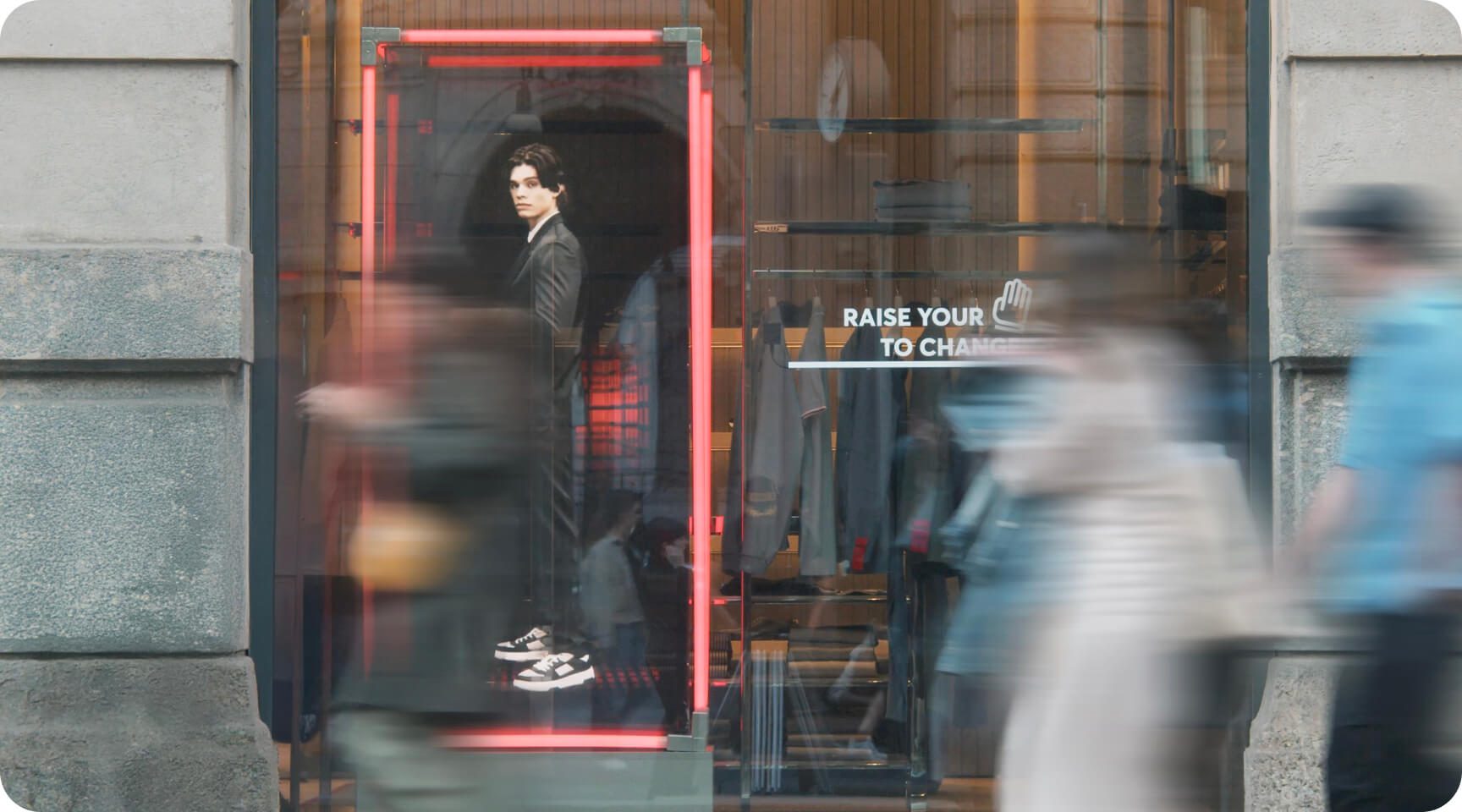
HUGO Store Window
Arrow CHALLENGE

From One-Way Display to Two-Way Engagement

For HUGO, the challenge was not simply to advertise a new collection. It was to create a memorable retail display that stopped foot traffic, increased dwell time and gave customers a compelling reason to walk in. A positive retail experience is driven by convenience, personalised service and a seamless, engaging environment. HUGO needed a storefront solution that could deliver this at the first point of contact.
Pain Point: Luxury window displays must compete for attention while maintaining a premium feel. Any solution had to feel high-end, considered and aligned with fashion aesthetics while capturing focus and appealing to a young, tech-savvy audience.

Traditional window displays fail to stand out in competitive luxury shopping districts and attract the attention of discerning Gen Z shoppers.

Static 2D signage struggles to create the emotional impact needed to convert passersby into store visits, and viewers into amplifiers.

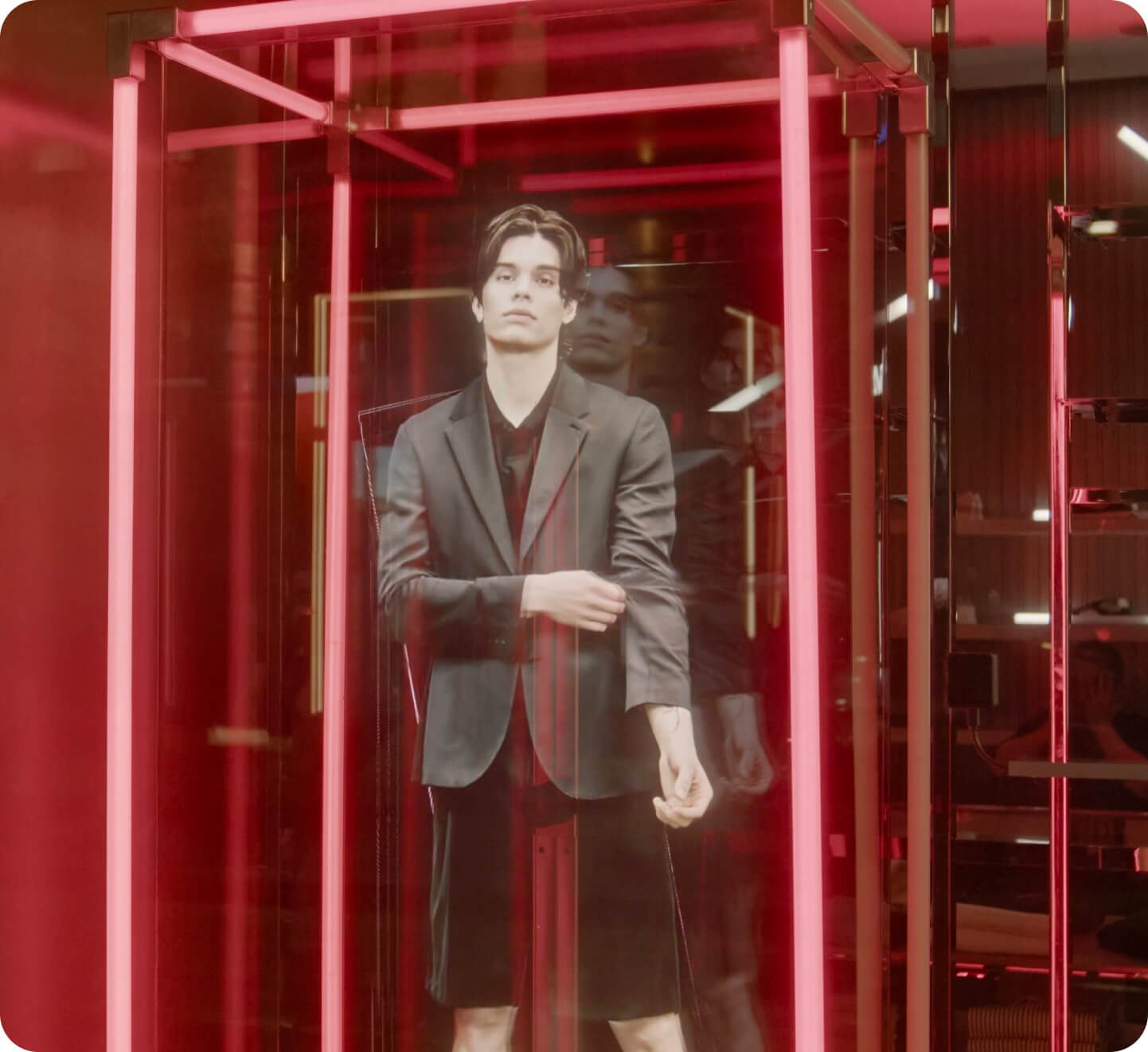
HUGO's Holographic Avatar

02. Challenge

Bridging the Digital-to-Physical Gap with New Technologies

Arrow CHALLENGE

The Retail Store as a Community Hub

Retail experience encompasses the impressions and emotions a customer forms through interactions with a retail brand, whether in-store or online. Maintaining consistency between those two environments is an important consideration, especially for brands targeting the discerning Gen Z consumer.
This is why physical stores are evolving from points of sale into brand hubs and community spaces. Retailers are shifting toward physical spaces that prioritise human connection and sensory engagement. For HUGO, the shop window is the first moment of that sensory experience.

HUGO's Store Window
Arrow CHALLENGE

Translating Online Engagement in Offline Spaces

Hugo Boss, like many luxury fashion brands, has invested heavily in digital-first content. This has been especially key to their strategy for HUGO, the cooler, younger sibling of BOSS defined by streetwear-adjacent design and bold colours. HUGO’s marketing approach includes influencer and TikTok-first campaigns, meeting their core audience where they’re most active. Its tagline – #HUGOyourway – is an invitation to self-expression that resonates most powerfully in online spaces where individuality is currency. Translating this energy into a physical retail environment that feels equally compelling poses a real challenge. Poorly executed technology can undermine brand integrity and feel gimmicky or outdated, alienating the customer.
Pain Point: HUGO’s digital-first identity creates a high bar for physical retail. Any technology deployed in the Milan flagship window had to feel genuinely interactive and on-brand, carrying the spirit of HUGO’s online presence.

A gap between the dynamic, interactive experiences HUGO’s Gen Z audience encounters on social media and what a traditional static window can deliver.

New technology must integrate seamlessly with existing visual merchandising and brand identity without feeling forced or off-brand.

HUGO Store Front
The Solution

Forward-Thinking Shopping Experiences

Retailers that prioritise customer-centric strategies often outperform their competitors in the market. For HUGO, a customer-centric storefront meant one that earned attention through genuine connection rather than just spectacle. That is exactly what holographic technology delivers, particularly when used in conjunction with interactive elements.

Why HYPERVSN?

HYPERVSN is the market leader in 3D holographic technology for, delivering sharp, vivid images with brightness up to 3,000 nits. Added interactivity makes passersby active participants rather than passive observers.

Hardware Configuration

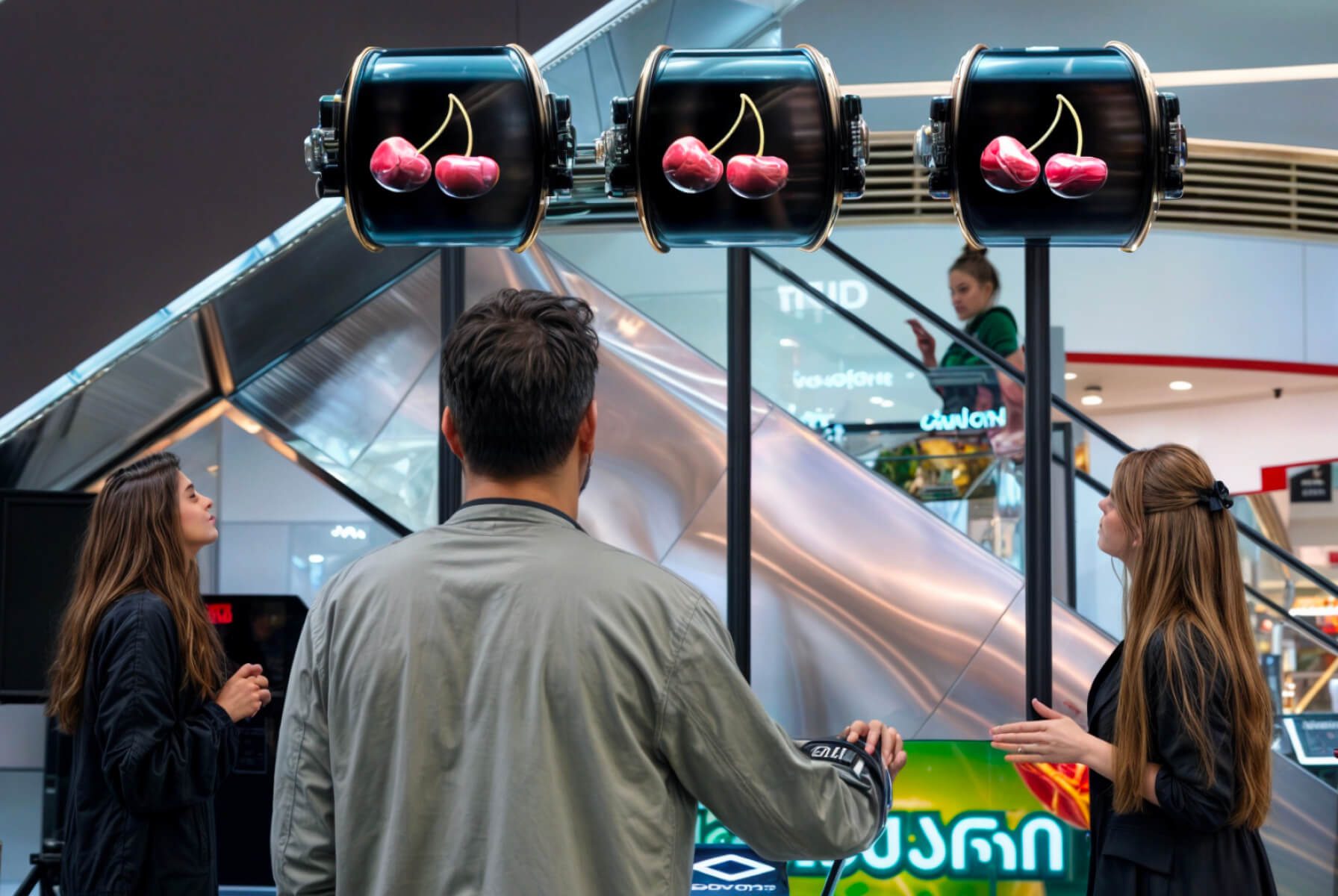
3-unit HYPERVSN SmartV Wall installed within the flagship store window, with a gesture camera sensor for interactivity.

Content Format

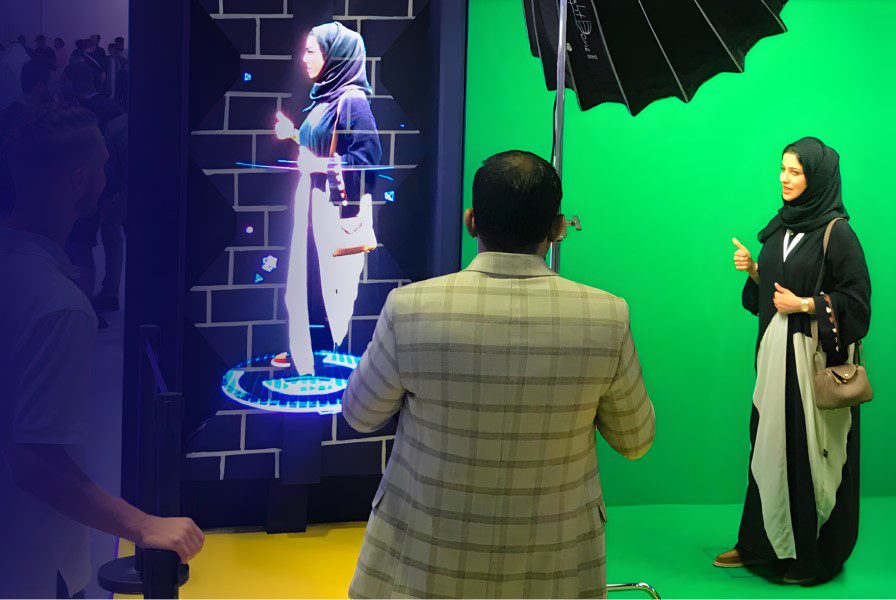
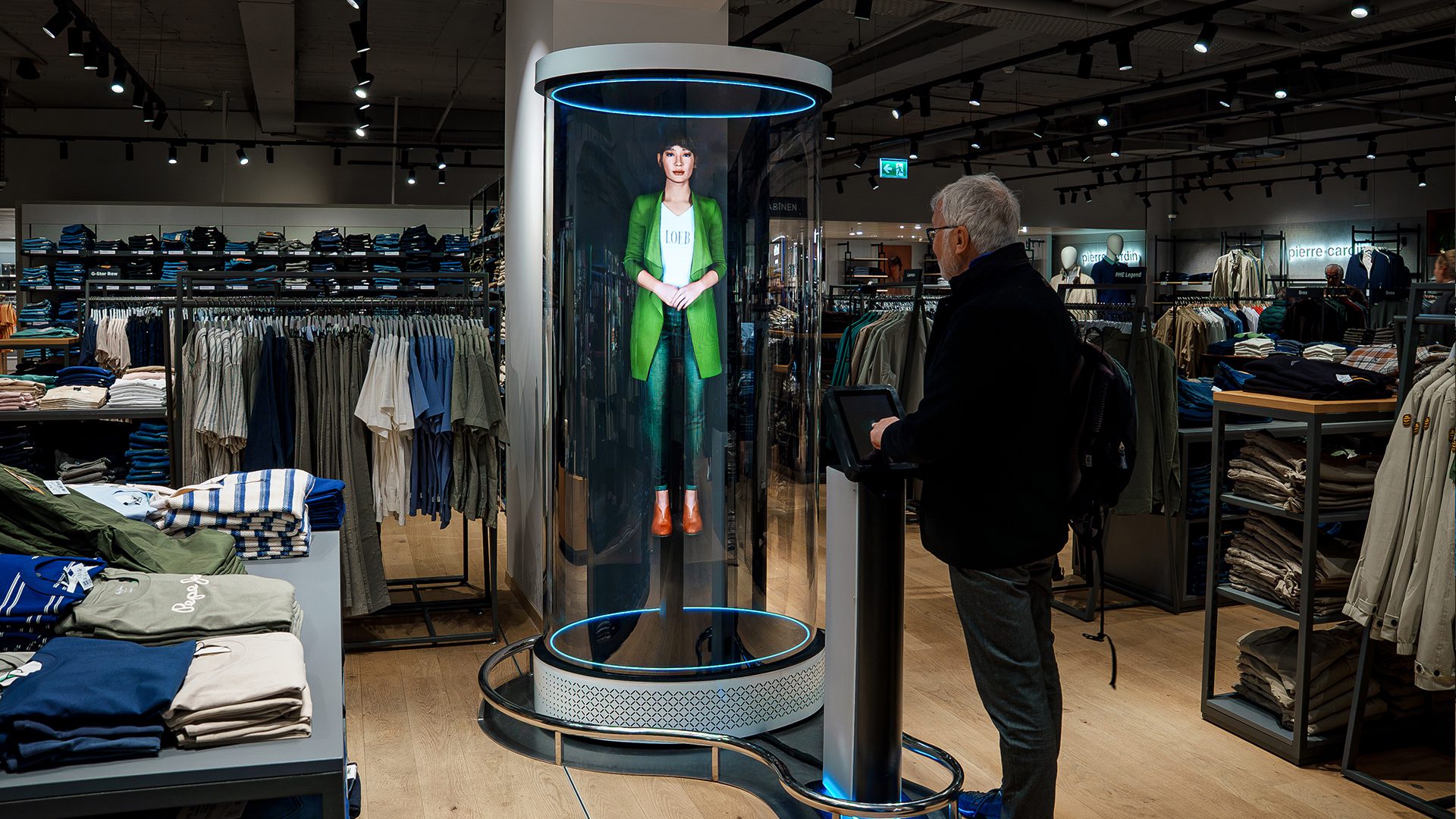
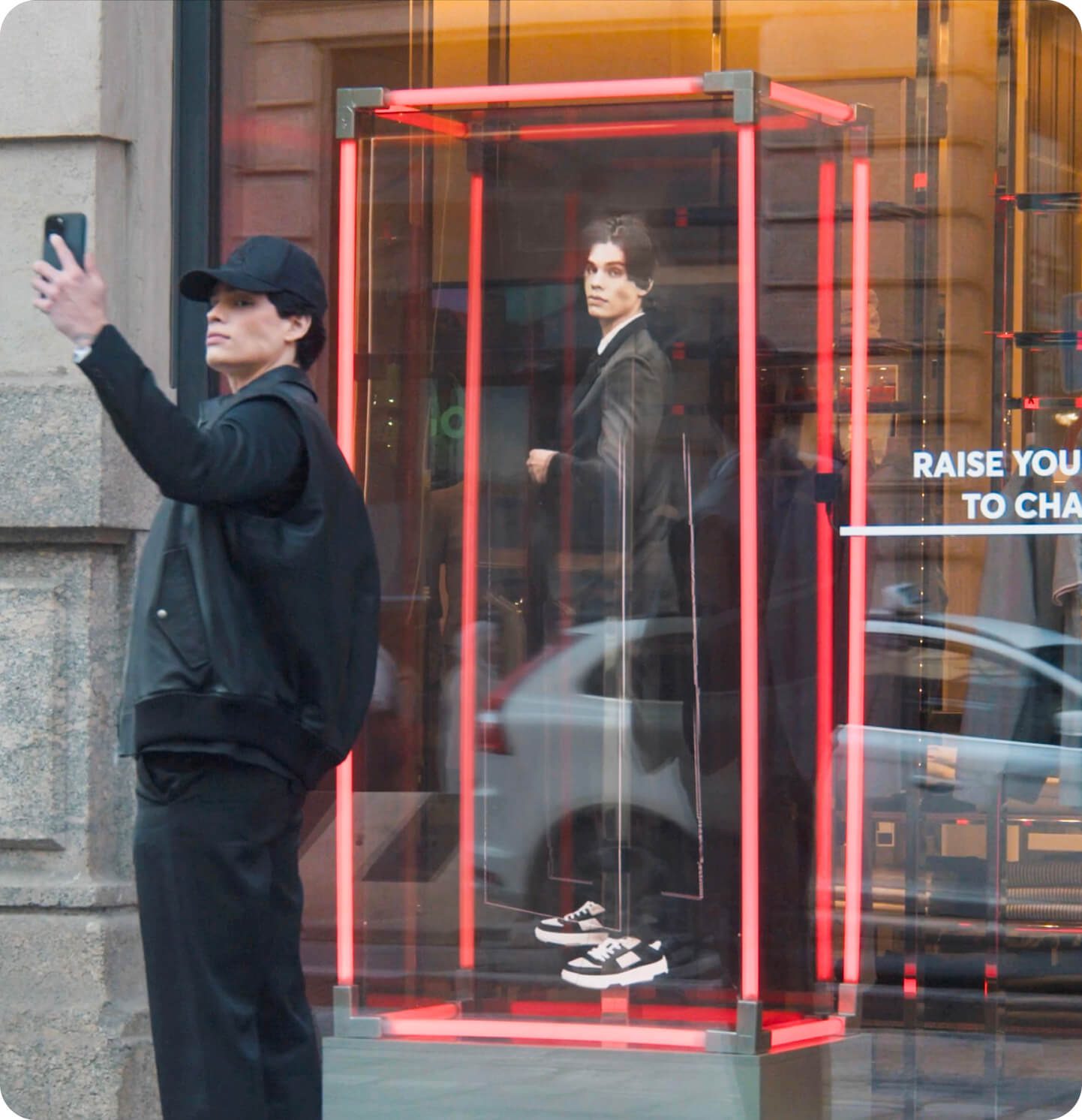
A life-size holographic digital twin of popular influencer Jean Carlo Leon, with gesture-controlled interactivity. The campaign was amplified by a video of Jean Carlo meeting his digital twin face to face and swiping through the outfits.

Placement Strategy

Positioned at the main entrance to maximise attention capture, encourage interaction from the street and create a powerful first impression.

Traditional 2D Signage

HYPERVSN 3D Holograms

Engagement

Low, blends into background High, stands out and elicits emotion

Storytelling

Limited, static or 2D animations Vivid, highly detailed 3D visuals

Phygital Effect

Feels separate from or imposed on physical store Augments and interacts with physical retail environment

Shareability

Low Highly Instagrammable

Impact in Innovation

Technology That Drives Growth for Retail Businesses

Customers

Visual Engagement

The life-size holographic digital twin of JeanCarlo Leon attracted immediate attention from passersby familiar with the social media star.

Interactive

Interactive Experience

The gesture-control mechanic transformed a passive window display into an immersive experience. Customers paused, interacted and lingered, with measurable increases in foot traffic and dwell time.

Perception

Brand Perception

The installation solidified HUGOs positioning as the trendy, innovation-driven luxury fashion arm of Hugo Boss. Deploying a holographic digital twin of a real influencer added authenticity and shareability.

Increase Arrows

Dwell Time

The interactive nature of the display gave passersby a reason to stop and stay. Each interaction extended engagement and deepened product exposure in a way that no static visual narrative could achieve.

Stars

Omnichannel Integration

Omnichannel integration is a priority for innovation in the retail industry, allowing seamless transitions between online and offline channels. The video of JeanCarlo meeting his double achieved this, extending the campaign’s reach.

Loyalty

Social Amplification

Both the interactive window display and the influencer video generated significant organic social reach. The result was earned amplification and valuable user-generated content.

Integration & Compatibility

Technology Used

This HUGO fashion retail innovation campaign used a 3-unit HYPERVSN SmartV Wall, configured as a HYPERVSN Holographic Human format, installed at the flagship store window.
Safety and compliance notes: Proper installation is required to avoid malfunctions or hazards. To prevent consumers from touching the holographic devices, an appropriate distance and/or protective accessories are recommended. HYPERVSN provides set-up support and a range of stylish, practical accessories.

4K resolution with brightness of up to 3,000 nits 

Patented technology 

Cloud-based CMS for ultimate control 

70% less energy consumption than traditional 2D LED screens 

YOUR HOW-TO GUIDE 

Innovate Your Retail Experience Like Hugo Boss

Integrating technology into the retail experience enhances convenience and efficiency but it can also create buzzworthy visual appeal. Here is a step-by-step guide to deploying holographic technology in your own retail environment, based on the approach HUGO used to make it work. 

  • Step 1: Define the Goal

    Start with a clear business outcome – foot traffic uplift, seasonal campaign launch, brand innovation storytelling, or product hero moment. Understanding customer behaviour and preferences is crucial for retailers to tailor their offerings effectively. HUGO aligned its holographic content directly with seasonal launchbrand positioning and audience insights, ensuring the technology served a clear strategic purpose. 

  • Step 2: Choose Format and Placementt

    Evaluate your retail space, foot traffic patterns and visual hierarchy. The layout and design of a store are fundamental elements of the retail experience. HUGO chose the HYPERVSN Holographic Human for its flagship window, a high-visibility location that maximised both impact and interactivity from the street.  

  • Step 3: Develop Premium, Brand-Aligned Content

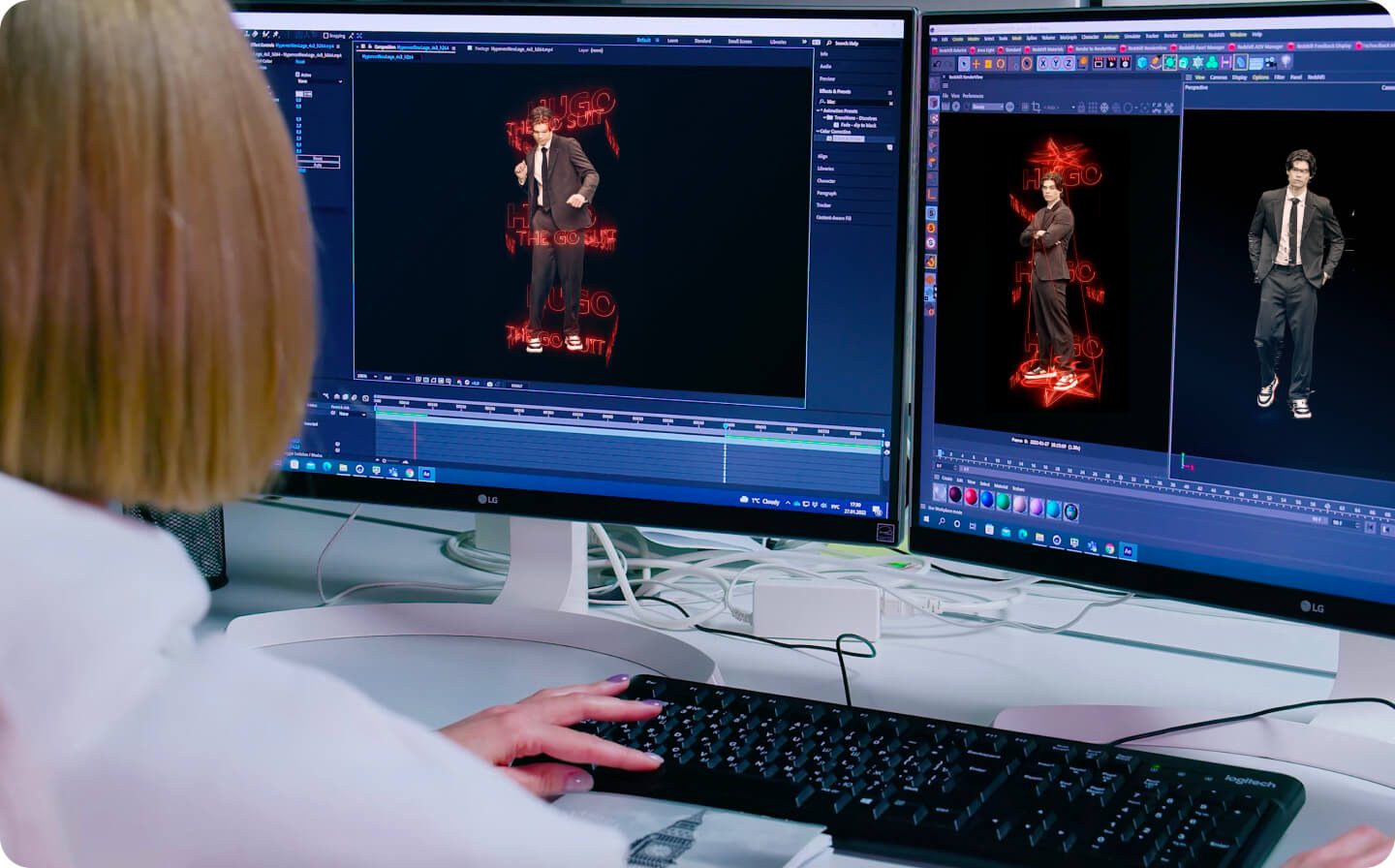
    Content quality determines whether the technology feels like a luxury investment or an afterthought. HYPERVSN’s world-class Design Lab work closely with clients to transform brand assets into compelling 3D visual narratives.  

  • Step 4: Integrate with Existing Visual Merchandising

    The holographic content should enhance, not replace, your existing retail design. Coordinate with visual merchandising, lighting and facilities teams to ensure seamless integration with store architecture and brand identity.  

  • Step 5: Measure and Iterate

    Use the HYPERVSN CMS to track engagement, refresh content seasonally and optimise based on performance. Brands that treat holographic installations as evolving assets rather than one-time activations will extract significantly more value over time. 

Need Clarification?

Frequently Asked Questions

  • What are 3D holograms?

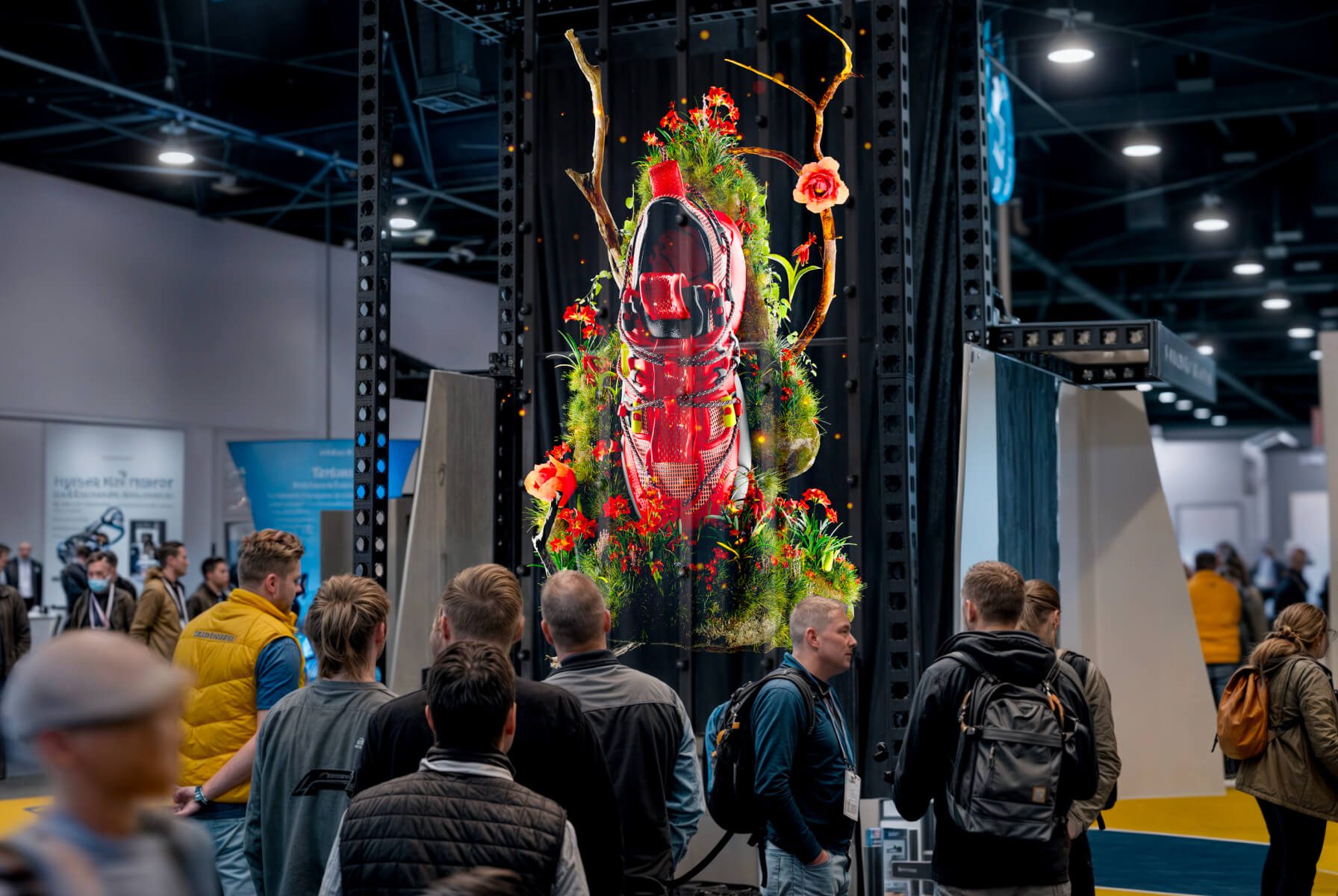
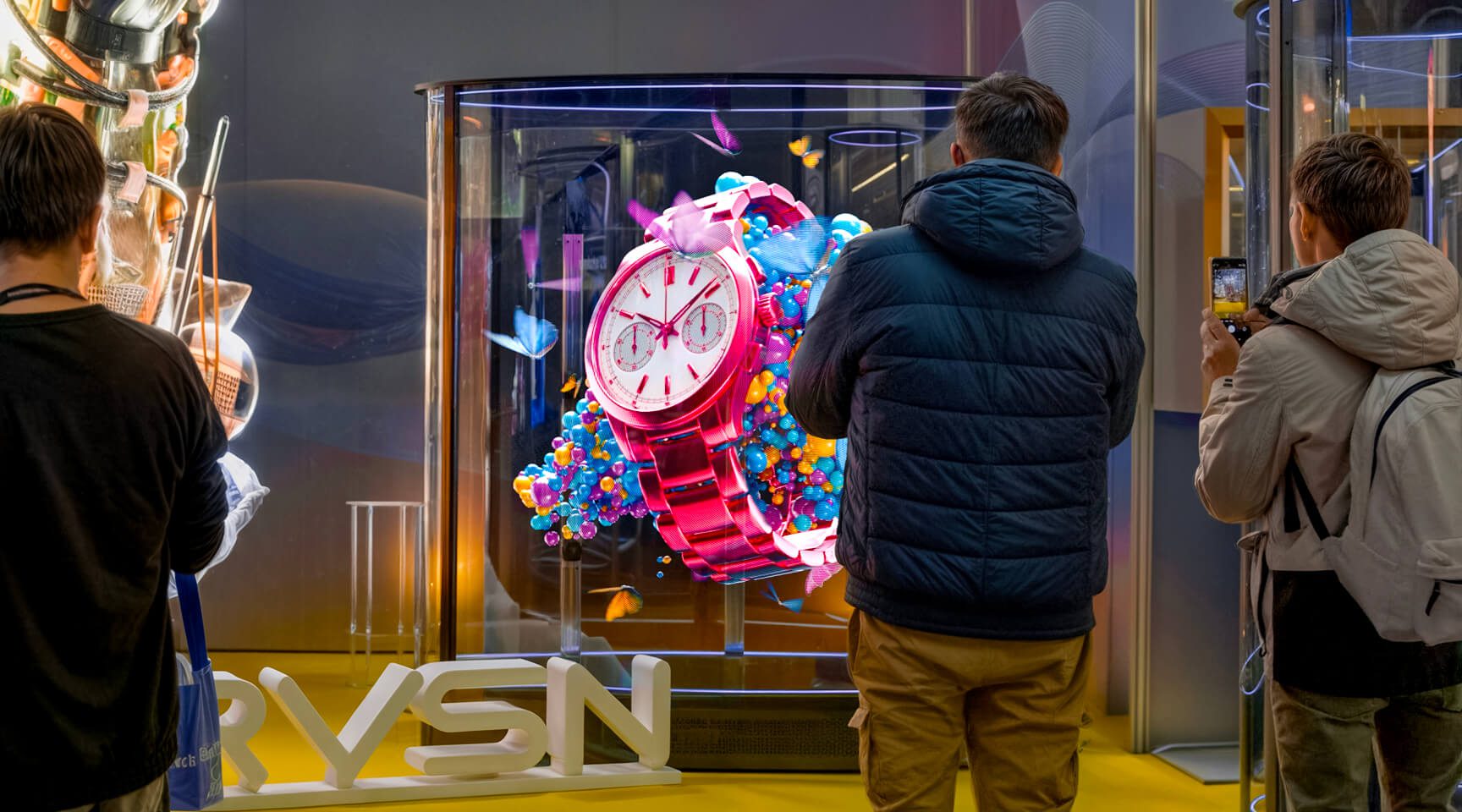
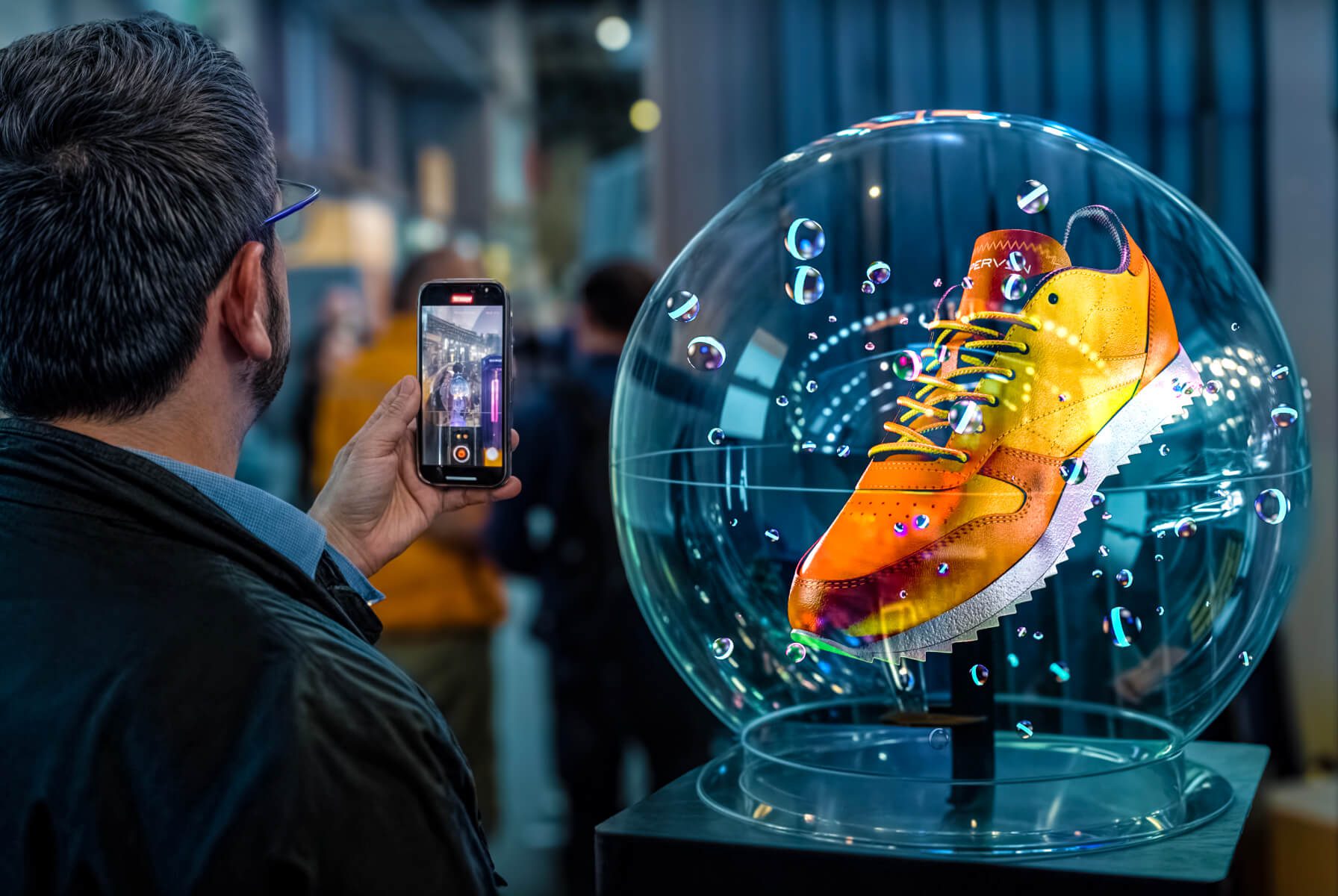
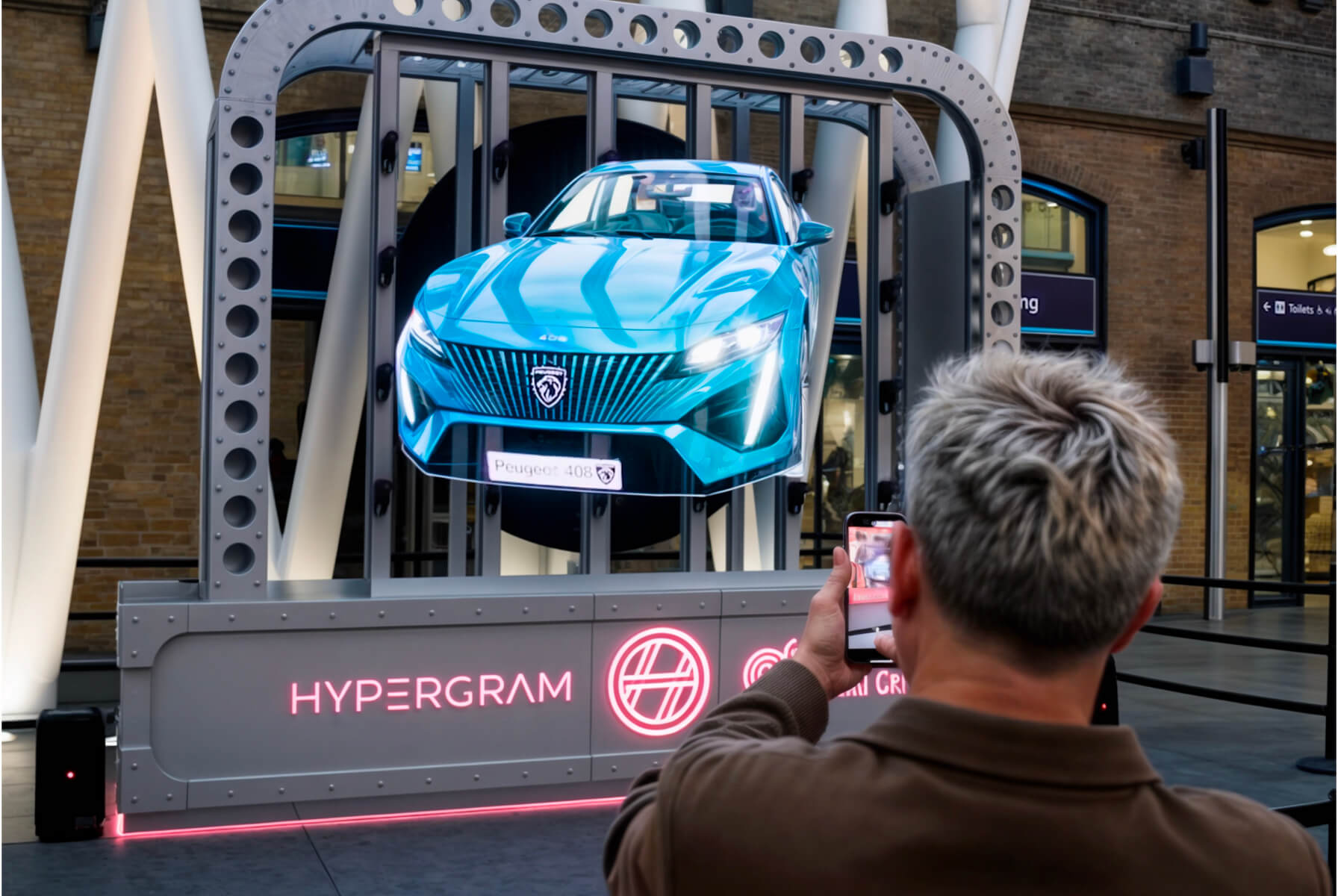
    HYPERVSN 3D holograms use proprietary technology to generate sharp, vivid images that appear to be floating in mid-air. Our devices use high-speed LED-based rotors spinning at speeds that make the blades invisible to the human eye, leaving only high-definition 3D holographic content. Unlike traditional 3D displays, our solutions don’t require specialist glasses or headsets – the 3D effect is visible to the naked eye. With a brightness of 3,000 nits, these displays remain vivid even under intense lighting and bright, outdoor environments. Combining our hardware with exceptional 3D design, we create immersive experiences that enhance consumer experiences through digital signs and billboards, helping to increase footfall in physical stores. 

  • Why are holographic solutions effective for luxury fashion retail?

    Holographic technology combines visual innovation with premium aesthetics, differentiating luxury flagships from competitors relying on traditional 2D signage. It enables brands to communicate sophisticated product storytelling in immersive, memorable ways that resonate with design-conscious luxury consumers. A good retail experience is a must for customer satisfaction and loyalty, and the storefront is the first chapter of that experience. Omnichannel integration is essential for retailers to provide seamless transitions between online and offline shopping experiences and holograms can be an excellent ‘phygital’ tool for this. Excellent customer service is key for a great retail experienceA holographic window primes customers for a higher-quality interaction and sales conversations before they have even walked in. 

  • What role does immersive retail technology play in modern fashion retail innovation?

    Digital innovation is advantageous to the company’s survival, providing improved data-driven decision making, increased operational efficiency, and enhanced customer experience. Retailers that prioritise innovation in customer experience and supply chain agility are outperforming peers. Immersive retail solutions are associated with increased dwell time and stronger brand recall. They bridge the digital-to-physical gap, allowing brands to translate digital-first content into compelling physical experiences. In 2026, a positive retail experience is defined by the seamless integration of digital convenience with immersive, value-driven physical environments. Holographic window activations are one of the most powerful tools available to deliver that integration at the storefront. Retailers investing in unified platforms can connect digital browsing with in-store fulfilment, creating a smoother purchasing journey. Personalisation has become a core driver of retail innovation, with data and AI powering more tailored shopping experiences. Interactivity and AI integration are excellent ways to deliver this personalised experience. Automation streamlines operations in retail, reducing errors and accelerating fulfillment. 

  • What can retailers do to enhance customer experience?

    Retailers can enhance the in-store experience by blending technology with personalised service and gathering customer feedback for continuous improvement. Key elements of a positive retail experience include fast, friction-free checkout, knowledgeable staff, well-organised inventory and consistent branding across channels. In fact, 77% of consumers are more loyal to brands that offer proactive help, such as notifying them of order delays or assisting them when they appear to struggle at a checkout kiosk. Long checkout lines are a primary pain point among consumers; 86% of shoppers avoid stores where they expect long waits. Interactive kiosks and mobile self-checkouts provide speed and autonomy for mission-driven shoppers. Effective customer service requires investment in staff tools and training to ensure positive shopping experiences. Despite the power of retail innovation, training staff for excellent service is essential for a positive retail experience. Retail employees are expected to have expert knowledge about the products they sell to provide accurate information to customers. Retail employees are typically tasked with greeting customers and answering queries and are expected to manage difficult customers professionally and respectfully. Training programs that focus on communication, problem-solving and empathy equip staff to handle various customer needs effectively. Well-organised products are also crucial for customer satisfaction and prevent missed sales opportunities. Organising stock is a chief duty of retail employees, which varies according to the type of stock handled. Checking for expiration dates is a critical responsibility for retail employees in food-based businesses. Personalisation significantly enhances the retail experience by making customers feel valued and understood. Retailers that implement AI-driven shopping and personalised recommendations can significantly enhance customer engagement. AI shopping agents are becoming standard, helping customers filter, compare and discover products before entering a store. Successful retail brands often utilise loyalty programs to encourage repeat business and increase customer retention. Ultimately, stores should act as cultural centres that foster a sense of belonging and community.

  • What is the environmental impact of HYPERVSN holographic displays?

    HYPERVSN 3D holograms use 70% less energy than traditional 2D LED screens, primarily because the LED rotors require significantly less power than a solid backlit panel. Remote content updates via the HYPERVSN CMS also eliminate the need for printed promotional materials, reducing waste across the campaign lifecycle. For sustainability-conscious brands, this makes holographic technology a responsible as well as a commercially effective choice. Sustainability is a competitive differentiator and a growing area for retail innovation, appealing to socially conscious consumers. Sustainability practices are increasingly important for retailers as they align with consumer values and enhance brand loyalty. Retailers that embed sustainability into their operations align with customer values and position themselves for long-term growth. 

Start Your Project with HYPERVSN

Get in touch to discuss how 3D holography could transform your passenger experience and boost customer satisfaction.

4 Item in cart

HYPERVSN 3D Catalog

USD 1,200

Qty

Remove Item

HYPERVSN 3D Catalog

USD 1,200

Qty

Remove Item

HYPERVSN 3D Catalog

USD 1,200

Qty

Remove Item

Cart Subtotal:

USD 3,600