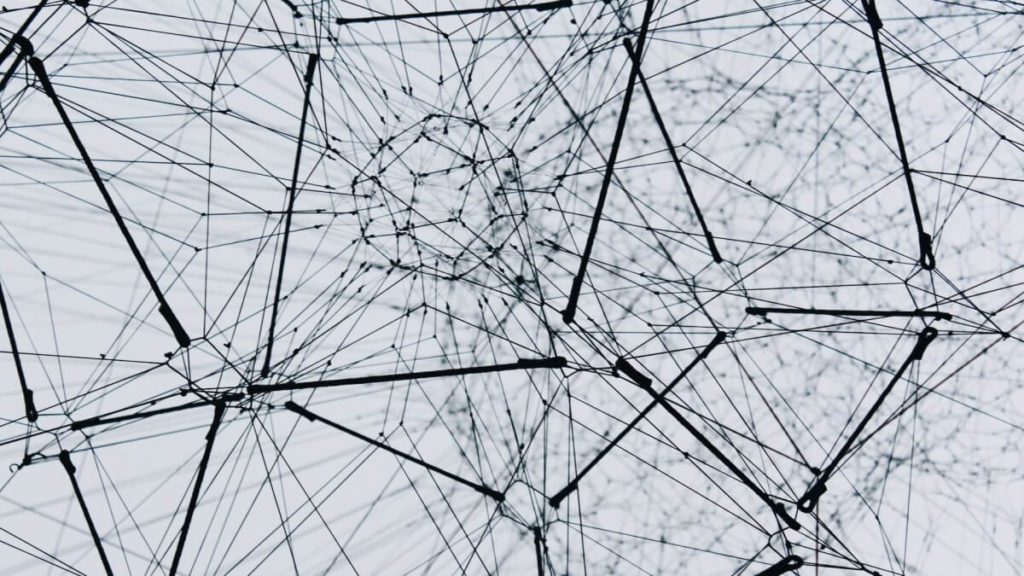
Web 3.0 is a vision of a more open, transparent and participatory Internet, where users have more control over their data, identity and interactions. One of the key aspects of Web 3.0 is decentralisation. It means that the Internet is not controlled by a few centralised entities but by a network of distributed nodes that cooperate and compete with each other.
How can decentralisation be achieved in Web 3.0? There are several technologies and protocols that aim to enable decentralisation, such as:
Blockchain
A blockchain is a distributed ledger that records transactions and events in a secure and verifiable way. Blockchain can provide trustless and censorship-resistant platforms for various applications, such as cryptocurrencies, smart contracts, decentralised finance and more.
Peer-to-peer (P2P) networks
On P2P networks each node can communicate directly with any other node without relying on intermediaries or servers. P2P networks can facilitate data sharing, content delivery, communication and collaboration among users.
Distributed storage
Distributed storage is a system where data is stored across multiple nodes, instead of a single server or cloud provider. Distributed storage can offer higher availability, scalability and privacy for data storage and access.
Distributed computing
Distributed computing is a system where computation is performed by multiple nodes instead of a single server or cloud provider. Distributed computing can offer higher efficiency, scalability and resilience for complex tasks and applications.
Open-source software
Open-source software can also contribute to decentralisation by allowing individuals to collaborate on the development of software without the need for a centralised organisation to control it. It can help create a more democratic internet, where individuals have more control over the technology.
Conclusion
However, decentralisation is not only a technical challenge but also a social and economic one. It requires new models of governance, incentives and collaboration among users, developers and stakeholders. Decentralisation is not an end goal but a means to create a more democratic, fair and innovative internet for everyone.