Holograms in education are changing the way students explore complex subjects, visualize information and interact with learning materials. By presenting three-dimensional (3D) content in a more engaging and accessible format, holographic displays can help make abstract concepts easier to understand and transform traditional lessons into interactive learning experiences.
From medical anatomy and scientific research to engineering, history and museum exhibitions, holographic technology offers new possibilities for schools, universities and educational institutions.
But how exactly can holograms be used in education? What are their main benefits, and can they improve learning outcomes? Let’s explore the most practical applications.
What Are Holograms in Education?
Holograms in education refer to technologies that present three-dimensional visual content to support teaching, learning and knowledge sharing. Instead of relying exclusively on flat images, diagrams or video presentations, students can explore digital representations of objects, structures and processes in 3D.
The term holographic technology is used broadly across the education and display industries. Different solutions create 3D experiences in different ways.
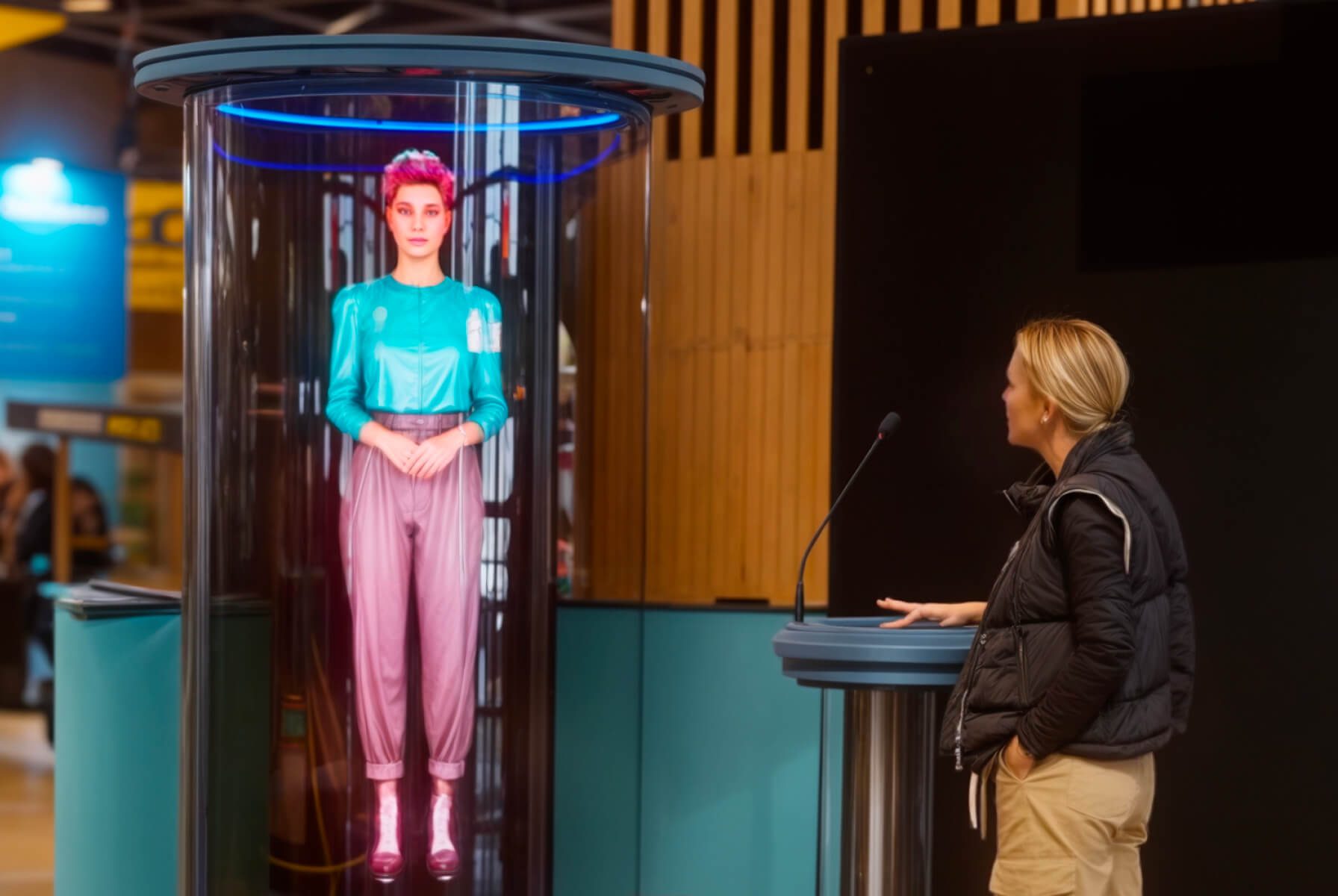
For example, augmented reality (AR) places digital objects into a user’s view through a smartphone, tablet or headset. Virtual reality (VR) creates an entirely simulated environment. Dedicated 3D holographic displays, on the other hand, present visual content that appears to float in physical space and can be viewed by multiple people around the display.
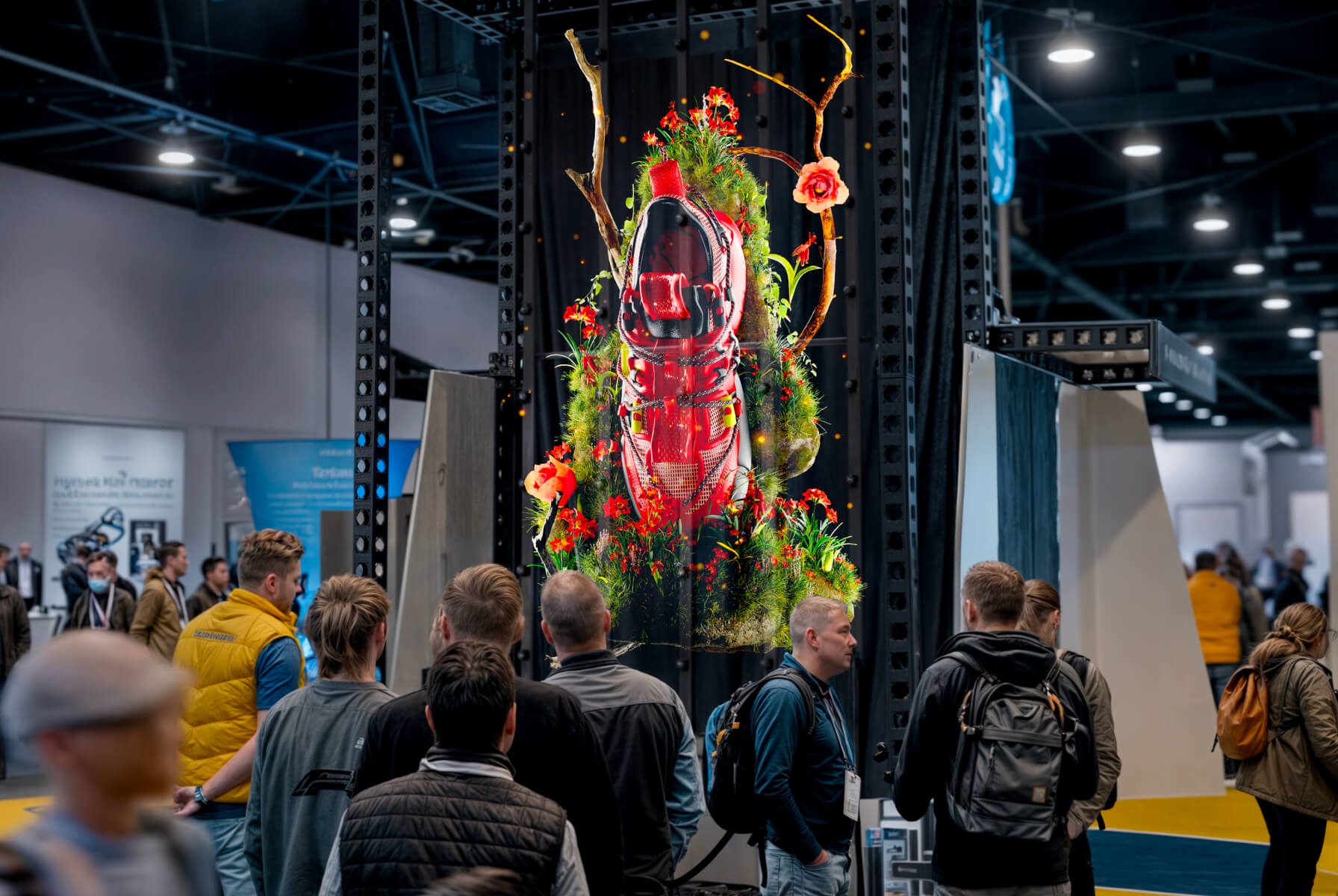
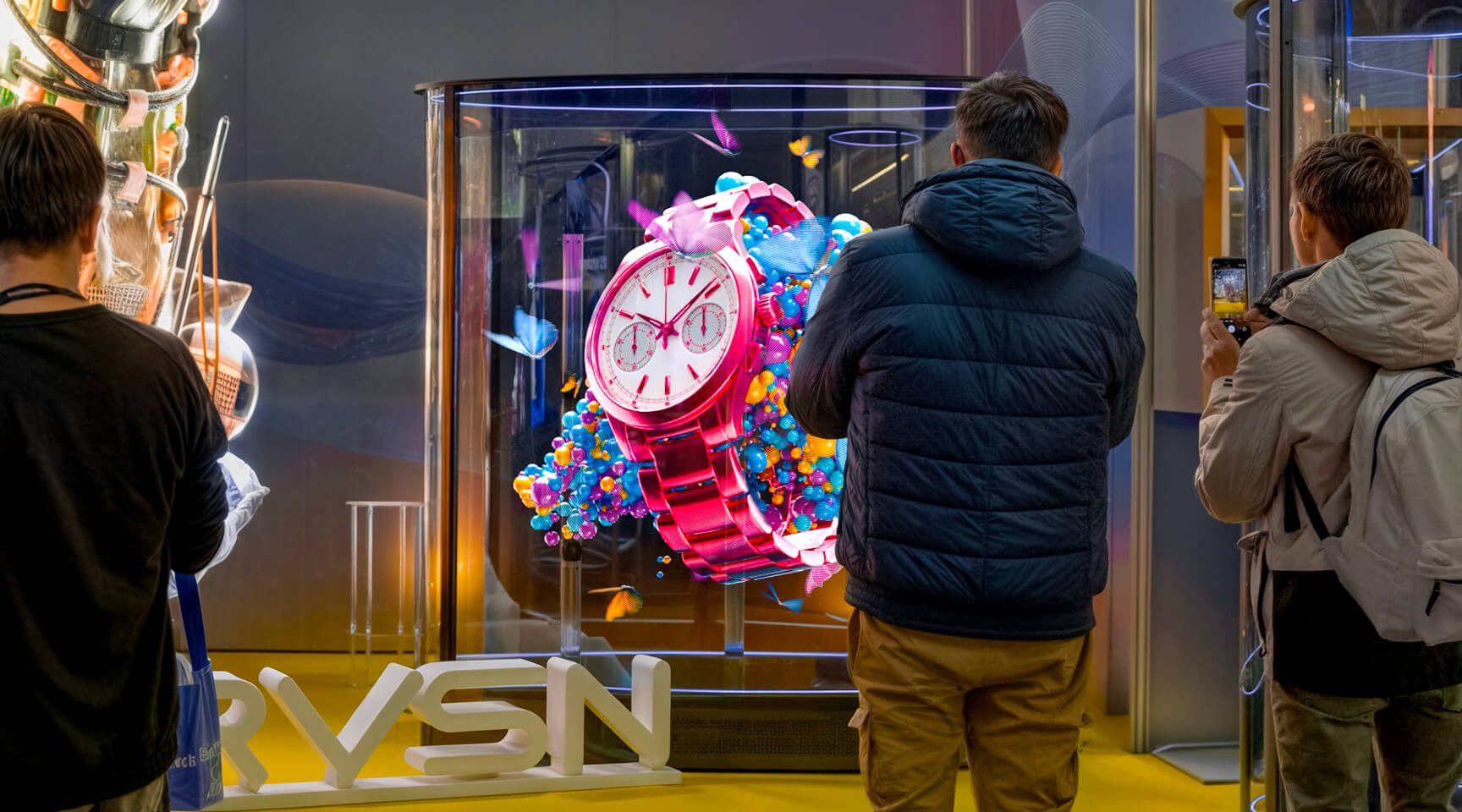
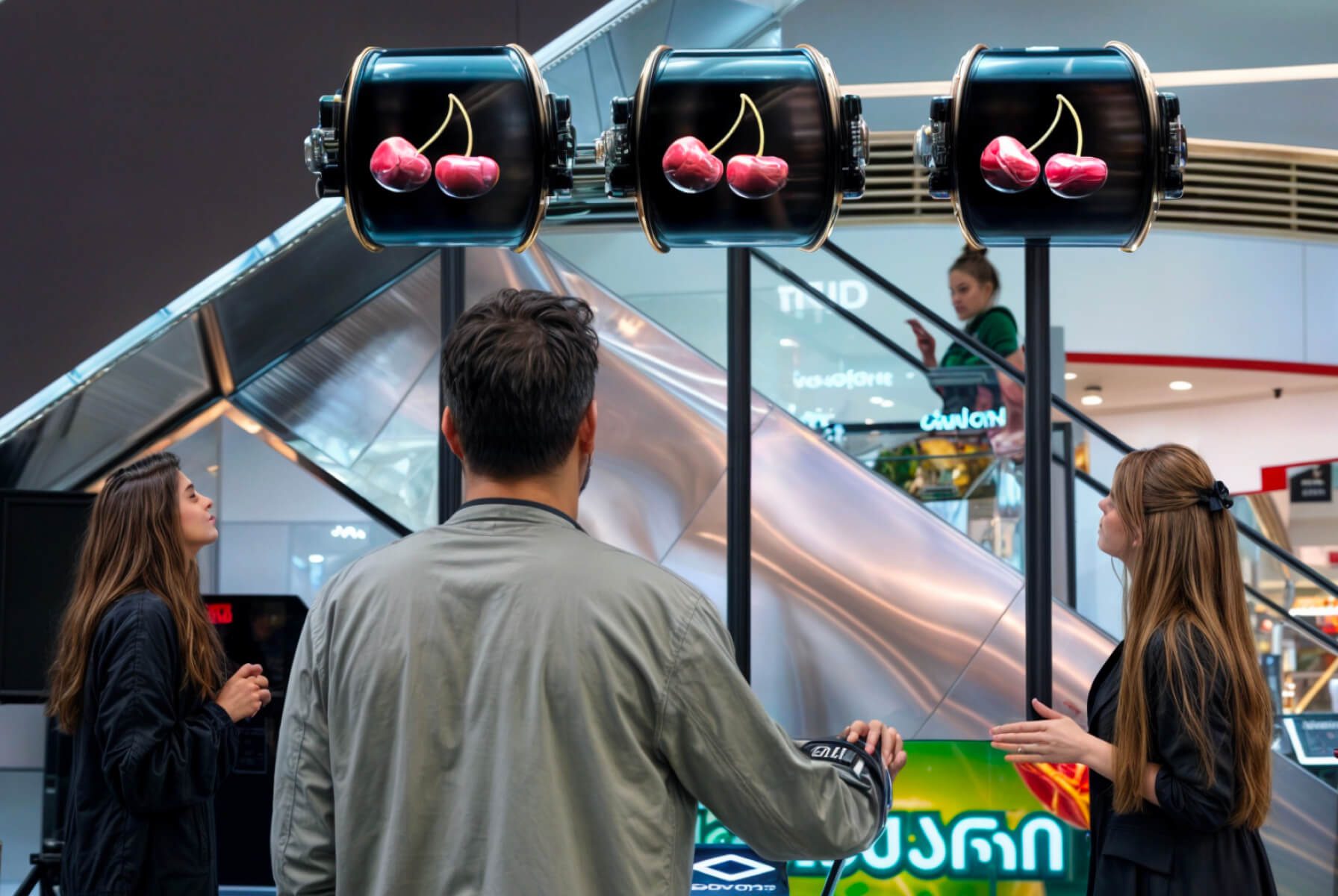
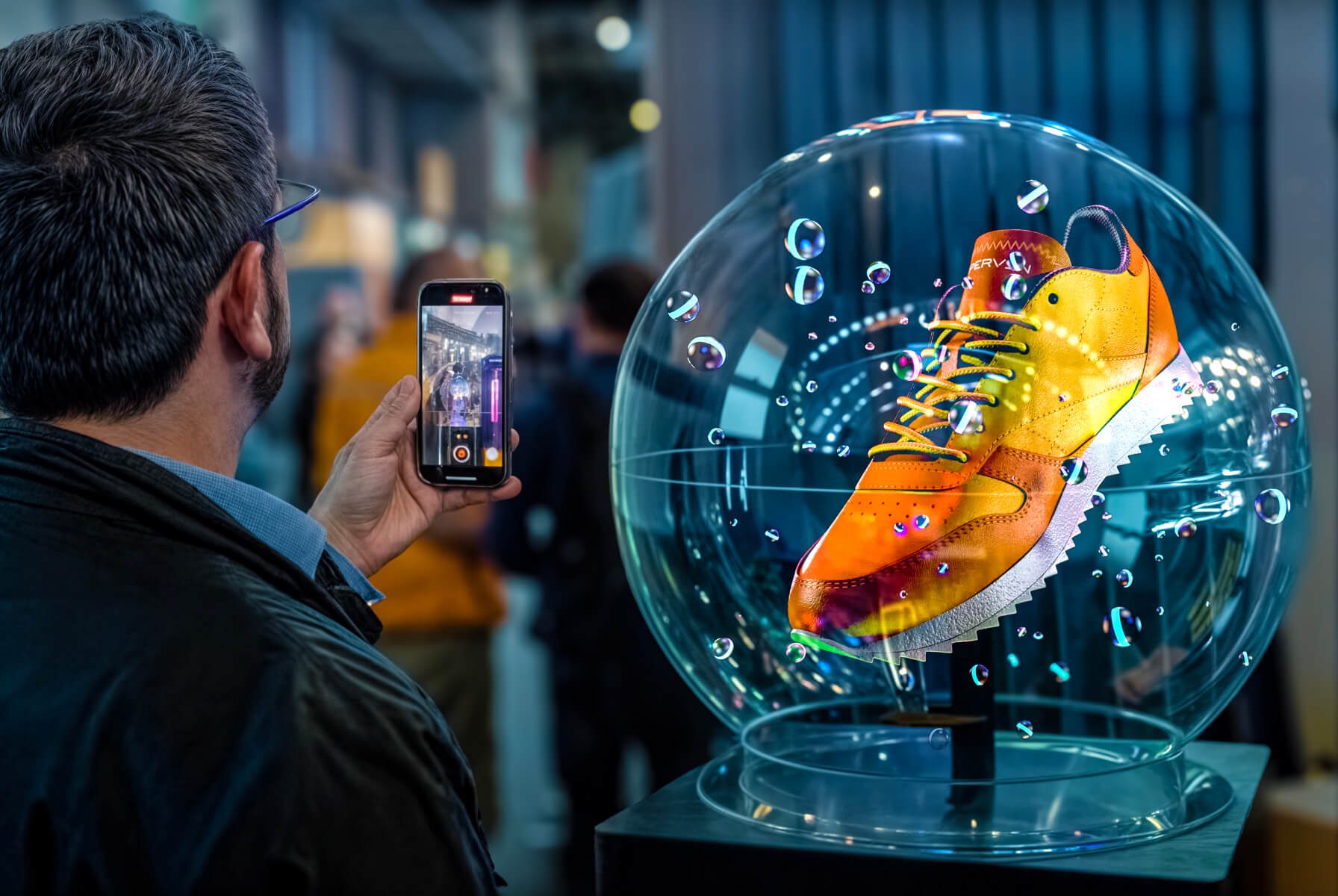
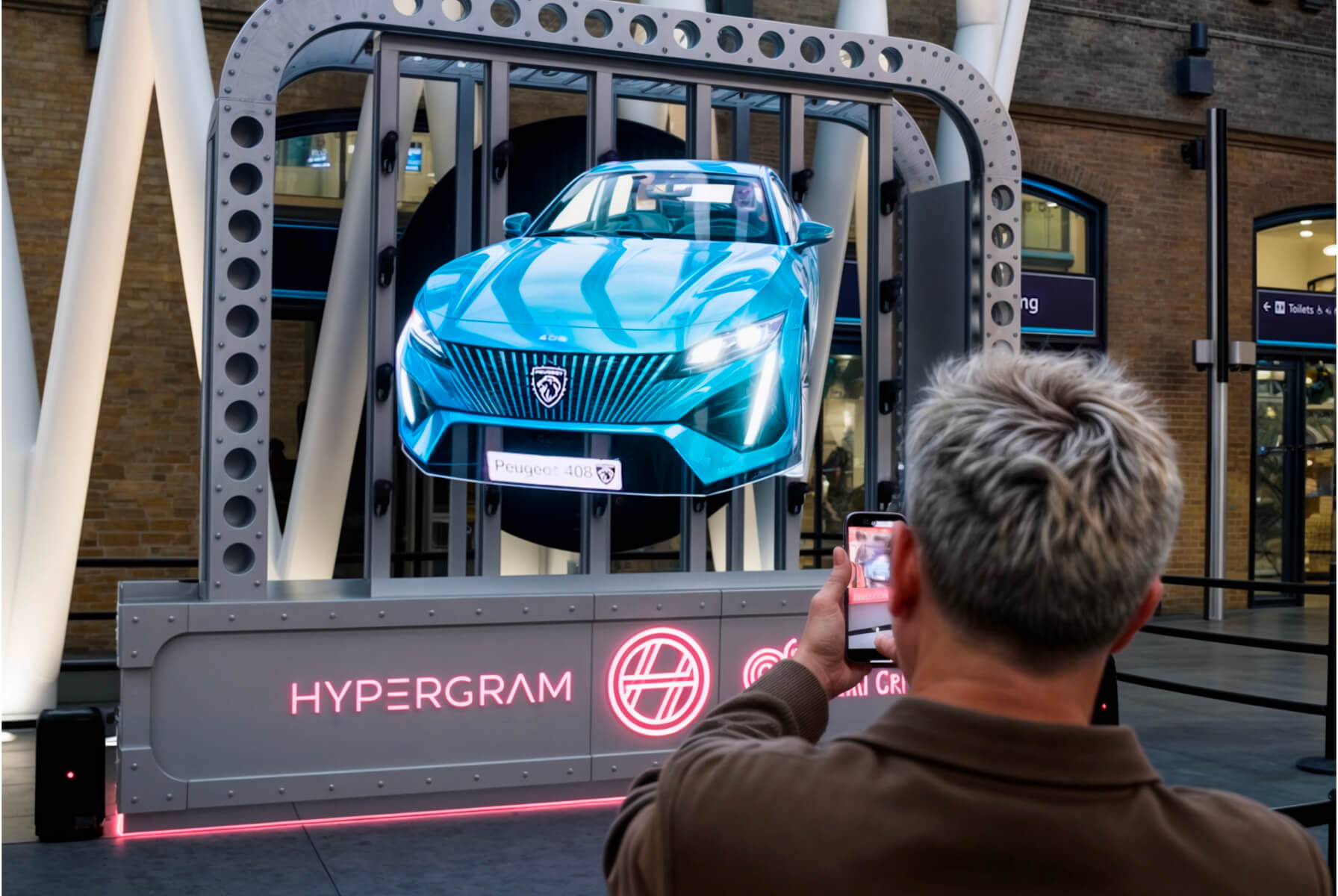
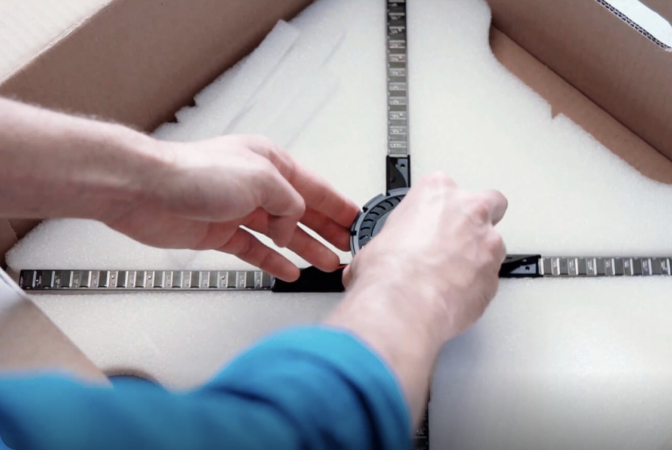
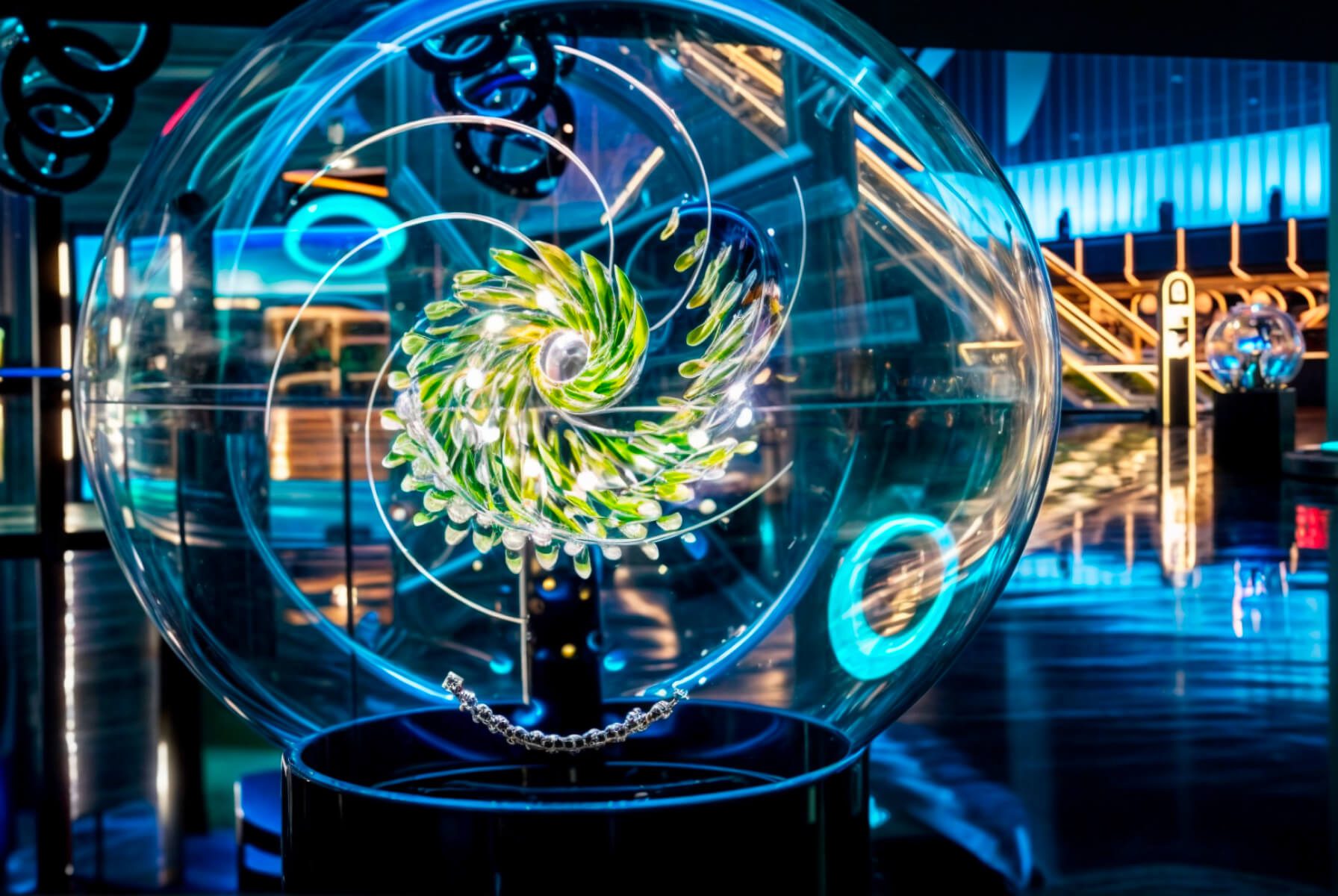
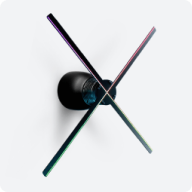
HYPERVSN uses a four-ray LED-based rotor display that rotates at high speed to create the visual effect of 3D content floating in mid-air. This makes it possible to present digital models without requiring every viewer to wear an individual headset.
The most important educational advantage is the ability to make spatial information easier to explore and discuss.
7 Practical Applications of Holograms in Education
Holographic displays can support different subjects and learning environments. Their greatest value comes from using 3D visualization where understanding an object’s shape, structure, components or spatial relationships is important.
1. Medical Education and Human Anatomy
Medical education is one of the most promising areas for 3D visualization. Understanding the human body requires students to learn how organs, bones, muscles, blood vessels and other anatomical structures relate to one another.
Traditional illustrations and textbooks provide essential information, but they cannot always communicate complex spatial relationships effectively.
3D holographic models can help medical students:
- Explore the structure of the human heart, brain and other organs.
- Examine anatomical structures from different angles.
- Understand how individual organs and body systems relate to each other.
- Study complex anatomical details using interactive digital models.
- Review medical concepts without relying exclusively on flat diagrams.
For example, an interactive 3D model of a human heart can help students examine its chambers, valves and surrounding structures. Models of the brain can illustrate different anatomical regions and their relationships.
Research also provides encouraging evidence. A randomized study published in Medical Education in 2018 involved 179 nursing students who studied cardiac anatomy using holographic 3D visualization, conventional 3D PDFs or printed 2D images. Students in the hologram group achieved higher post-test scores than those using the other two formats.
However, holographic visualization should complement rather than replace anatomy laboratories, clinical demonstrations and practical medical training.
2. Biology, Chemistry and Physics
Many scientific concepts are difficult to understand because students cannot directly observe the processes being discussed.
Holographic 3D visualization can make these concepts more tangible by displaying structures and processes in a spatial format.
Possible applications include:
Biology
- 3D representations of cells and their internal structures.
- DNA and molecular models.
- Human body systems and biological processes.
- Plant anatomy and ecological structures.
Chemistry
- Molecular structures and chemical bonds.
- Three-dimensional representations of chemical compounds.
- Molecular geometry and atomic arrangements.
- Visual explanations of chemical reactions.
Physics
- Three-dimensional demonstrations of forces and motion.
- Electromagnetic field representations.
- Planetary systems and orbital movements.
- Models illustrating complex physical phenomena.
For example, a 3D molecular model allows students to examine the spatial arrangement of atoms and bonds rather than relying exclusively on a two-dimensional chemical formula.
This approach is particularly useful when the learning objective involves understanding structure, scale, orientation or spatial relationships.
3. Engineering and Technical Training
Engineering students often need to understand how complicated machines, mechanical systems and technical components work.
Physical equipment is not always available for classroom demonstrations, while conventional diagrams may make it difficult to understand how individual components fit together.
Interactive 3D holographic models can help students explore:
- Mechanical components and industrial equipment.
- Automotive engines and transmission systems.
- Aircraft and aerospace structures.
- Electrical and electronic devices.
- Architectural and engineering models.
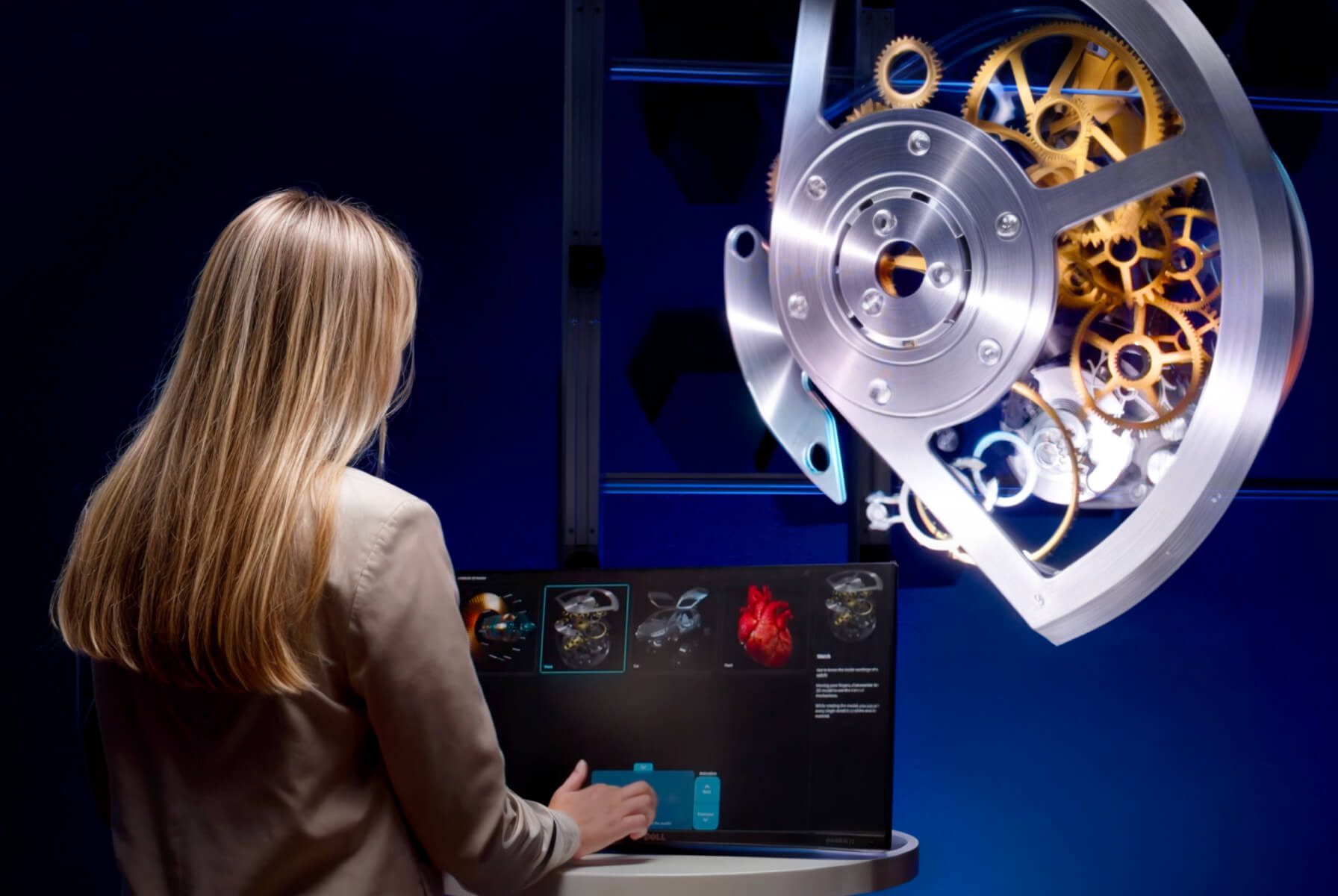
Students can examine a digital model, rotate it, inspect different components and, where the software supports it, trigger animations showing how individual parts fit together.
For vocational education and technical training, this creates opportunities to introduce equipment and mechanical systems before students work with real machinery.
It can also make demonstrations easier to repeat without needing to disassemble physical equipment during every lesson.
4. History and Cultural Heritage
Holographic displays can make history more visually engaging by bringing historical objects, monuments and cultural artefacts into an educational environment.
Instead of simply reading about a historical object, students can examine a three-dimensional representation of it.
Potential applications include:
- 3D models of historical buildings and monuments.
- Reconstructions of archaeological artefacts.
- Historical objects presented in museum exhibitions.
- Visual representations of ancient architecture.
- Educational presentations about historical events and civilizations.
For example, a museum could display a 3D reconstruction of an ancient architectural structure, allowing visitors to examine its appearance and details from different viewpoints.
This approach can also help educational institutions present cultural heritage when displaying or handling original artefacts is impractical.
5. Museums, Libraries and Science Centres
Educational experiences are not limited to traditional classrooms. Museums, libraries, science centres and public exhibitions also play an important role in informal learning.
Holographic displays can attract visitors’ attention and provide an additional way to explore educational content.
Possible applications include:
- Interactive educational exhibits.
- 3D representations of scientific objects.
- Digital museum collections.
- Information displays explaining exhibitions.
- Educational content for children and families.
An exhibition could use a 3D display to present an object that is too large, too delicate or otherwise unsuitable for direct physical demonstration.
Visitors can explore the displayed information while the institution provides additional explanations through traditional labels, audio guides or educational materials.
6. Language Learning and Cultural Education
Learning a language involves more than memorizing vocabulary and grammar. Students also benefit from exposure to different cultures, communication styles and real-world situations.
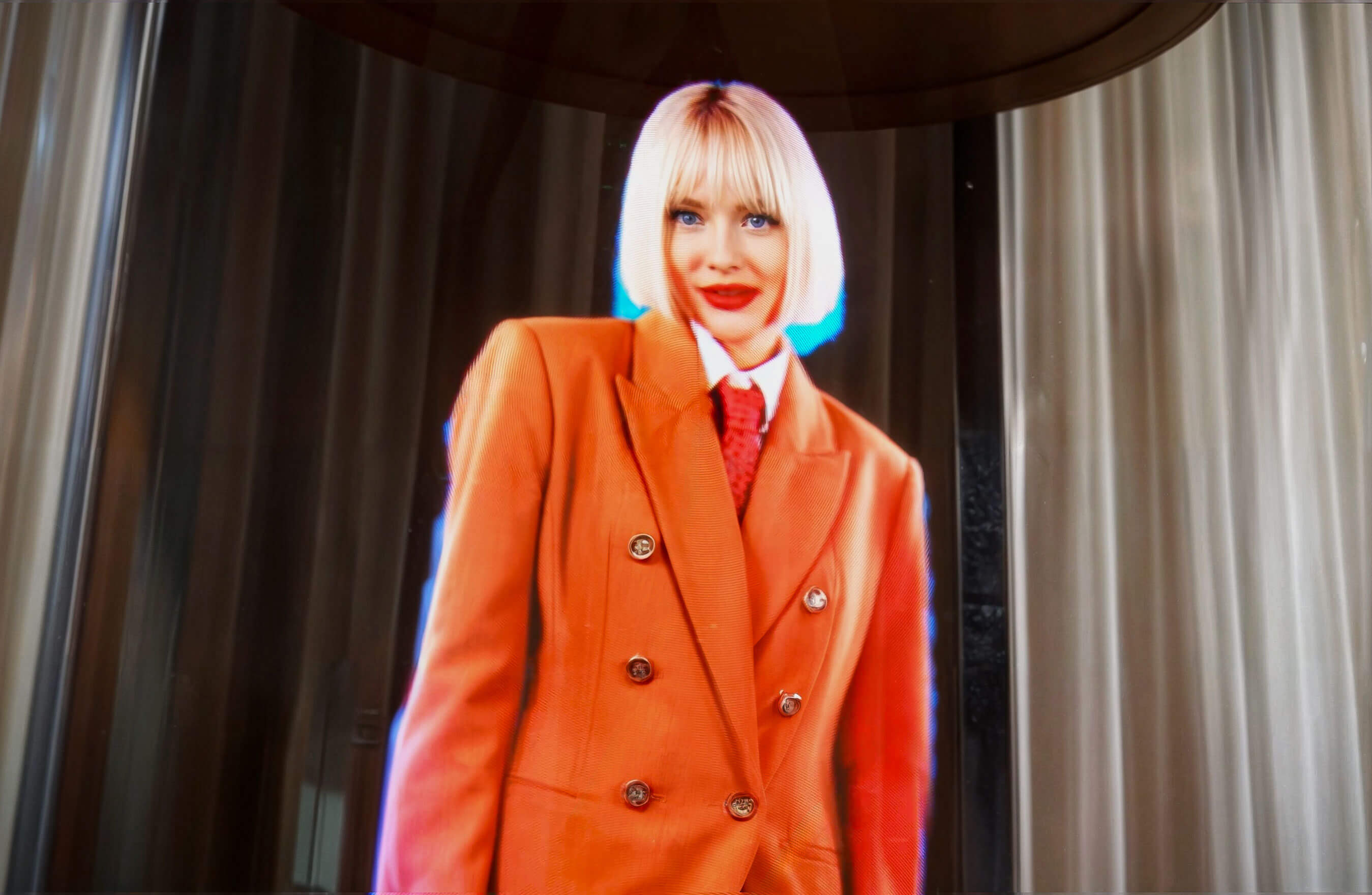
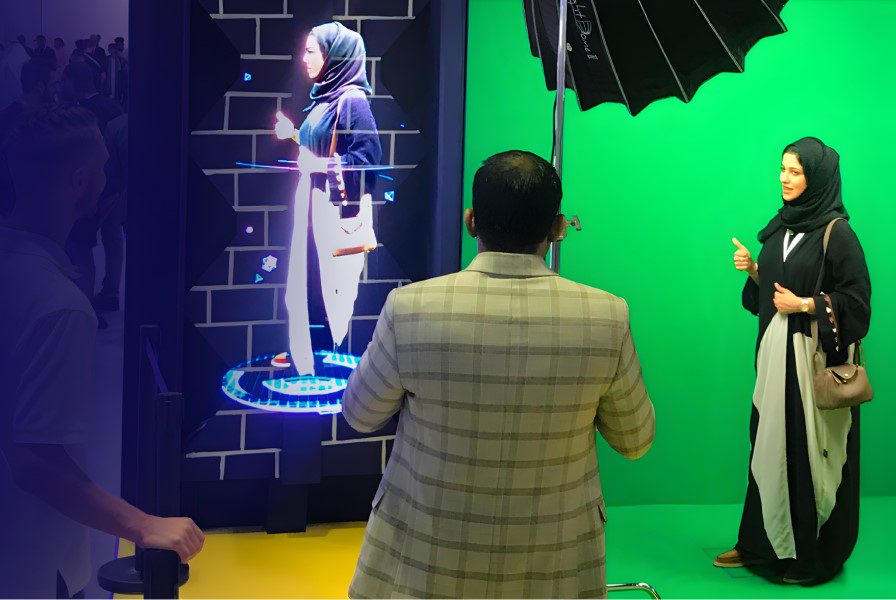
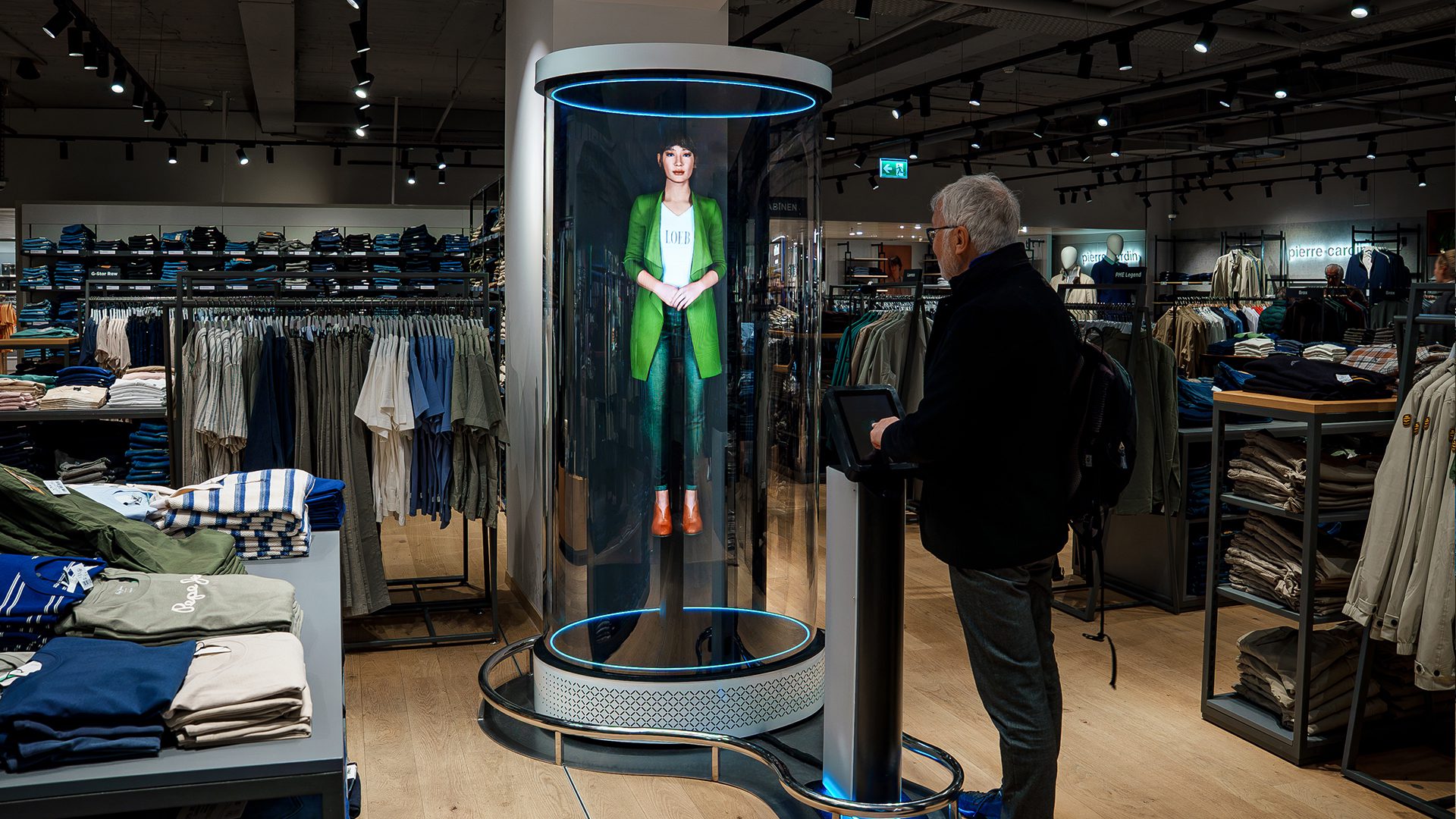
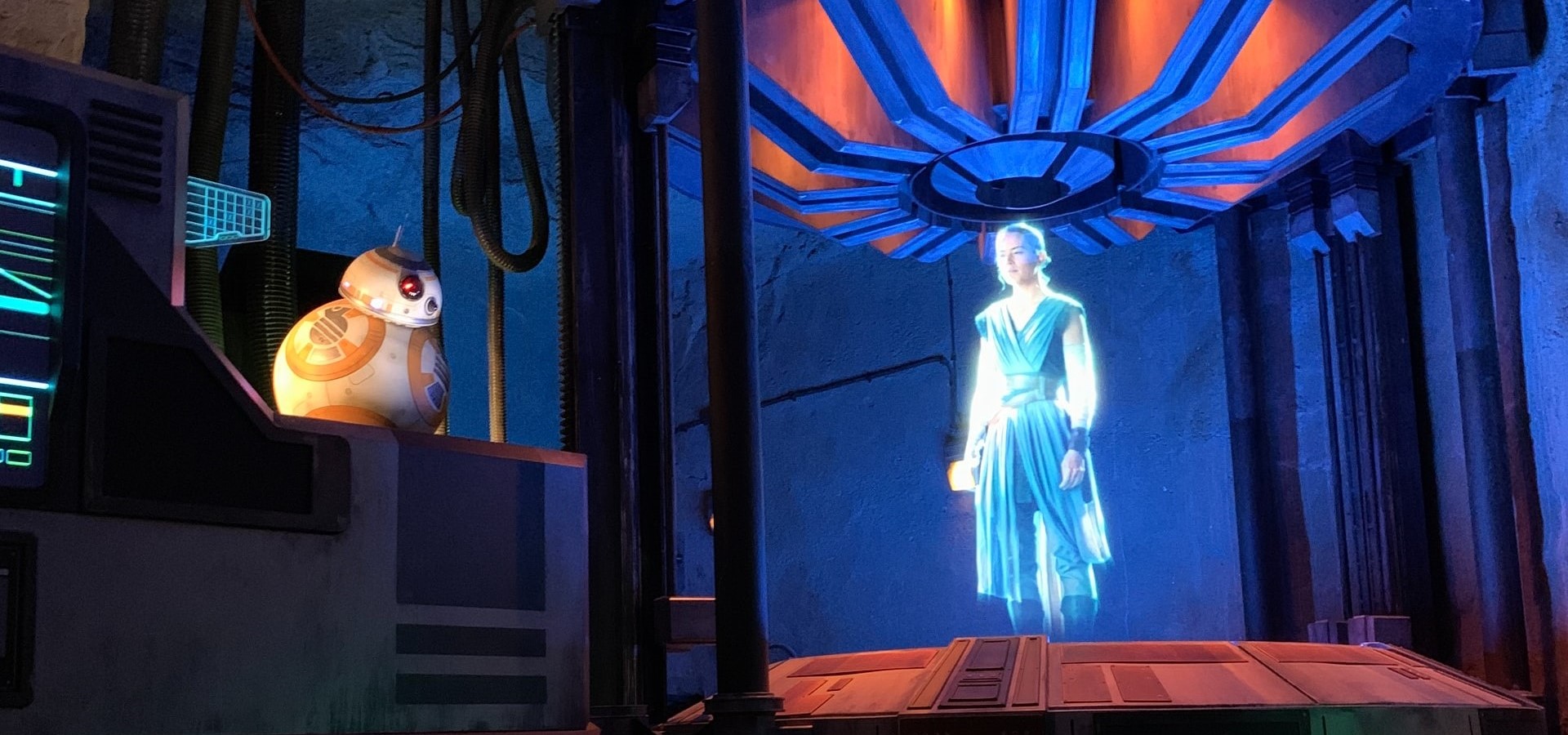
3D digital presenters and holographic human experiences can support language and cultural education by displaying presenters, characters and pre-recorded educational content in an engaging format.
For example, an educational institution could use digital presenters to:
- Introduce students to different languages and cultures.
- Present short educational dialogues.
- Explain cultural traditions and customs.
- Deliver multilingual information to international students.
- Support language-learning activities and presentations.
Live or recorded remote presentations can also give students access to speakers and educational experts located elsewhere.
It is important to distinguish between displaying a digital presenter and enabling a real-time conversation. Two-way interaction requires additional communication software and supporting technology.
7. Campus Communication and Interactive Navigation
Holographic displays can also support the everyday operation of educational institutions.
Universities and large campuses often need to communicate information to students, visitors, employees and prospective applicants.
3D displays can be used for:
- Campus maps and navigation.
- Student information and announcements.
- Exhibition and event schedules.
- Information about university departments.
- Admissions and visitor guidance.
- Important notices and educational campaigns.
For example, a holographic campus map can help visitors identify important buildings, lecture halls and other facilities.
Placed in reception areas, libraries or exhibition spaces, these displays can combine practical information with more visually engaging presentations.
What Are the Main Benefits of Holograms in Education?
The value of holographic technology depends on how it is integrated into the learning process. When used for an appropriate educational purpose, 3D visualization can offer several advantages.
Better Visualization of Complex Concepts
One of the main benefits of holograms in education is the ability to represent objects and structures in three dimensions.
This is particularly useful for subjects involving anatomy, engineering, biology and other areas where spatial relationships are important.
Students can examine a model from different viewpoints and develop a clearer mental picture of how its components are arranged.
Increased Student Engagement
Traditional presentations often rely on text, diagrams and static images. Introducing a 3D visual experience can create a different learning environment and attract students’ attention.
Interactive models can encourage students to explore educational content rather than simply observe it.
However, attention alone does not guarantee better understanding. The displayed content should always be connected to a specific learning objective.
More Interactive Learning Experiences
Interactive 3D models can give students an opportunity to explore educational objects more actively.
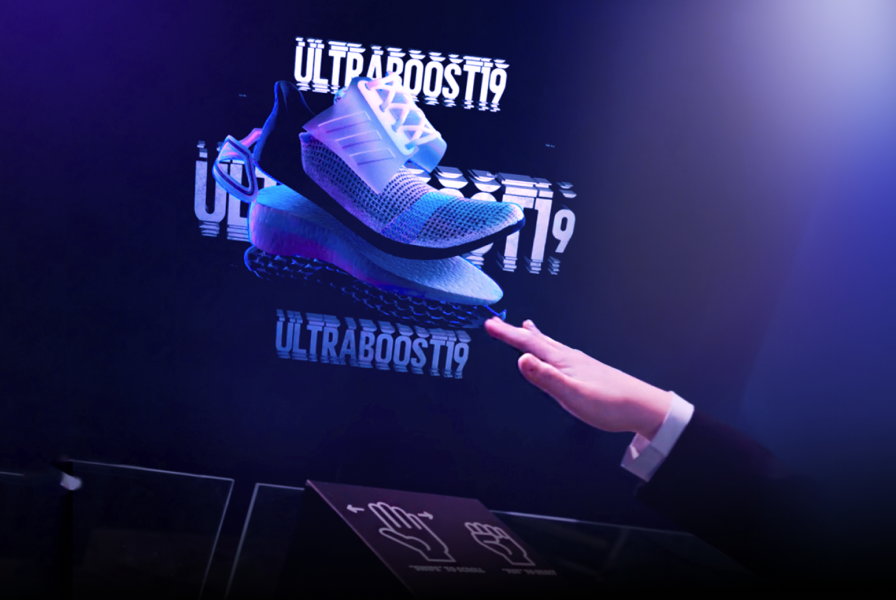
Depending on the technology and software, learners may be able to rotate models, examine individual components or trigger animations.
This encourages exploration and can make classroom discussions more practical.
Shared Learning Experiences
Unlike individual headset-based experiences, some holographic display systems allow several students to view the same 3D content simultaneously.
This is useful for teacher-led demonstrations, group discussions and educational presentations.
A teacher can introduce a model, explain its structure and guide the entire class through the same visual experience.
More Flexible Educational Content
Digital models can be updated and adapted to different subjects, courses and audiences.
An educational institution can prepare different visual materials for biology, medicine, engineering or other fields without necessarily requiring a separate physical model for every lesson.
The actual flexibility depends on the display system, supported software and available content formats.
What Does Research Say About Holographic Learning?
Research into 3D visualization and holographic learning has produced encouraging results, particularly in medical and anatomical education. However, the effectiveness of these technologies depends on the type of visualization, the subject being taught and the instructional approach.
A 2018 randomized study published in Medical Education examined the impact of autostereoscopic holographic displays on anatomical knowledge. It included 179 nursing students divided into three groups.
Students who studied cardiac anatomy using holographic visualization achieved significantly higher post-test scores than those using conventional 3D PDF materials or printed 2D images.
Another study, published in 2020 in the Journal of Otolaryngology – Head & Neck Surgery, examined the use of holographic models for teaching ear anatomy to medical students. The study found that knowledge improved across all learning formats, without a statistically significant difference in test scores between groups. However, students rated holographic visualization more positively for understanding spatial relationships, engagement and motivation.
More recently, a 2025 randomized trial published in Academic Medicine evaluated a hologram-based augmented reality learning module for anatomy education. Among 48 medical students, the group using Microsoft HoloLens 2 achieved higher immediate theoretical and practical test scores than the group using traditional learning materials.
The researchers also highlighted important limitations, including the small sample size, single-site design and absence of a delayed knowledge-retention test.
These findings should be interpreted carefully. Headset-based augmented reality, autostereoscopic displays and LED-based holographic displays are different technologies. Results from one system cannot automatically be applied to another.
The broader conclusion is that 3D visualization can support learning in suitable contexts, but it should be evaluated as part of a structured educational method rather than treated as a replacement for teaching.
How HYPERVSN Can Be Used in Educational Environments
HYPERVSN provides 3D holographic display solutions that can be used in educational institutions, museums, exhibitions and other learning environments.
Its LED-based display technology creates the visual effect of 3D digital content floating in mid-air, allowing multiple viewers to observe the same presentation without individual AR or VR headsets.
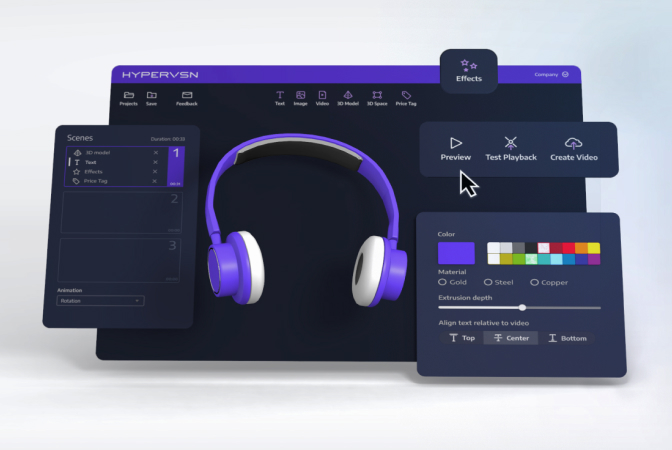
One relevant application is HYPERVSN SmartV 3D Modeller, an interactive solution designed to display and manipulate 3D models.
Using supported control interfaces such as a touchscreen or air mouse, viewers can rotate digital models and explore their components. The system also supports model animations and custom 3D content.
For educational institutions, this creates opportunities to present:
- Anatomical models, including organs and other biological structures.
- Mechanical and engineering components.
- Educational 3D objects and visual demonstrations.
- Interactive museum and exhibition content.
- Scientific and technical models.
Beyond classroom demonstrations, HYPERVSN solutions can also support campus navigation, educational signage, visitor information and museum displays.
The HYPERVSN Education solutions page provides examples of applications for educational environments.
You can also explore the HYPERVSN SmartV 3D Modeller to learn more about interactive 3D model presentation.
How to Introduce Holographic Technology into Education
Implementing holographic displays successfully requires more than installing new hardware. Educational institutions should begin by identifying where 3D visualization can provide real value.
Here are five practical steps.
1. Identify the learning objective
Determine which subject or concept would benefit most from 3D visualization. Anatomy, engineering, molecular structures and technical demonstrations are good starting points.
2. Choose the appropriate technology
Decide whether the educational objective requires a shared 3D display, an interactive model, augmented reality or a fully immersive VR environment.
These technologies have different capabilities and should not be treated as interchangeable.
3. Prepare educational content
The 3D models and animations should be accurate, relevant and easy to understand. Avoid unnecessary visual effects that distract from the educational objective.
Where appropriate, combine 3D models with labels, explanations and supporting materials.
4. Integrate the technology into lessons
A holographic display should support a lesson rather than exist as a separate attraction.
Teachers can use it to introduce a topic, explain a difficult concept, demonstrate a process or encourage students to discuss what they observe.
5. Measure the results
Evaluate the effectiveness of the technology using practical indicators, such as:
- Student understanding before and after the lesson.
- Knowledge retention over time.
- Performance in practical exercises.
- Student engagement and feedback.
- Teacher experience and ease of implementation.
This helps determine whether the technology is contributing to measurable educational improvements.
Limitations of Holographic Technology in Education
Despite its potential, holographic technology is not a universal solution for every educational challenge.
There are several factors that institutions should consider before introducing it.
Initial investment: Dedicated displays, supporting hardware, software and content production can require a significant budget.
Content development: Educational 3D models must be accurate and suitable for the subject. Existing models may need adaptation, and specialized content may require professional production.
Learning effectiveness: A visually impressive presentation does not automatically lead to better knowledge retention. Educational objectives and teaching methods remain essential.
Technical requirements: Institutions should consider installation space, viewing angles, lighting conditions, display configuration and compatibility with their existing systems.
Accessibility: Different students have different visual, sensory and learning needs. 3D displays should complement accessible teaching materials rather than become the only way to access important information.
Holographic displays are most effective when used as part of a broader educational strategy that includes teachers, textbooks, practical demonstrations and other digital learning tools.
Frequently Asked Questions About Holograms in Education
What are holograms used for in education?
Holograms and 3D holographic displays are used to visualize complex subjects, present anatomical structures, explain scientific concepts, demonstrate engineering models and create interactive educational exhibitions. They can also support museum presentations and campus information systems.
How can holographic displays improve the learning process?
Holographic displays can make spatial information easier to understand by presenting objects in three dimensions. They can also encourage student engagement and support interactive demonstrations. Their effectiveness depends on the quality of the content and how the technology is integrated into teaching.
Are holograms used in medical education?
Yes. 3D visualization and hologram-based technologies are used in medical education to help students explore anatomy, understand organ structures and study complex spatial relationships. Research has demonstrated potential benefits in certain anatomical learning tasks, although results depend on the specific technology and teaching method.
Do students need special glasses to see holograms?
Not always. Some holographic displays, including HYPERVSN’s LED-based rotor displays, present 3D visual content that can be viewed directly without an individual headset. Augmented reality and virtual reality solutions, in contrast, may require dedicated headsets or other viewing devices.
Can holograms replace traditional teaching methods?
No. Holographic technology should complement traditional teaching rather than replace teachers, textbooks, laboratory work or practical demonstrations. Its main role is to provide additional visualization and interaction where these can improve the learning experience.
What is the difference between holographic displays and augmented reality in education?
Augmented reality overlays digital content onto a user’s view of the physical environment, usually through a smartphone, tablet or headset. Holographic displays present 3D visual content through a dedicated display system. Both can support interactive learning, but their hardware, viewing experience and applications are different.
The Future of Holograms in Education
Holograms and 3D holographic displays offer educational institutions new ways to present information, explain complex subjects and engage students.
Their greatest potential lies in areas where spatial understanding and visual exploration are essential, including medical education, STEM subjects, engineering and cultural heritage.
As 3D display technology and interactive educational content continue to evolve, these solutions may become an increasingly useful part of modern learning environments.
For schools, universities, museums and other educational organisations interested in exploring these possibilities, HYPERVSN offers a range of 3D holographic solutions designed to bring digital content into shared physical spaces.
Discover HYPERVSN solutions for Education and explore how interactive 3D visualization can support your next educational project.